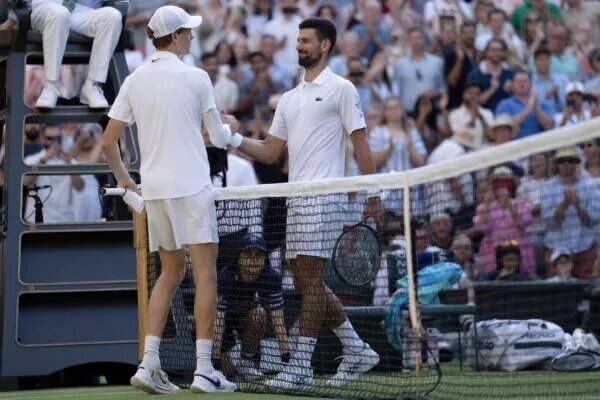



The recently concluded Roland Garros final between Jannik Sinner and Carlos Alcaraz was an all-time classic, culminating in a fifth set tiebreak to decide the match. One of the greatest of all time and in official books the second-longest-ever final, which lasted 5 hours and 29 minutes. However, this epic for the ages has spurred a certain debate on the last set super-tiebreak. The Spaniard winning the last set 7-6(10-2) didn’t go down well with many neutral supporters, who demanded a difference of two games to be the deciding factor.
For years the first three Grand Slams of the year–namely, the Australian Open, French Open, and Wimbledon allowed matches to go on till late until a decisive two-game advantage was acquired in the final set. Only the US Open would have a fifth set 6-6 tiebreaker. Fans would enjoy that as that rule gave them moments to cherish forever. It almost became a heavyweight championship clash as players could come back from 0-30 (or more) down and throw repeated punches to save their service game.
The Wimbledon 12-12 Rule
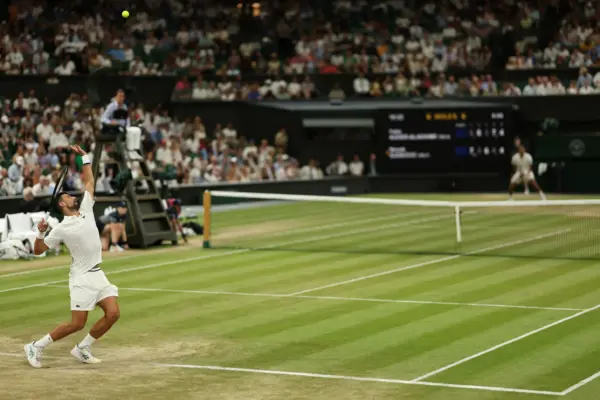
The first rule change came in 2019 at Wimbledon, where the new rule limited a match until 12-12 in the fifth set, and then a tiebreak had to be played. This was due to a Kevin Anderson-John Isner semifinal at the same venue in 2018 which was decided 26-24 in the fifth. That match delayed the much anticipated Rafael Nadal-Novak Djokovic semifinal, which too went on very late and had to be pushed to the next day as it finished 10-8 in the fifth. Ironically, the first time the 12-12 rule came into play was the 2019 epic final between Roger Federer and Djokovic where both went neck to neck before the tie breaker split the two and the Serb won the championship.
2022 Brings in the Super Tiebreak rule
Recognizing the scheduling problems if matches went on for so long, the Grand Slam board in 2022 announced that there will be a fifth-set tiebreak in all the Grand Slams, however it will be a 10-point knockout. Fans voiced their opinion back then and continue to do so. They believe anyone who runs away with a 3-0 or 4-0 lead in the tie break more often than not would win it as he gets to serve rather regularly. Whereas in a two-game rule players can fight back from 0-40–notably Alcaraz did that in the 4th set Sunday–as he doesn’t have to pass on the serve mid game to his opponent.
In a match where one almost believes that none of the players can lose, a tiebreak does spoil the fun. Will the Grand Slam boards sit and give us another new rule? Fans would desperately wait for it.
Main Photo Credit: Susan Mullane-Imagn Images