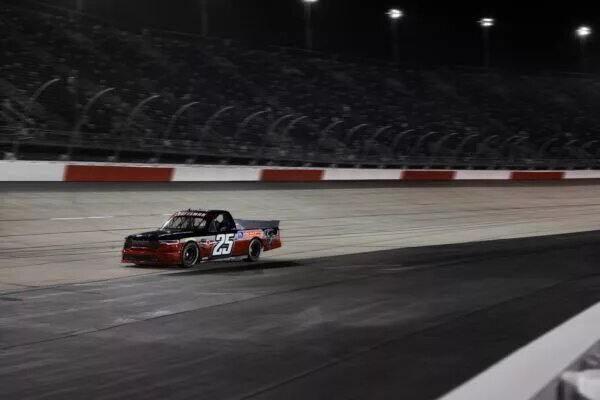
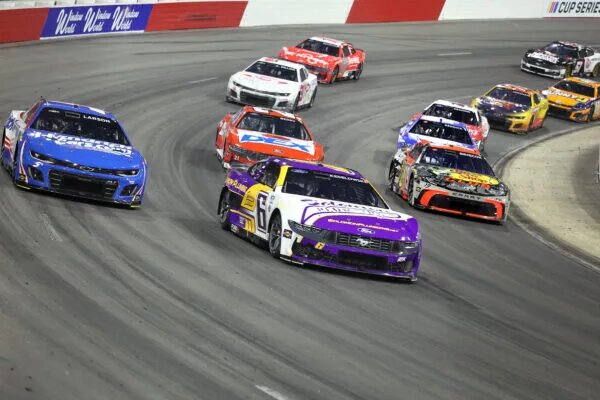
The late Barney Hall once said that we “don’t race anywhere in the world like (we) do at Talladega.” It was true when he said it during the MRN Radio broadcast of the Winston 500 on Oct. 15, 2000, and it’s still true in 2020.
But given that we also do this style of racing at Daytona International Speedway, what difference is there between it and Talladega Superspeedway?
Differences in racing between Daytona and Talladega
According to Kurt Busch, it’s the width.
“It’s hard to even go three-wide (at Daytona),” he said. “Yes we will, but it comes with a lot of risk.”
The narrow-ness of Daytona boxes up the field. Thus, drivers must be more aggressive when making moves through the field.
“Talladega can handle four-wide, even five, but there’s the risk as well because a driver and a spotter have to be in sync to know if you’re in lane two or lane four, and knowing where the guys are around you,” he said.
When you get down to it, Talladega is largely a bigger clone of Daytona.
At 2.66 miles, it’s .16 of a mile longer than Daytona. Furthermore, Daytona is more of a handling-centric track, due to its surface and the dynamic weather of Central Florida. Whereas Talladega, according to Corey LaJoie, is more speed-centric, which adds more weight to drafting strategy.
“Daytona sometimes when it’s hot and greasy and it’s slick like we had in the July race, now in August or September, whenever it is, handling comes into play and guys will start lifting, but the only time you’re lifting really at Talladega is because you’re trying to create some momentum, trying to create a run, trying to back yourself up from the guy in front of you and trying to get your line moving,” he said.
Regardless of the differences, statistically speaking, both tracks put on the most competitive races of the season. The lead changes are usually up in the 30 to 50 range and the number of different leaders are usually at the highest of the season, during a restrictor plate race.
And this happens, while the field is bunched up into a 200 mph traffic pattern that’s reminiscent of what you’d see on the Interstates around Atlanta.
It’s a style of racing that’s synonymous with NASCAR.