

Even more casual F1 fans are likely to have seen some of the extensive coverage surrounding the 2026 Mercedes engine. For several months now, Mercedes power units have been discussed as the ones to beat for the new regulations.
This consensus is owing to a combination of factors, including their historical track-record and recent information about their development.
However, the last few weeks have further reinforced the belief that Mercedes power will be the benchmark. More than ever before, there is a genuine sense that the Silver Arrows and their customers will begin 2026 with an advantage.
Mercedes engines in pole position for 2026
There are several indicators which point to Mercedes engines as being favourites for 2026. Carlos Sainz and Pierre Gasly, for example, have spoken in glowing terms about about the German manufacturer’s progression.
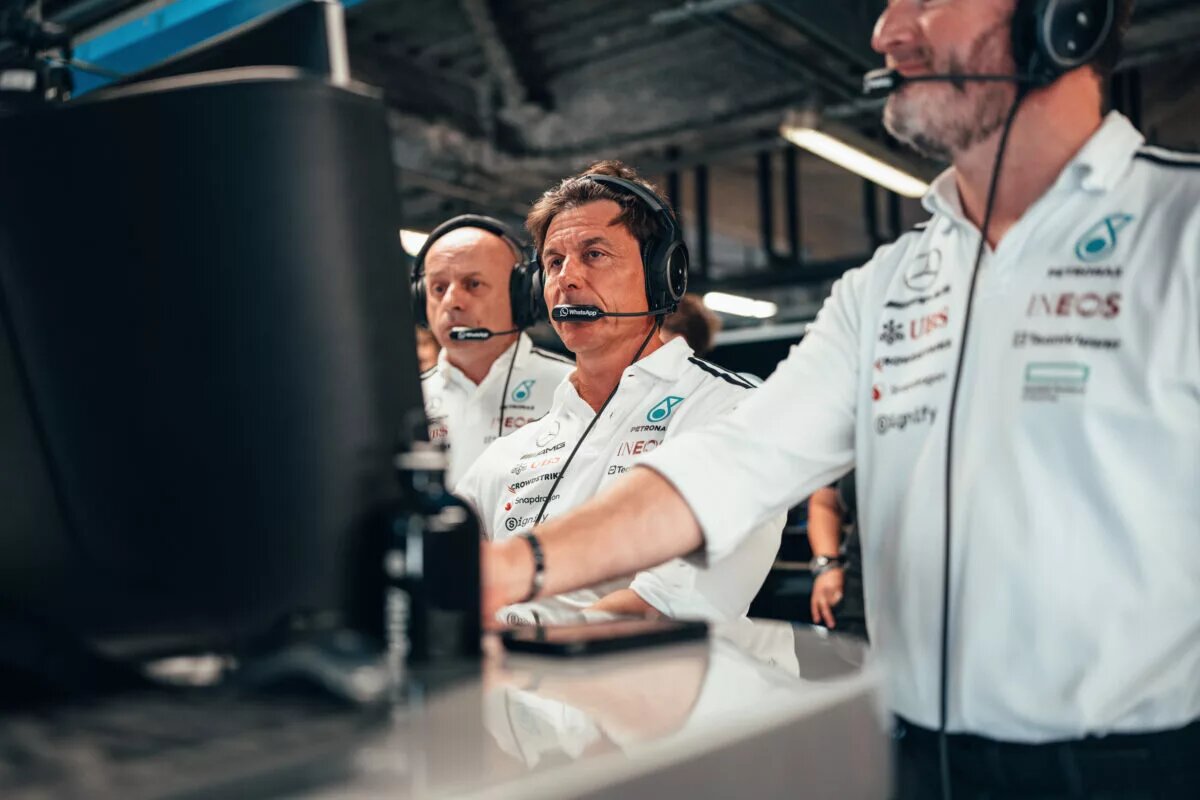
These comments reflect the almost unanimous paddock narrative about Toto Wolff’s team. Nobody is expecting another power unit to outperform the one produced by the engineers at Mercedes’ factory in Brixworth.
In 2024, when Williams agreed to continue with Mercedes power for 2026 and beyond, team principal James Vowles conveyed clear a sense of confidence. The 46-year-old made clear he believed the German squad were doing an “exceptional job” for the new regulations.
Vowles also added that he anticipates bigger differences between manufacturers in 2026. Suffice it to say, the former Head Strategist believes his team will benefit from these increased performance gaps.
Beyond this, Mercedes are understood to be at the forefront of a crucial innovation regarding engine compression ratio.
The factory in Brixworth has been developing a trick to increase compression ratio (limited to 16:1 in static tests) when the car is circulating on track – likely thanks to a clever use of thermal expansion.
Only Red Bull Powertrains are known to have caught wind of this idea early enough to implement it in 2026. Even then, having only learned of this solution through an engineer they signed from Mercedes, it will take some time for Red Bull to replicate.
Although rival teams have protested against this interpretation of the regulations (and will raise the issue again with the FIA this week), the FIA are not likely to dish out a punishment.
After all, Mercedes were transparent with the FIA from the very beginning, approaching them to ensure their compression ratio idea was within the bounds of the regulations. This means it would take a dramatic turn of events for corrective action – at least in the short term.
Putting aside this specific area, the Silver Arrows are understood to have enjoyed the smoothest journey in developing their 2026 engines.
Unlike other manufacturers, who have encountered various difficulties and obstacles, the direction of travel at Mercedes has been clear and unwavering.
Speaking of the other manufacturers, their limitations have become clearer in the build-up to 2026…