

There has scarcely been a day without some news on Mercedes and their power unit development. Much like in previous regulatory transitions, the Brackley-based squad are front and centre.
The FIA are understood to have confirmed that Mercedes and Red Bull’s engine trick – concerning a heightened compression ratio – is legal.
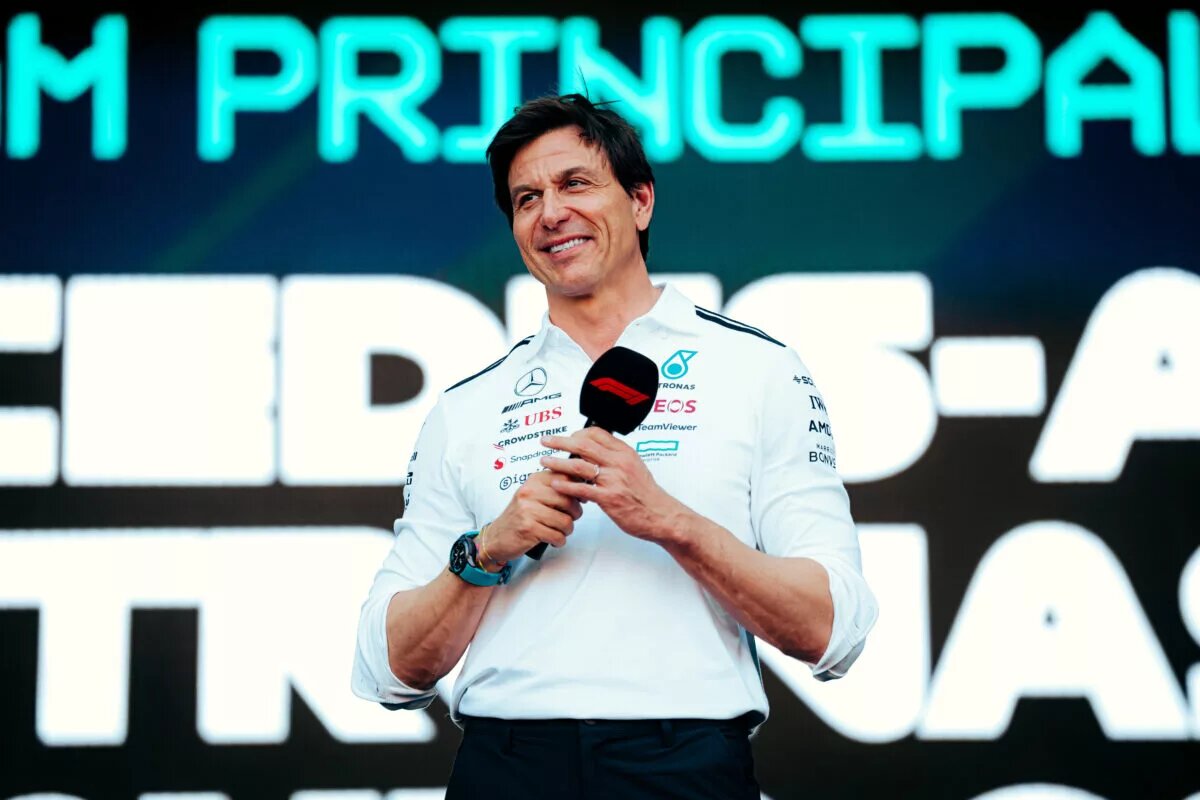
From the outside, this controversy has bubbled to the surface since the 2025 season’s conclusion. However, behind the scenes, Toto Wolff’s personnel have been on top of this issue for a very long time.

Mercedes were transparent with FIA on engine development
Part of what makes the 2026 regulations so transformative are the combination of aerodynamic and powertrain demands. Both these elements will be essential in determining success and failure for the coming years.
From the aerodynamic perspective, teams could only begin testing their 2026 designs in the wind tunnel from January 1st this year.
This is not to say ideas on 2026 were have been formulated previously – but at least officially – the lions’ share of work began twelve months ago.
By contrast, power unit development has been underway for several years. Since the 2026 rules were announced, manufacturers have worked diligently to design and refine their engine. Mercedes, of course, are among these.
Concerning Mercedes’ latest engine solution (which allows them to increase their compression above the 16:1 limit), thermal expansion is understood to be the key in achieving a higher ratio whilst on track.
For other manufacturers, this idea was not common knowledge until relatively recently. This is partly why any drastic response from the FIA was never likely, since making alterations to engines just months before 2026 is highly impractical.
That said, a far more important factor in the FIA confirming the validity of Mercedes’ innovation is that the Silver Arrows were completely transparent.
They were forthcoming in communicating with the FIA to ensure this idea was compliant with the regulations. As previously outlined, the intricacy and sophistication of a Formula 1 engine requires expending a great volume of resources.
Making changes is a process that requires years, which is why Mercedes could not afford to take poorly calculated risks.
Only after receiving the greenlight from the FIA, perhaps as early as a year ago, did they pursue this compression ratio trick. Because of this, Wolff’s team were never concerned about a last-minute change of heart.
It should be noted that whilst Red Bull are working on a similar approach regarding compression ratio, they are lagging behind Mercedes.
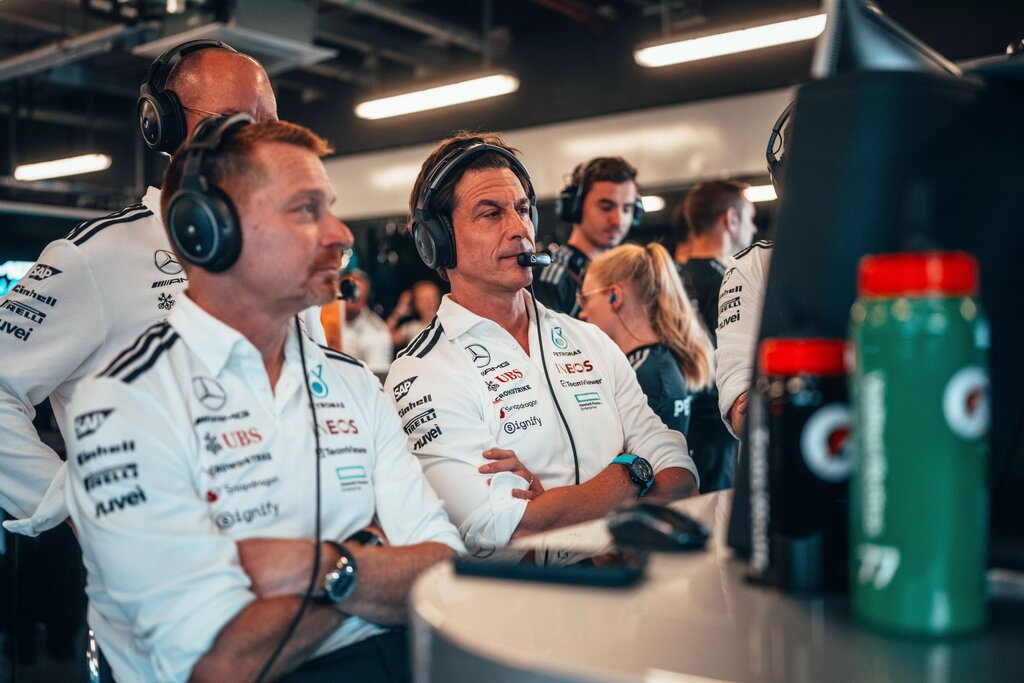
An understated approach in testing
With virtually any development or piece of information that circulates over the winter break, caution must be exercised. Even teams themselves, whilst having rough estimates, cannot be certain about what 2026 will look like.
The last four seasons often saw upgrade packages failing to deliver expected performance, with simulator and wind tunnel data proving difficult to translate on track for many teams.
This means every team, including Mercedes, will primarily have performance-based targets – rather than targeting a specific position. There are simply too many unknown variables to take into consideration.
Beyond this, mid-season development is also an important factor. More so than in previous campaigns, the 2026 grid could evolve drastically as teams obtain more data – and thus greater understanding of this new generation of cars.
Still, it would be unwise to write off Mercedes. Their preparation and resource allocation towards next year has been considerable. Adding this to seasoned and experienced aerodynamic and engine departments tends to result in a positive output.
When testing begins, there will be particular intrigue surrounding the Silver Arrows. For Toto Wolff, avoiding headlines and managing expectations will be a challenge in itself once 2026 commences.
READ MORE: Vowles says rival “trying to create narrative” about Mercedes engines
Main photo: Sebastian Kawka (Mercedes F1 Media)