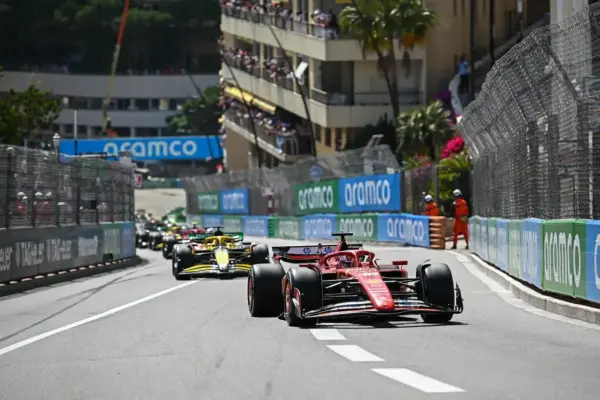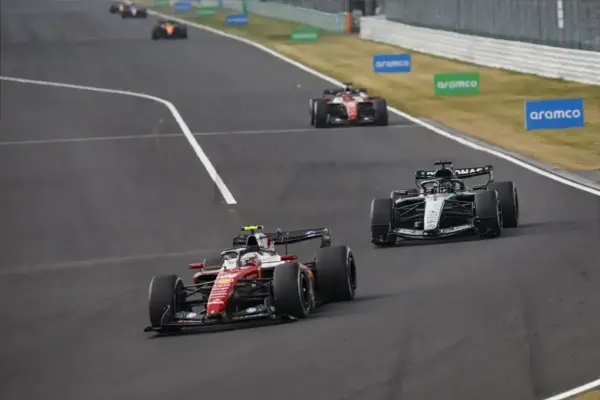
Oscar Piastri set a 1:19.729 to set the fastest lap of Free Practice 2 at the Albert Park circuit. The Australian enjoyed a strong session in McLaren’s MCL40, which showed the first glimpses of its potential.
George Russell and Kimi Antonelli followed just behind, in a session where the Mercedes engines across the field look to have been turned up after a relatively tentative FP1.
Ferrari were just behind in 4th and 5th. The SF-26 has encouraging pace, although it was also one of many cars to taste the gravel in Free Practice.
Top teams still keeping something in reserve
In many ways, the first practice sessions of 2026 leave similar conclusions to those from pre-season. All of the big teams – McLaren, Red Bull, Mercedes and Ferrari – have looked competitive enough to be genuine threats.
It was Red Bull and Ferrari who topped the timing sheets in FP1, with Leclerc’s final time of the session putting him almost half a second clear of the field.
Still, this advantage was evidently thanks to the Mercedes engine being on a conservative mode. The W18, as well as other Mercedes customer teams, posted relatively uninspiring top-speeds throughout the first session of the day.
This changed in FP2, when both McLaren and Mercedes climbed to the top of the timings. Putting aside fastest times, there were still a few concerns for the Mercedes-powered cars.
Multiple teams using the German power units encountered reliability hiccups at some point on Friday. Not all of these issues were directly linked to the engine, but reports indicate it did play a factor in a few instances.
As previously outlined on LWOS, McLaren entered this weekend with some trepidations about how to maximise the Mercedes engine. This challenge is shared by all customer teams, and likely explains some of the stoppages in FP1 and FP2.
Turning to the other big names, it was a relatively encouraging few sessions for Red Bull. The RB22’s limitations look to have been slightly exposed in Melbourne, at least from an aerodynamic and handling perspective.
Max Verstappen found himself in the gravel on a few occasions, as did his new teammate Isack Hadjar. Then again, the same can be said for Ferrari – who saw Charles Leclerc go off track more than once in the SF-26.
Broadly speaking, the front-runners had a comfortable margin over the midfield – but distinguishing between teams in this leading group is difficult.
What FP2 revealed about the midfield battle
Further down the grid, things are slightly easier to read. First and foremost, Aston Martin’s worst fears have been realised.
The Honda engine is nowhere near the level required. A lack of horsepower and extremely inefficient energy recovery means the AMR26 loses several seconds per lap on the straights.
This makes it nearly impossible for Aston to conduct any meaningful tests of their aerodynamic package. With reliability also extremely critical, the question is when – not if – the Silverstone team find themselves with a potentially weekend-ending problem.
Cadillac are slightly faster than Lawrence Stroll’s team. Given that 2026 is their debut campaign, being faster than any team is a significant achievement for the US squad.
Still, Cadillac also have work to do – they are currently several tenths slower than the 9th-fastest team. At present, Williams look to be occupying this position – with the FW48’s excess weight among the team’s biggest issue.
Then again, Williams could plausibly take a step forward between FP2 and qualifying tomorrow. For now though, Haas, VCARB and Alpine appear slightly more competitive.
Haas and VCARB have been the most promising so far, although higher engine modes (especially in VCARB’s case, as they collect valuable data for Red Bull) could be clouding the true picture.
Regardless, the upper and lower midfield is taking shape in this first race weekend of 2026.