

The 2009 F1 season was characterised by important moments that marked a turning point in the world of motorsport.
F1 Season 2009: The Year of Revolution
The 2009 F1 season was one of the most surprising in motorsport history, defined by a profound regulatory shift.
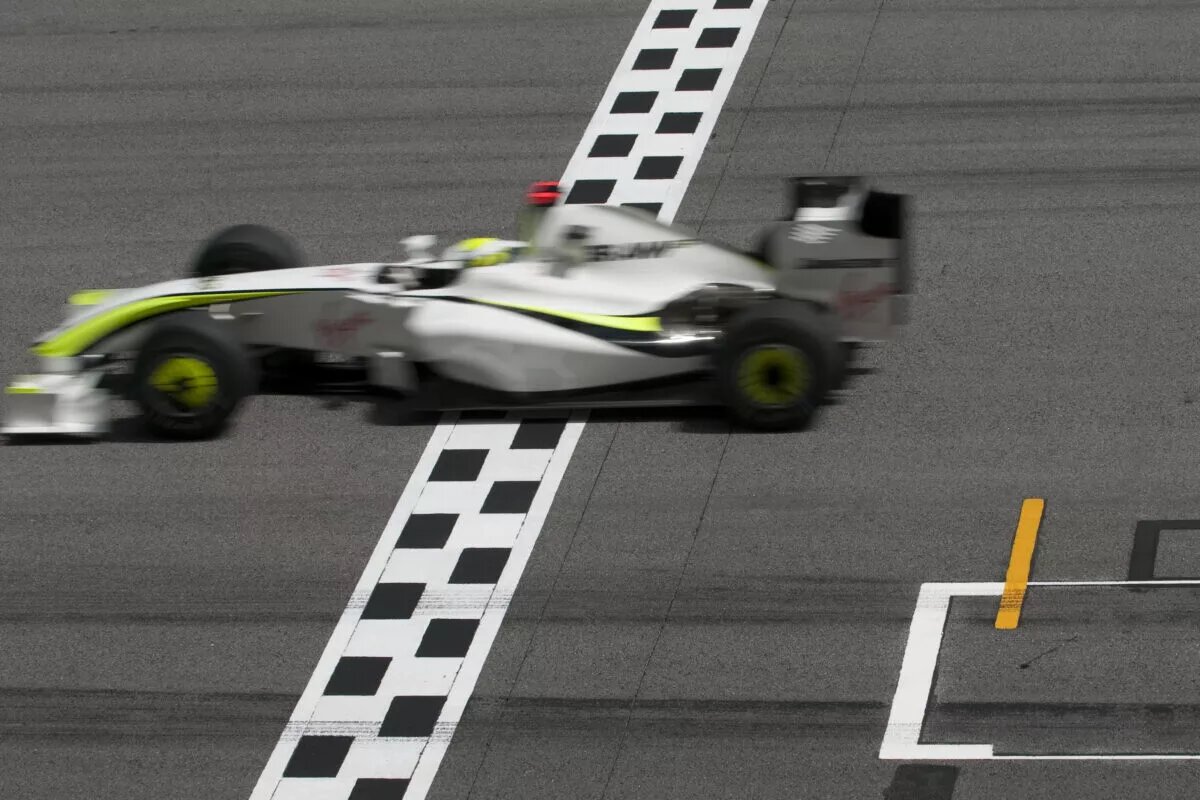
It was a season that saw the unexpected rise of Brawn GP, a team that defied all odds to dominate the championship.
Jenson Button claimed the world title with a blistering start, while Red Bull laid the foundation for its future dominance.
A Technical Revolution: New Regulations for the 2009 F1 Season
The 2009 season brought a radical shift in F1, with a new set of regulations aimed at improving overtaking and reducing costs.
The cars underwent a major aerodynamic overhaul – wider, adjustable front wings, narrower rear wings, and a simplified floor to reduce downforce.
After years of absence, slick tires made a return, increasing mechanical grip, while KERS (Kinetic Energy Recovery System) was introduced.
KERS allowed energy to be stored under braking and released during acceleration, but many teams opted against it due to weight and reliability concerns.
The biggest controversy, however, was the double diffuser, a loophole exploited by Brawn GP, Williams, and Toyota to gain an aerodynamic edge.
Its legality sparked protests from rival teams, fueling one of the season’s biggest debates.
READ MORE: Bold Predictions for the 2025 F1 Season
Teams and Protagonists of the Season
The 2009 season brought a dramatic shift in the balance of power among teams. Brawn GP dominated the first half of the championship, capitalizing on the controversial double diffuser.
Red Bull, led by Sebastian Vettel and Mark Webber, emerged as the main challenger, laying the groundwork for their future dominance.
Ferrari and McLaren, after years at the top, struggled to adapt to the new regulations, delivering inconsistent performances – despite race wins from Lewis Hamilton and Kimi Räikkönen.
Toyota and Williams showed flashes of competitiveness, while Renault’s season was overshadowed by the infamous Crashgate scandal in Singapore.
In many ways, 2009 reshaped the grid, setting the stage for a new era of Formula 1.
2009 F1 Season: Between Regulations and Scandals
The 2009 F1 season was not without controversy, both on and off the track. One of the most debated issues was the legality of the double diffuser, used by Brawn GP, Williams, and Toyota to gain a significant advantage over their rivals. Despite protests, the FIA ruled it legal, fueling tensions between teams.
However, the most explosive scandal came in September 2009 – Crashgate. Nelson Piquet Jr. revealed that he had been ordered to crash deliberately during the 2008 Singapore Grand Prix to benefit his teammate, Fernando Alonso.
The FIA investigation led to severe penalties for Renault and resulted in the expulsion of Flavio Briatore and Pat Symonds.
The scandal tarnished Formula 1’s reputation, exposing how off-track tactics could manipulate the outcome of a championship.
YOU MAY ALSO LIKE: F1: Crashgate, the endless saga
Jenson Button and Brawn GP: A Fairytale Triumph
The 2009 F1 season saw Jenson Button’s blistering start, winning six of the first seven races thanks to the sheer competitiveness of his Brawn GP.
However, as the season progressed, Red Bull closed the gap with victories from Vettel and Webber, while McLaren and Ferrari began to show signs of recovery.
Despite a dip in performance, Button managed his lead expertly and sealed the drivers’ title at the Brazilian Grand Prix.
In the Constructors’ Championship, Brawn GP held on to their advantage to take the crown. Red Bull finished second, solidifying their rising status, while McLaren and Ferrari endured a challenging year.
The Beginning of the Red Bull Era: Vettel’s Rise to Glory
The 2009 season wasn’t just about Brawn GP’s triumph – it also marked a turning point for Red Bull, the sport’s newest rising force.
With a car designed by Adrian Newey, the team secured their first F1 victories, courtesy of Vettel and Webber. The German, in particular, cemented himself as Red Bull’s future leader, finishing the season runner-up to Jenson Button.
From 2010 onward, Red Bull would embark on a period of dominance. They would go on to win four consecutive world titles with Vettel, transforming from an outsider into the sport’s powerhouse.
READ NEXT: Sebastian Vettel’s Red Bull Era
Main Photo
Credit: IMAGO / Depositphotos
Recording Date: 26.09.2013