

In the design of today’s F1 circuits, does tradition still prevail or has the search for safety and innovation taken over?
The Timeless Appeal of Historic F1 Circuits
Motor racing circuits have undergone a radical evolution throughout the history of Formula One.
From legendary historic circuits, there has been a transition to modern circuits designed with advanced engineering criteria. Giving importance to safety and visual spectacle.
This transformation has opened a debate between purists and innovators.
On the one hand, historic circuits offer unpredictable races, full of excitement and with a strong link to the past. On the other hand, modern tracks provide greater safety for drivers and spectators.
But the question persists still.
In the design of today’s circuits, does tradition still prevail or has the search for safety and innovation taken over?
Historic circuits represent the purest essence of motorsport.
Most historical F1 tracks are born following the natural conformation of the land and are often derived from public roads.
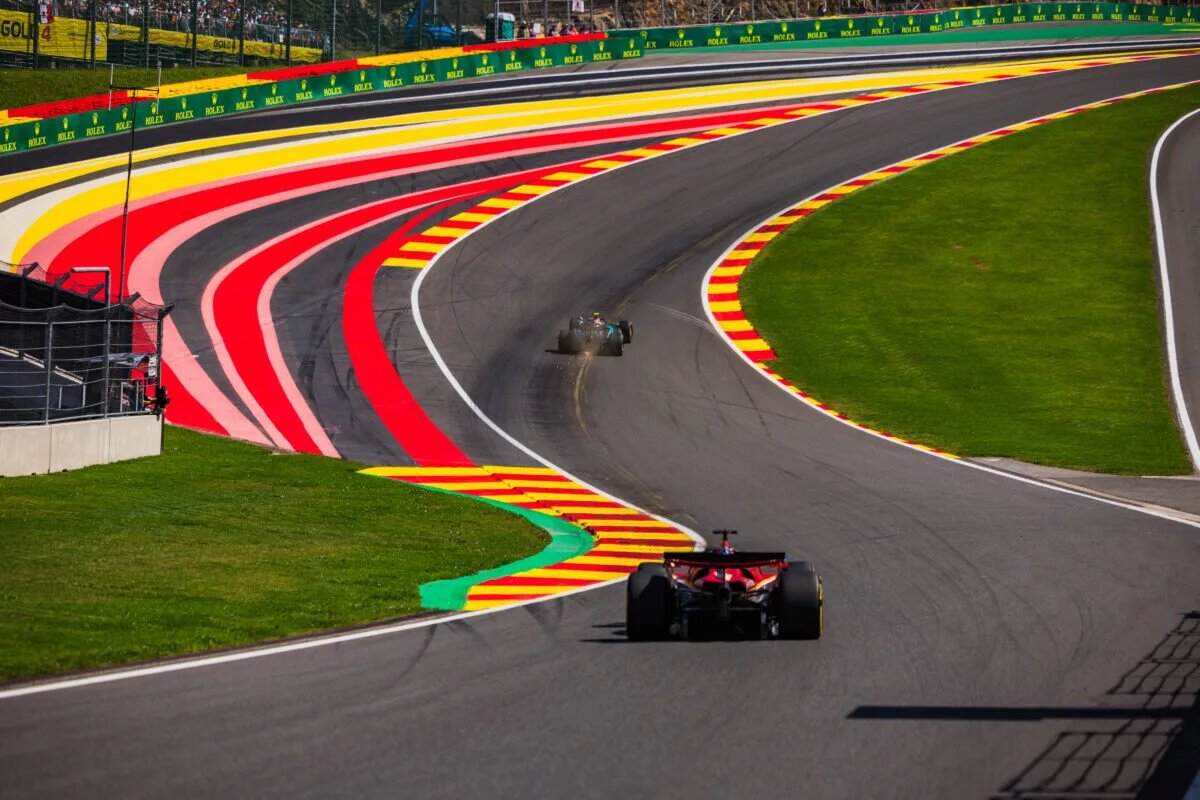
Some iconic examples are Monza, with its breathtaking speeds, and Spa-Francorchamps, nestled in the Ardennes with legendary bends like the Eau Rouge.
There’s also Nürburgring Nordschleife, nicknamed ‘the Green Hell’ due to its length and difficulty, and Silverstone, the birthplace of F1, bears witness to this philosophy.
However, these circuits have lower safety standards than modern ones. In the past, the absence of wide escape routes and less advanced infrastructure greatly increased the risk for drivers.
Despite this, their unpredictability and difficulty still make them beloved by fans and professionals alike, confirming their irreplaceable role in the world of F1.
READ MORE: Is Spa Worth Lives?
The Era of Modern F1 Circuits: Safety and Spectacle in the World of F1
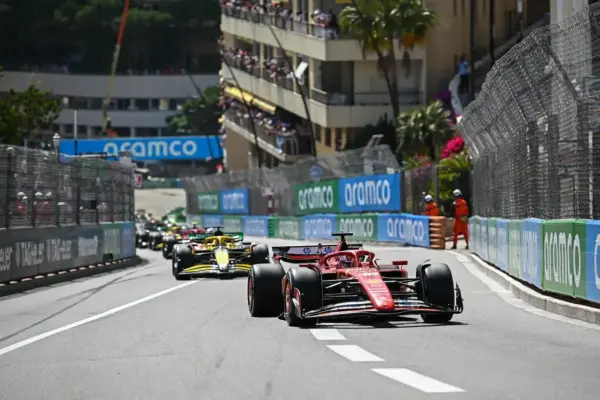
As motorsport has evolved, modern circuits have been designed to ensure the highest levels of safety and spectacle.
Some examples are, Yas Marina, with its state-of-the-art infrastructure, and the Shanghai Circuit, characterised by technical corners designed to favour overtaking.
The Lusail International Circuit is another great example of this philosophy. It is optimised for night racing, as is the circuit in Jeddah, one of the fastest city circuits in the world.
Unlike the historic circuits, the modern ones have wide run-off areas, high-grip asphalt and corners calculated to make the races more spectacular and safer.
Moreover, the focus is not only on competition but also on business. Media visibility, sponsor involvement and spectator comfort play a central role.
All this has made modern circuits technologically advanced. But it has also led to criticism for the loss of the originality and unpredictability that characterised the tracks of the past.
Tradition or Innovation: Which Philosophy Prevails?
The comparison of historic and modern circuits reflects two opposing visions of motorsport.
On one hand, classic tracks offer exciting racing and test the pure talent of the drivers. However, they often do not meet today’s safety standards.
On the other, modern circuits provide protection and media spectacle. But they are sometimes less technically demanding and less exciting for fans.
Today, the trend seems to be to balance tradition and innovation. Historical circuits are being adapted with targeted modifications to improve safety without distorting their soul, while new tracks try to offer more engaging challenges.
However, the question remains: is it possible to find a perfect compromise between past and future?
YOU MAY ALSO LIKE: 2025 F1 Academy Lineup: Aurelia Nobels Returns with PUMA
Drivers’ Preferences: Between Historical Charm and Modernity
In the debate between historic and modern circuits, many drivers express a clear preference for classic tracks.
For example, Lando Norris expressed misgivings about historical circuits such as Zandvoort being taken off the calendar. He emphasised his appreciation for the unique atmosphere and the warmth of the fans at such events.
However, not all drivers share the same opinion. Some, appreciate the state-of-the-art facilities and technical challenges offered by modern circuits which often present safer and more predictable conditions.
Many drivers, however, have a deep respect and affection for historic circuits. They also recognise the advantages in terms of safety and innovation offered by modern circuits.
The Future of Racetracks: A Possible Balance?
The comparison of historic and modern F1 circuits shows how the sport is constantly evolving, oscillating between nostalgia for the past and the need to adapt to contemporary demands.
Historic tracks offer genuine excitement and technical challenges. Meanwhile, modern ones provide safety and spectacle for an ever-growing public.
However, in recent years attempts have been made to find a meeting point between these two approaches.
Some historic circuits have been updated with safety measures without losing their distinctive character, while new tracks try to integrate more technical and driver-friendly elements.
The future of F1 may therefore lie in an intelligent compromise, able to combine tradition and innovation without sacrificing the essence of competition.
The challenge will be to keep the fascination of racing alive, balancing respect for history with the demands of modern F1.
READ NEXT: Why the Start of 2025 Is Critical for Hamilton and Leclerc
Main Photo
Credit: IMAGO / AFLOSPORT
Recording Date: 29.07.2024