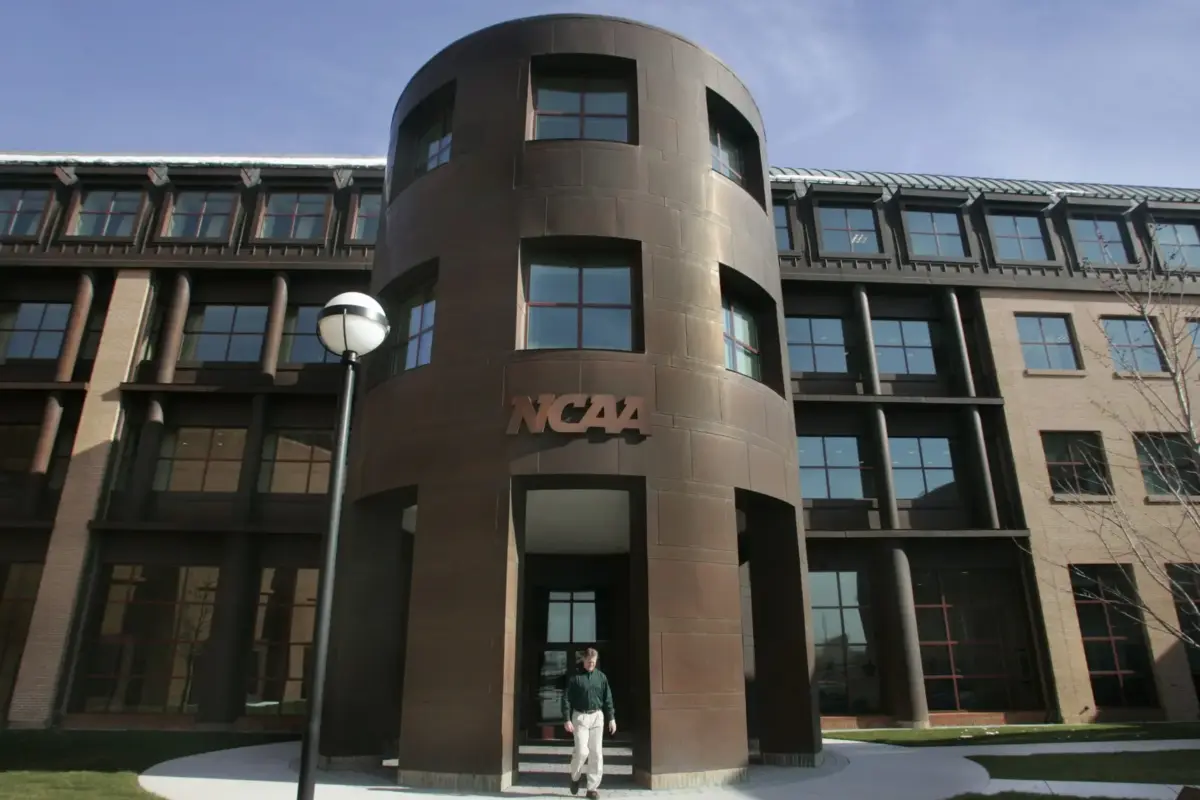

The SCORE Act, the legislation designed to save college sports, is now dead on arrival before it ever gets to a vote in the US House of Representatives.
The SCORE Act Dies a Sudden Death
The bill, which we highlighted in detail last week, had bipartisan support and was set to go to a vote around Wednesday of this week. It was likely to pass the House, but then fail in the Senate. But now it is not even going to make it out of the House, and may not even get a vote. The Congressional Black Caucus announced Monday night that it would not vote for the bill. Without the members of the caucus, there are not enough “yes” votes to even bother with a vote. Accordingly, late Monday night, the bill was pulled from the House voting calendar for this week.
There are 58 House members and four senators who make up the Congressional Black Caucus.
What Happened?
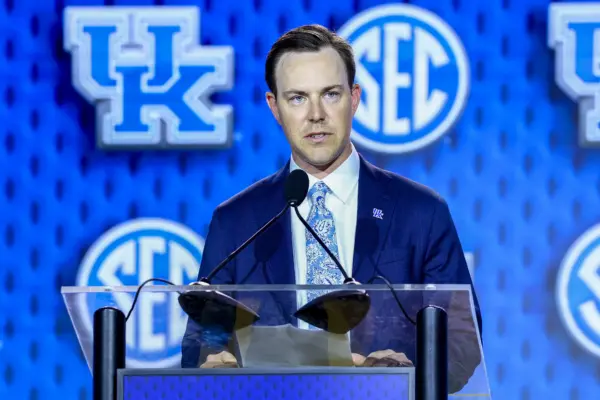
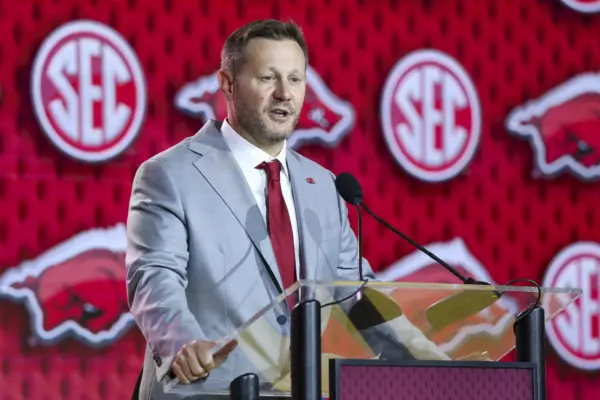
The late departure from their Congressional colleagues does not come from disagreements with the bill itself. On Monday, the CBC sent a letter to ACC Commissioner Jim Phillips, SEC Commissioner Greg Sankey, and NCAA President Charlie Baker. Phillips and Sankey are the connected tissue in why the CBC is killing this bill. The two conferences have member schools in states that are in the midst of political fights over the redrawing of representation maps for voting.
The CBC made its letter public on Monday night. “The Congressional Black Caucus cannot support legislation benefiting major athletic institutions that continue to remain silent while Black voting rights and Black political power are being systematically dismantled across the South.”
The statement made specific reference to the redistricting fights. “In the wake of the Supreme Court’s Callais decision, states across the South have moved rapidly to redraw congressional maps in ways designed to dilute Black voting strength, weaken Black representation, and undermine decades of hard-fought civil rights progress secured through the Voting Rights Act.”
Caucus Wants Schools In On Voting Rights Fight
The statement went on to say that the intentions of the withdrawal of support are not a political movement. Instead, it claimed to be an effort to draw universities and colleges into commenting on the issues. “For generations, Black athletes have helped build college athletics into one of the most powerful and profitable industries in American life. The success, visibility, and cultural influence of major athletic conferences and institutions are inseparable from the talent, labor, leadership, and cultural contributions of Black communities. Yet at the very moment those same communities face coordinated attacks on their democratic representation, too many leaders across college athletics have chosen silence.”
And the CBC detailed that while the SEC and ACC conferences are in the geographic heart of the fight, the Caucus claims a bigger picture.
“The Congressional Black Caucus believes institutions that profit from Black talent and Black communities have a responsibility to stand with those communities when their fundamental rights are under attack. Silence in the face of injustice is not neutrality — it is complicity.” It continued, “While the letters were directed to the SEC, ACC, and NCAA because of their influence, reach, and unique footprint throughout the South and college athletics broadly, the concerns raised by the CBC extend far beyond any one conference or governing body and apply across college sports as a whole.”
What SCORE Was
There has been no formal response from Phillips, Sankey, or Baker to this point. The SCORE Act gave limited anti-trust protections to the NCAA as a way of having one ruling body be able to enforce a new set of rules. The bill would establish one framework for Name/Image/Likeness deals, limit the ability of schools to hire away coaches while the season is still in progress, limit the timing of student-athlete transfers, and strictly define college athletes as non-employees of the schools and conferences.
Will The Senate Still Take Its Swing?
There is broader support outside of Congress for a potential Senate bill. Co-sponsors are working on a blend of multiple bills. The College Sports Competitive Act is being put together by Maria Cantwell (D-WA) and Eric Schmitt (R-MO), would allow a return to pooled media rights for the conferences. The belief is that the generation of tens of millions of dollars in new revenue would save the Olympic or non-revenue sports at most schools.
The Student Athlete Fairness and Enforcement Act (SAFE Act) has many of the same elements as the SCORE Act from the House. But it gets tricky now, based on Monday’s developments. For any of these bills to make it through the Senate, they need 60 “yes” votes. The SAFE Act has been sponsored to this point by Senators Cantwell, Richard Blumenthal (D-CT), and Cory Booker (D-NJ). Booker is a member of the Black Congressional Caucus. While the CBC did not specifically target any of the Senate bills, that is likely a byproduct of the legislation not yet being done and ready for a vote. Is Booker’s support for his own bill gone before the process even gets there?
Barring unexpected, but potential, changes from the authors of the bills, there is expected to be finalized wording ready for a vote by early next week.
Main Image: Charlie Nye/Indianapolis Star via Imagn Content Services, LLC