
With the expansion of the College Football Playoff to 12, many folks warned that the regular season would get watered down. Now, there are tangible talks of expanding further to 24 in the coming years, much to the dismay of the same 12-team CFP detractors. One of the most common issues raised is that big-time non-conference matchups will fade away in time. While teams could schedule these top-tier out-of-conference foes and afford a loss, it could be too great a risk either way (SEE: Texas in 2025, which lost at Ohio State…then again to Florida and at Georgia).
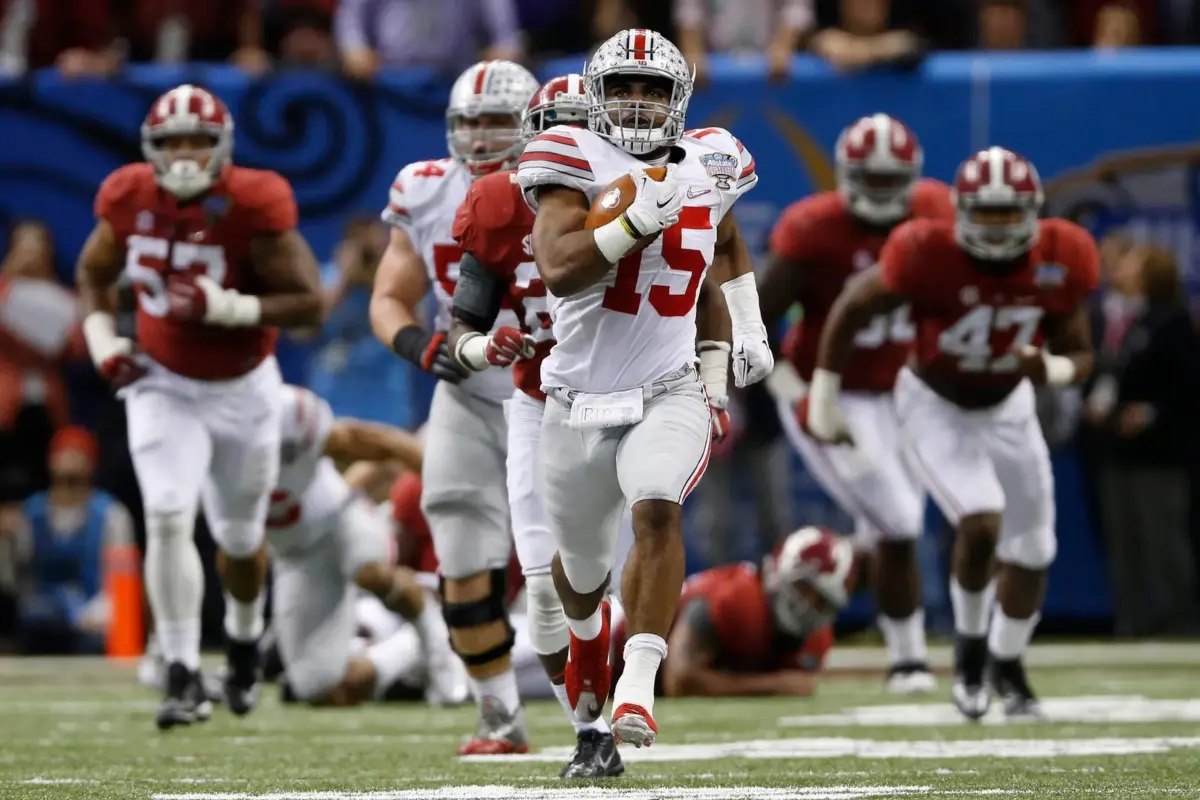
On Thursday, the college football world finally got some closure on what would happen with the Ohio State-Alabama matchups in 2027 and 2028. With the SEC joining the rest of the Power 4 in playing nine conference games, some non-conference games would be on the chopping block. We speculated, along with most of the college football world, that the Ohio State-Alabama home-and-home series would be axed. As it is, it was the other OSU that got its matchups with the Crimson Tide nixed. Alabama, instead of backing out of the home-and-home with Ohio State, took Oklahoma State off its 2028 and 2029 schedules. The Cowboys added a home-and-home with Michigan State instead, almost as if it anticipated the move.
Objectively, this is an absolute win for Ohio State, Alabama, and college football writ large.
Keeping the Ohio State-Alabama Series is an Absolute Win For Everyone
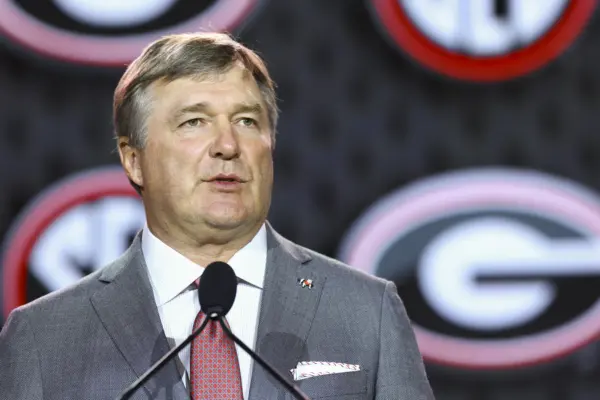
In the wake of this news, Ross Dellinger of Yahoo Sports announced that Georgia’s home-and-home with Florida State would be scrapped in favor of working toward a single “neutral-site” game (our money is on Atlanta…). While Florida State hasn’t been the cream of the ACC crop in some time, minus two 10-plus-win seasons in 2022 and 2023, a home-and-home with Georgia would have been exciting, just as Georgia’s series with Clemson was.
When the Ohio State-Alabama series was initially reported, many thought the likelihood of it remaining as such was slim. Only eight Power 4 teams (plus Notre Dame) feature schedules without an FCS opponent. Six of those eight, including Ohio State, come from the Big Ten, while Texas and Oklahoma represent the SEC.
The watering down of schedules was going to happen, especially among the “Bluebloods.” Why would a team like Ohio State, Michigan, Alabama, etc., unnecessarily risk their chance at a title to play a tough team? Kudos to those teams for doing so anyway.
Marquee Matchups Matter
In today’s era of college football, the regular season and out-of-conference matchups are a bit undervalued. Of course, there are a few high-stakes matchups this year. Aside from the usual rivalry matchups like Florida-Florida State or Clemson-South Carolina, Ohio State travels to Texas in Week 2 as the biggest of the year. In Week 1, we get Boise State at Oregon, Louisville at Ole Miss, and Notre Dame at Wisconsin (at Lambeau Field). Along with that OSU-Texas matchup in Week 2, we get Arizona State at Texas A&M and Oklahoma at Michigan.
Later on, Tennessee travels to Georgia Tech, Florida State heads to Alabama, and Notre Dame has BYU and Miami (FL), highlighting what looks to be another underwhelming slate.
These matchups are going to be narrative-setters all season long. While we may be in the third season of the 12-team era, any of these games could have gone the way of the dodo. Instead, these programs valued the high-stakes matchups, and college football is only better for it. As much fun as it will be to watch Jeremiah Smith play two quarters against Ball State and Kent State after turning 10 receptions into 350 yards and five touchdowns, it’s the game at Texas that will help or hurt his long-shot Heisman Trophy odds.
Even if some of these teams disappoint, the winners of these matchups will use the results to fuel discussions of CFP inclusion, as well as who deserves individual awards. You know that if, say, Louisville stinks it up this year, Ole Miss will prop up that ranked win all year as a resume builder
The Future of Non-Conference Scheduling
This year’s slate, plus the Ohio State-Alabama series’ reaffirmation, make it seem like marquee matchups are going to stick around. Hopefully, this is the case.
Of course, we have to address the Georgia of it all. The Bulldogs turned that home-and-home with Florida State into what will either be a neutral-site game or a cancellation altogether. It’s not great, but that could be the direction the sport is headed in.
Ohio State also has a home-and-home scheduled with Georgia set to take place in 2030 and 2031. With Georgia’s cancellation, it would not be surprising if the Ohio State-Georgia series is also moved or canceled altogether, as this handom tweeter from 2023 put it:
If this doesn't end up a "neutral site" game in Atlanta, I'd be surprised https://t.co/A9Oo4U5GWS
— Drew (@DrewCrabtree12) July 13, 2023
What will become of these massive non-conference matchups in the future? There were already rumblings of some programs freezing Notre Dame out due to the Irish’s temper tantrum following last year’s results. At the same time, programs could look at Notre Dame’s situation as to why they shouldn’t schedule tough out-of-conference games. Of course, if Notre Dame had more than a 10-point win over fellow non-CFP team USC after those losses to Miami and Texas A&M at the beginning of the year, maybe we’d have a different conversation.
Notre Dame may need these bigger matchups, while the other Bluebloods can skate by thanks to conference ties. At the same time, when the CFP expands to 24, what incentive is there? While a middle-of-the-pack Big Ten team will get the benefit of the doubt, will the same grace be applied to a 9-3 Big 12 team with losses to the top three teams?
Keeping the Ohio State-Alabama series is great news for the future of college football. These two teams have looked around at what college football has become, and the trajectory of the game in general, and decided to keep a pair of matchups that could be what keeps them out of contention. Of course, with names like Ohio State and Alabama, it’ll take four-plus losses to keep either out of the expanded field, but that’s a discussion for another day.
Main Image: © Adam Cairns / USA TODAY NETWORK via Imagn Images