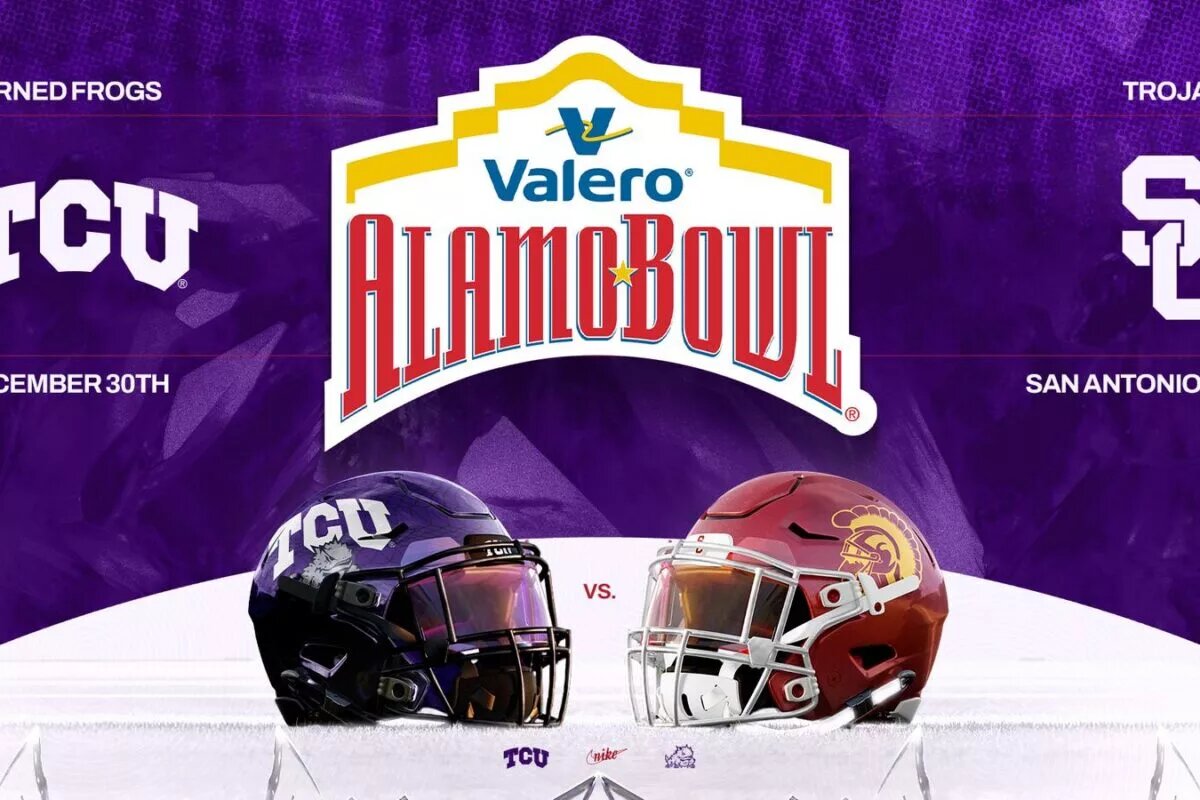

USC and TCU arrive in San Antonio carrying rosters that look different than they did in October, but the changes shape this matchup in distinct ways. This is not a game defined by who opted out. It is defined by who remains, how each staff adapts, and which players can shoulder expanded roles against a familiar opponent built on speed and spacing.
USC enters the Alamo Bowl without several cornerstone contributors on both sides of the ball. TCU is navigating its own attrition, particularly on offense, where availability has reshaped how the Horned Frogs can function. What remains is a game centered on quarterback decision-making, defensive matchups on the perimeter, and which team can manufacture stability without leaning on its missing stars.
USC’s Offense Adjusts Without Its Usual Targets
USC’s offensive structure will look different because the personnel is different. The Trojans will be without wide receivers Makai Lemon and Ja’Kobi Lane, both of whom opted out to prepare for the NFL Draft. Tight ends Lake McRee and Walker Lyons are also unavailable, removing two reliable middle-of-the-field options who helped USC stay on schedule earlier in the year.
That puts pressure on Zachariah Branch and Duce Robinson to carry more of the passing load. Branch remains the offense’s most dynamic player with the ball in space, but without Lemon and Lane stretching coverage vertically, TCU can be more aggressive, squeezing throwing windows underneath. Robinson’s role becomes critical, particularly on third downs and in the red zone, where size matters more than separation.
Protection is also a factor. USC will be without left tackle Elijah Paige and center Kilian O’Connor, forcing the offensive line to reshuffle against a TCU front that plays fast and attacks gaps rather than anchoring. That puts a premium on rhythm throws and timing rather than extended dropbacks.
TCU’s Defense Faces a Different USC Look
The TCU defense revels in the fact that USC’s skill group is condensed, but it also loses flexibility because of its own absences. Cornerback Avery Helm is out, removing a veteran cover option who often handled boundary responsibilities. That opens opportunities for Branch to move around the formation and force mismatches against younger defensive backs.
The Trojans are less explosive without Lemon and Lane, but they are still capable of stacking completions if the pocket stays clean. The Horned Frogs’ ability to pressure without sacrificing coverage integrity will decide whether USC can control the pace or is forced into contested throws.
TCU’s Offense Navigates Major Changes
TCU’s offensive situation is more complicated. Quarterback Josh Hoover entered the transfer portal and will not play, forcing the Horned Frogs to adjust on the fly at the most important position. That change limits the playbook and places added emphasis on execution rather than improvisation.
Wide receivers Jordan Dwyer and Ed Small are unavailable, while running backs Nate Palmer and Kevorian Barnes are also out. That removes multiple layers of experience and forces younger players into high-leverage roles against a USC defense that still has speed across the second level. TCU must manufacture offense through structure. Sustained drives, safe throws, and field position matter more than chunk plays. Asking replacement players to win isolation matchups consistently against USC’s athletes is a risky formula.
USC’s Defense Sees Opportunity
USC’s defense enters without linebacker Eric Gentry, whose opt-out removes a rangy presence in the middle of the field. The Trojans are also without cornerback Braylon Conley, who entered the transfer portal. Even so, USC’s defensive advantage lies in facing an offense still finding its footing. The Trojans can challenge TCU’s quarterback with disguised looks and pressure packages that force quick decisions. Without Hoover, TCU is less equipped to punish aggressive coverage or recognize late rotations. USC’s ability to contest short throws and rally to the ball becomes more important than chasing sacks.
Containing the run is the priority. TCU cannot afford negative plays with a shortened rotation. If USC can win first down and force predictable passing situations, the matchup tilts sharply.
What This Game Comes Down To
USC needs to show it can function offensively without its top receiving options while protecting a reconfigured offensive line. TCU must prove it can move the ball without its starting quarterback and several skill-position contributors. Both teams are asking young players to handle the responsibility that they did not expect in August.
This is Groundhog Day. Bowl structure is officially broken. Opt-ins and outs and watch scenarios are taking over.