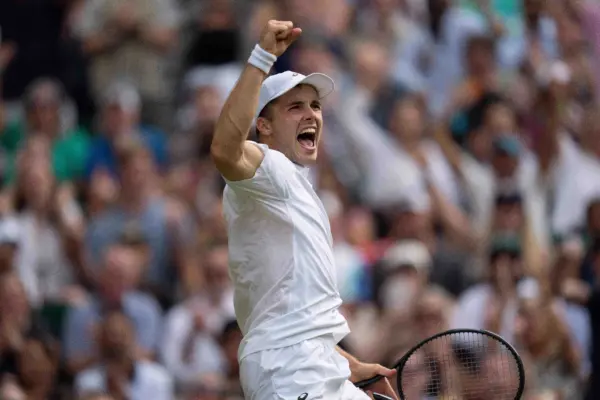

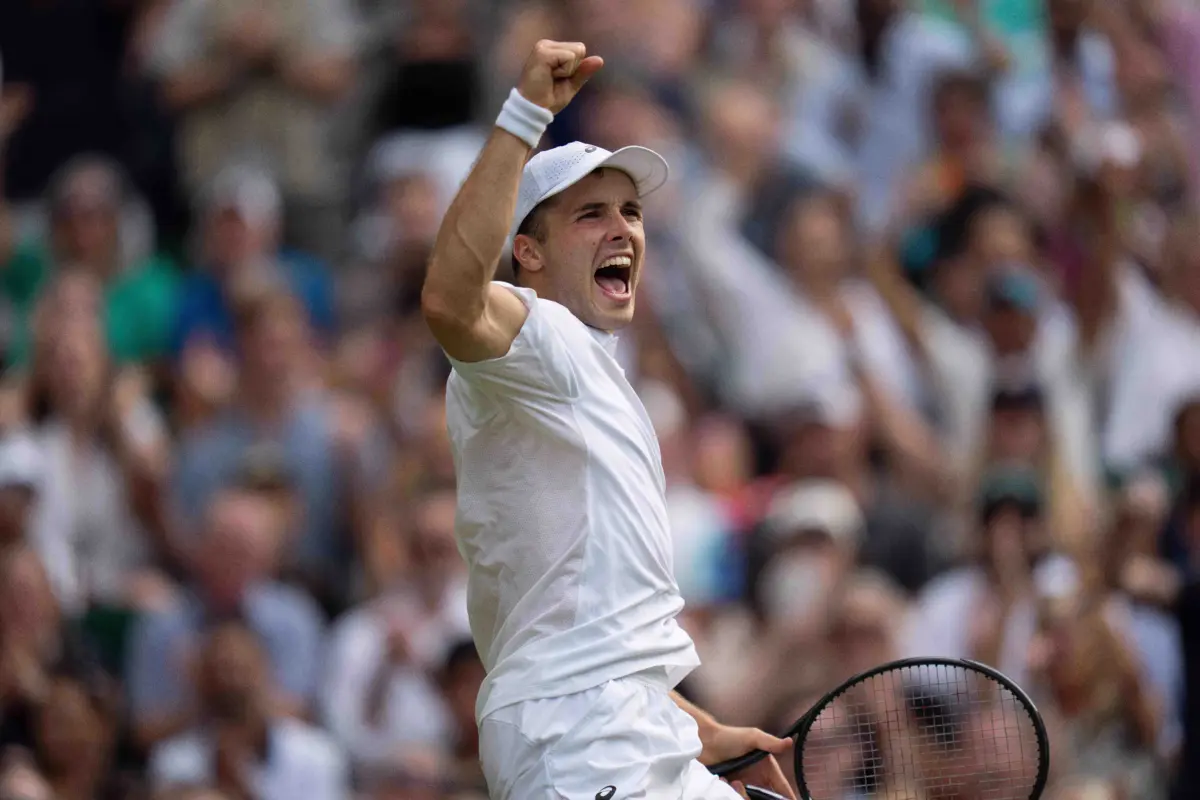

Arthur Fery is a Wimbledon semifinalist. The 23-year-old wild card beat 9th-seeded Flavio Cobolli 6-4 7-6(4) 6-0 on Centre Court on Wednesday, completing a run that started with two consecutive five-set comebacks in the first week and has now put him one match away from the Wimbledon final. He is the fifth British man to reach the semifinals at the All-England Club in the Open Era, joining Andy Murray, Tim Henman, Roger Taylor, and Cameron Norrie, and the first unseeded British player, man or woman, ever to do it. He will play second seed and Roland Garros champion Alexander Zverev on Friday.
Ranked 114th in the world, Fery is only the third player outside the Top 100 to reach a Wimbledon semifinal in the last 40 years, alongside Vladimir Voltchkov in 2000 and Goran Ivanisevic, who was ranked 125th when he won the title in 2001. He entered the tournament with a 2-4 career Grand Slam record outside SW19 and just six Tour-level wins to his name. He has now played 25 sets at this Wimbledon alone, more than he had played across his entire Grand Slam career before the fortnight began.
The path here has been as improbable as the ranking suggests. Fery opened his run with a 4-hour, 18-minute, five-set win over Zizou Bergs, then came back from two sets to one and a break down twice more to beat Grigor Dimitrov. Against Cobolli in the quarterfinal, he beat him a second time this year. On Wednesday there was no need for another comeback: he broke serve in the tenth game to take the first set, survived an early break deficit in the second to force and win a tiebreak, and then closed it out with a 6-0 third set in front of a Centre Court crowd that gave him a standing ovation after set one alone.
“That last game, I felt emotions that I hadn’t experienced before in my life,” Fery said afterward.
He is a former two-time All-American at Stanford who grew up about a mile from the All-England Club, and the story of this fortnight has, fittingly, been a homecoming. He is now the last remaining British player, man or woman, left in the singles draws.
Where British Tennis Has Come From
In 2006, there were eight British players in the Top 300. In 2016, there were seven. Today there are 18. That trajectory is the context behind everything Fery has done this fortnight, and understanding it requires going back further than most people’s attention span for British tennis extends.
The sport in Britain spent the better part of a century between Fred Perry’s last Grand Slam title in 1936 and Andy Murray’s first in 2012 in a state of persistent underachievement. Tim Henman reached four Wimbledon semifinals across eight consecutive appearances between 1996 and 2004 and never converted them into a final. Greg Rusedski reached the US Open final in 1997 and won nothing else of comparable significance. The story of British tennis for most of those 76 years was a country that could produce players good enough to be somewhat interesting and not quite good enough to win the things that mattered most.
Murray changed that. He won three Grand Slams, two Wimbledon titles, two Olympic Gold Medals, and spent 41 weeks as World No. 1. He also changed something structural about how the Lawn Tennis Association invested in young players and how the British public related to the sport. The crowds that packed into courts to watch Murray created a commercial environment that supported junior development programmes, improved coaching pathways, and gave young British players access to training resources that simply did not exist at the same level before his era. The 18 Brits in the top 300 today are not an accident. They are, in part, a downstream consequence of what Murray made possible.
Murray himself is now coaching Jack Draper through the grass-court season, which is the most visible example of what his presence continues to give British tennis even after his playing career has ended. The knowledge transfer, the credibility he brings to the coaching box, and the access to his experience that a player like Draper receives is the kind of resource that most tennis nations cannot manufacture. Britain has it because Murray decided to stay involved, and British tennis is richer for it.
The Honest Take
None of this is to suggest that British tennis has arrived at a destination. 18 players in the Top 300 is progress but hardly impressive. Spain has produced Rafael Nadal, Carlos Alcaraz, and a generation of clay-court specialists so deep the ATP ranking list reads like a geography of the Iberian peninsula. France developed Jo-Wilfried Tsonga, Richard Gasquet, Gael Monfils, and Gilles Simon simultaneously, a golden generation that briefly made the French the most formidable tennis nation in the world outside of the obvious individual outliers. Italy is in the process of taking over tennis completely and British tennis is not yet competing at that level. It is competitive in a way that it has not been for decades. That is the distinction, and it matters.
What Fery has done at this Wimbledon is turn the proof of concept into something undeniable. He grew up near the All-England Club, went to Stanford, developed his game on American college courts, and has produced the most-watched British tennis performance since Murray’s 2013 Wimbledon final, only now it comes with a semifinal attached. He has done it as a wild card, against three seeded opponents in a row, through the mental fortitude in tiebreaks and final sets that cannot be coached in a week.
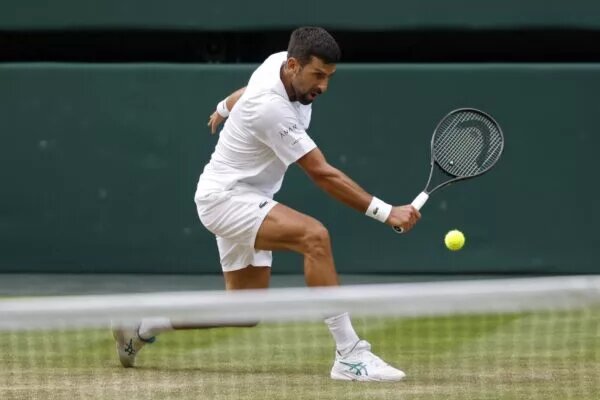
Zverev will be the sternest test yet. The German is the reigning Roland Garros champion and beat sixth seed Taylor Fritz in straight sets to reach this semifinal, showing a level of consistency that none of Fery’s previous four opponents quite offered across a whole match. Fery has never faced Zverev. “I guess it’s going to be a first time and we will figure it out as we go,” Fery said when asked about it. “I’m just going to keep going. I’ve been doing a great job over the past 10 days. I’m just going to do the same thing and see where that takes me.”
The Bigger Picture
British tennis trending upward is a process. The numbers, from seven players in the Top 300 in 2016 to 18 today, represent a decade of unglamorous work in development academies, wild card programs, and coaching pipelines that the public rarely sees and rarely celebrates until a 23-year-old is booking a Wimbledon semifinal a few miles from where he grew up.
Murray deserves credit for what he built at the top and for what his success inspired below it. The LTA deserves credit for investing more intelligently in the decade after his titles than in the decades before them. And Arthur Fery deserves credit for doing something that cannot be explained by funding or infrastructure alone: showing up at his home Grand Slam, coming back from impossible positions, beating three seeds in a row, and playing tennis that makes the Wimbledon fortnight feel like it belongs to everyone watching it.
British tennis is not Spain. It is not France or Italy. It is 18 players in the Top 300, and one of them two wins from a Wimbledon title. A wild card who refused to lie down on a court a few miles from where he grew up, and who now has Alexander Zverev standing between him and a final. Given where British tennis has been, that is more than enough reason to believe in where it is going.
Main Photo Credit: Susan Mullane-Imagn Images