
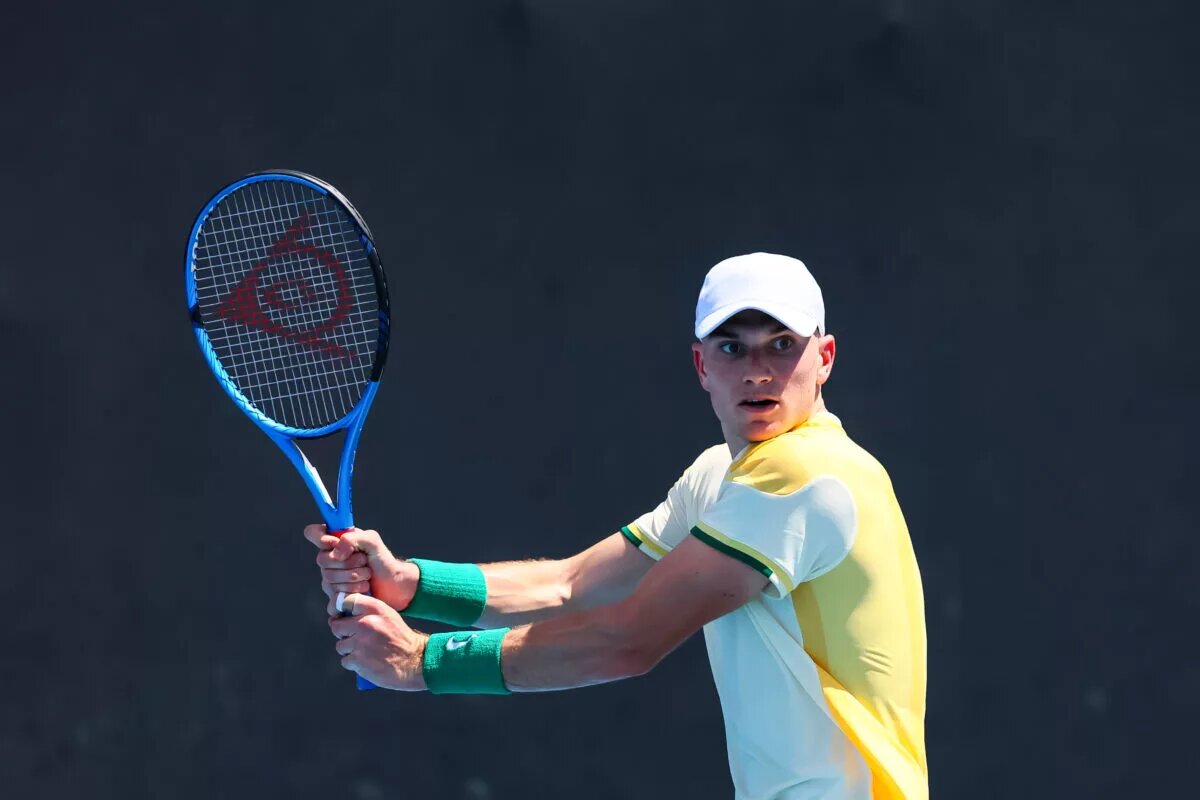

Jack Draper has played nine matches across four tournaments and a Davis Cup tie in 2026. He has not been on a tour court since he retired during his opening round match at the Barcelona Open in April with an aggravated tendon in his right knee, subsequently withdrawing from Madrid, Rome, Roland Garros and Queen’s Club. He is ranked 113th in the world after previously reaching a career high of fourth. Eastbourne represents his first competitive step back into ATP action and will serve as an initial test of his physical readiness for Wimbledon, which begins on June 29.
That is the context. It is not a small amount of context to carry into a Grand Slam on your home surface with the entire country watching.
Draper is one of the most talented British players in a generation, and that talent is not in question here. What is however is whether a player who has managed eleven competitive matches across the last twelve months, across two separate injury absences covering both his arm and his knee, can arrive at the All England Club on the back of a week at Eastbourne and do anything meaningful. The honest answer is that the conditions for him to do so are not good. The caveat is that Jack Draper on grass has never needed ideal conditions to be dangerous.
What can Jack Draper do at Wimbledon?
What He Has Going For Him?
The grass-court case for Jack Draper does not require much construction. He is a left-handed serve-and-groundstroke player whose ball travels awkwardly off the surface, whose left-handed serve pulls opponents wide on the deuce side in ways that no right-hander can replicate, and who has shown, when healthy, that he belongs in the conversation around the best grass-court players on tour.
He reached the semifinals at Queen’s in 2025. He beat Djokovic at Indian Wells earlier this year, which was not a grass match but confirmed that the level, when his body allows it, is still elite. Andy Murray, now part of his coaching setup for the grass-court season, has said he has been training well and has taken Murray by surprise with his level, describing him as bloody good.
That is worth something. Murray has won Wimbledon twice and coached at the highest level. If he is surprised by how well Draper is hitting the ball in practice, that is not something to dismiss. The game is there. It has always been there. The body is the variable and it has been the variable for the better part of two years.
There is also something to be said for the specific freedom that comes with no ranking and no expectation. Jack Draper walks into Wimbledon with nothing to defend, nothing to lose, and a surface that has historically been his best. That combination has produced results for players in worse form than him.
What Is Working Against Him?
The injury record is the primary concern and it would be dishonest to minimise it. For Draper it has never been solely about the injuries but the overall grind of tennis that takes a toll on the body. That framing is important. So the issue is not whether Jack Draper can win a match at Eastbourne. He can and he will. It is whether his body can sustain the load of seven matches over a fortnight at a Grand Slam having played so little competitive tennis in the preceding twelve months.
The knee is a particular concern because it is not the first major problem he has dealt with. In 2025 alone he came back from many months on the sidelines due to a bone stress injury in his left arm, only to pick up a knee injury in Barcelona that ended his clay season before it started. Two separate physical collapses, on different parts of the body, is a pattern that demands acknowledgement. It can’t be simply described as bad luck. It is a body that is struggling to tolerate the demands being placed on it, and no coaching appointment or practice session changes that underlying reality.
Eastbourne is now more important than it might otherwise have been. It is the event that should show how close he is to match sharpness before Wimbledon. Arriving at SW19 having won matches there and felt the competitive rhythm of grass will change his outlook considerably. Arriving having lost in the first round after two hours of tennis will raise the kind of questions that no amount of positive press can answer.
What Is Realistic?
A first-week exit is the most likely outcome, and stating that is not pessimism. Draper has played nine matches all year. The first-round opponent he receives will be someone who has been competing through Queen’s or Halle, sharper, more fluent, and in better physical condition than a player who has been training rather than competing for two months. That gap matters more than the talent gap in the early rounds of a Grand Slam.
If Draper gets through the first round, the second becomes genuinely interesting. If he gets through two, the draw and the surface start to work in his favour in ways they would not on hard or clay. Three wins at Wimbledon for Draper in his current state would represent a very good return and would shift the conversation around his season meaningfully. A quarterfinal would be remarkable.
What Wimbledon needs to be for Jack Draper is a successful physical test, not a deep run. If he completes matches, stays healthy across a week of competition, and shows that the knee can tolerate what elite grass-court tennis asks of it, that is the win. Everything beyond that is a bonus. The temptation, on home soil with Murray in the box and a crowd desperate to believe, is to frame the occasion as something larger. It should not be. Not yet. Right now the only question that matters is whether his body will let him use it.
Main photo credit: Mike Frey-USA TODAY Sports