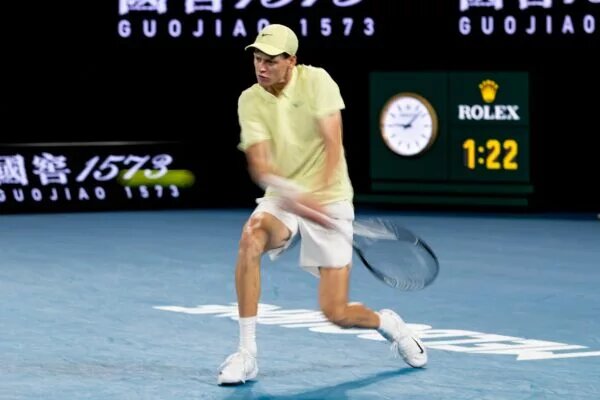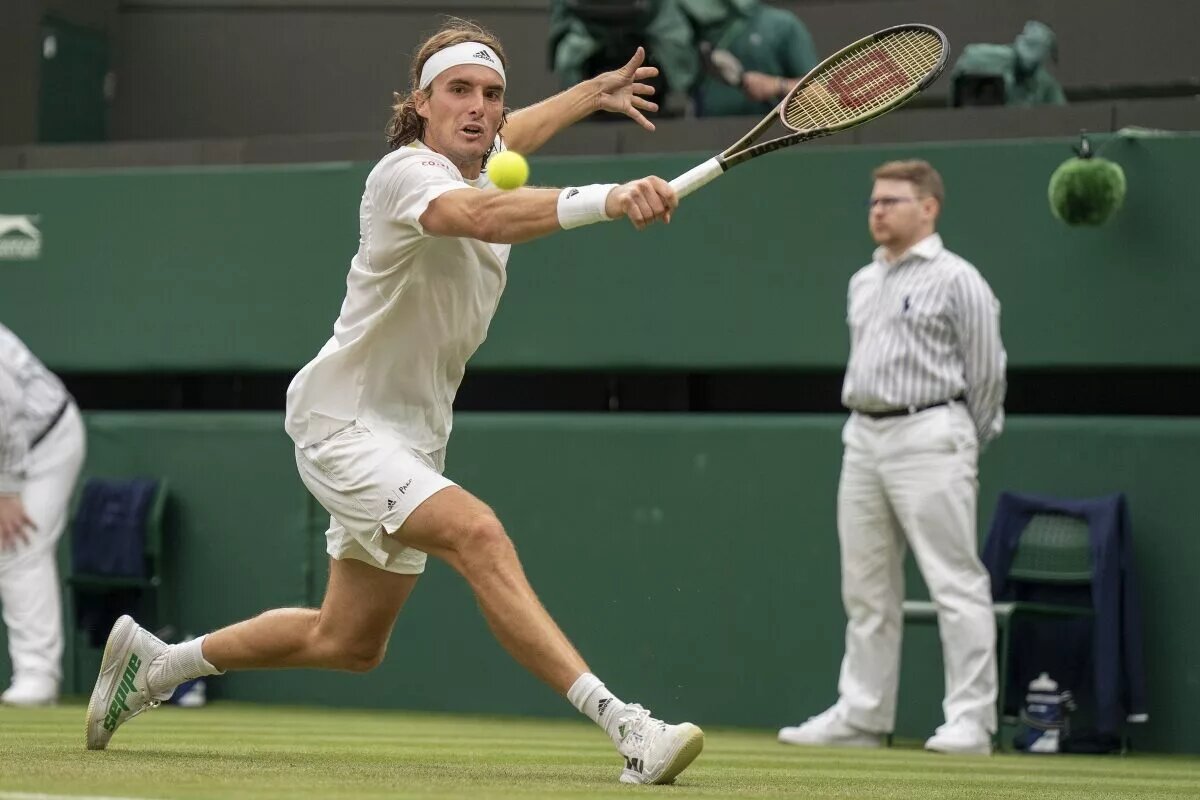

The world No. 7 beats the world No. 81 in straight sets in the second round of Wimbledon. Not much of a storyline. Until you look at the names behind the rankings — and the very different trajectories their careers have taken since their most iconic clash — Novak Djokovic continues to shine in the twilight of his career. At the same time, Stefanos Tsitsipas finds himself at a crossroads.
Why Tsitsipas Should Be Concerned After Wimbledon Loss
It is June 13th, 2021, 3:55 p.m. The Final Sunday on the clay in Paris. 22-year-old world No. 5 Stefanos Tsitsipas has just taken a two-sets-to-love lead over world No. 1 Novak Djokovic and is one set away from claiming his first Grand Slam title and writing Greek tennis history. But the Serbian had other ideas, storming back to win in five sets and lift his 19th Grand Slam trophy.
Fast forward five years. The two meet again on the Grand Slam stage. Wimbledon. Centre Court. Only this time, 7th-seeded Djokovic faces unseeded Tsitsipas in the second round. And he routs him. The seven-time Wimbledon champion dispatched the Greek 6-3, 6-4, 6-2 in just over an hour and a half, a scoreline that could hardly be more one-sided on a grass court.
Djokovic Looked Incredibly Comfortable
What should be more worrying for Tsitsipas than the scoreline was Djokovic’s demeanour throughout the match. The 39-year-old looked as comfortable and relaxed as he has ever been on a tennis court, chuckling and even making jokes with a ball girl during a set break.
An anomaly for a player at times associated with emotional outbursts, racket smashes, and vigorous exchanges with his box in tense moments. Here, he looked as if he were sipping cocktails while watching the sun set over the Athenian Riviera. A stark contrast to his more strained opening-round win against Yibing Wu, an opponent with a résumé far less imposing than Tsitsipas’.
The reason was simple: at no point – barring injury – did it feel as if it was possible for Djokovic to lose this match. And he seemed fully aware of that. He swung freely, tried some things, and whenever it got tight (which was basically never the case), simply served or directed play to Tsitsipas’ backhand, knowing that he would come out on top of the vast majority of those exchanges.
Tsitsipas’ Decline Is Becoming Harder to Ignore
So what does this mean for Tsitsipas? His backhand vulnerabilities are no secret. Nor is his head-to-head record against Djokovic, now standing at 12 consecutive defeats. Combine that with a win-loss record hovering just above 50 percent for the season, nobody expected Tsitsipas to win this match.
Still, the ease with which Djokovic dispatched him should prompt serious reflection. This is Stefanos Tsitsipas, after all — a player who has won more than most ever will, a former world No. 3 with 12 titles to his name, including three Masters 1000 crowns and the Nitto ATP Finals. A two-time Grand Slam finalist (also 2023 Australian Open), who as recently as 2021 declared: “Myself, Medvedev and Zverev can become the next Big 3.”
And yes, also Daniil Medvedev and Alexander Zverev have had their own setbacks over the past five years—be it injuries, off-court issues, or inconsistent form. But they have also found landmark success. Both have since crowned themselves Grand Slam champions, Medvedev at the US Open in 2021, Zverev as recently as Roland Garros just a few weeks ago. Medvedev spent 16 weeks as world No. 1; Zverev won an Olympic gold medal. Both have consistently remained (or returned) inside the top 10.
Tsitsipas, by contrast, has not progressed beyond the second round of a Grand Slam in his last nine appearances since the 2024 French Open and currently sits at No. 87 in the world rankings, trending downwards.
Can Tsitsipas Turn His Career Around?
So where can he go from here? He has recently — for what feels like the 20th time — split with his father Apostolos as coach and appointed Thomas Perrin of the Mouratoglou Academy as his new head coach. He has tried similar resets before, working with high-profile figures such as Mark Philippoussis and Goran Ivanišević, with mixed results.
The question is what a new coach can realistically change in his game, and how his clear weaknesses can be masked. Yes, grass has never been his strongest surface. But players such as Roger Federer, Grigor Dimitrov, and Stan Wawrinka have shown that a one-handed backhand can succeed on this surface. The deeper concern is that Tsitsipas’ limitations are now being exposed even on his preferred surface, clay.
The future is uncertain for Stefanos Tsitsipas. At close to 28 years old, Tsitsipas risks slipping outside the top 100 for the first time since breaking into that elite group in 2017. He now finds himself at a crossroads in his career. He must make the right adjustments to reverse his current career trajectory and become something even remotely close to what he himself predicted five years ago: part of the next Big 3.
So that, at the very least, the next time they meet, Novak Djokovic feels like he felt for most of their match on the 13th of June 2021: uncomfortable.
Main Photo Credit: Susan Mullane – USA TODAY Sports