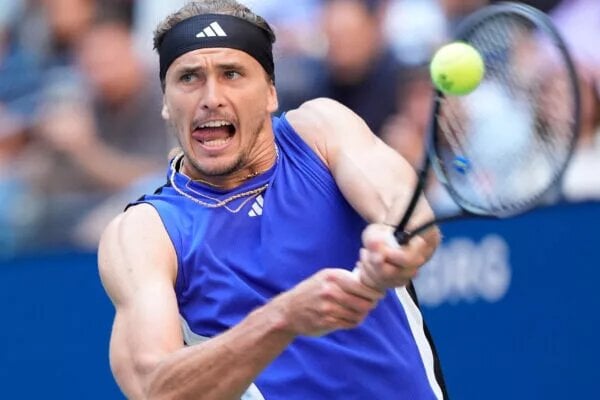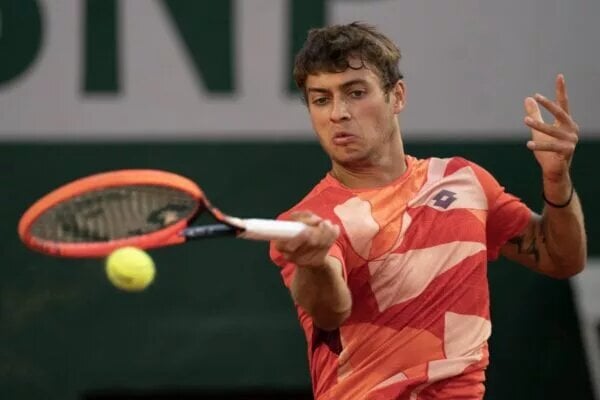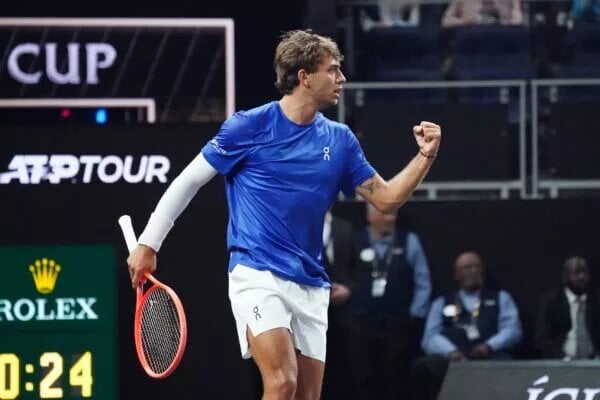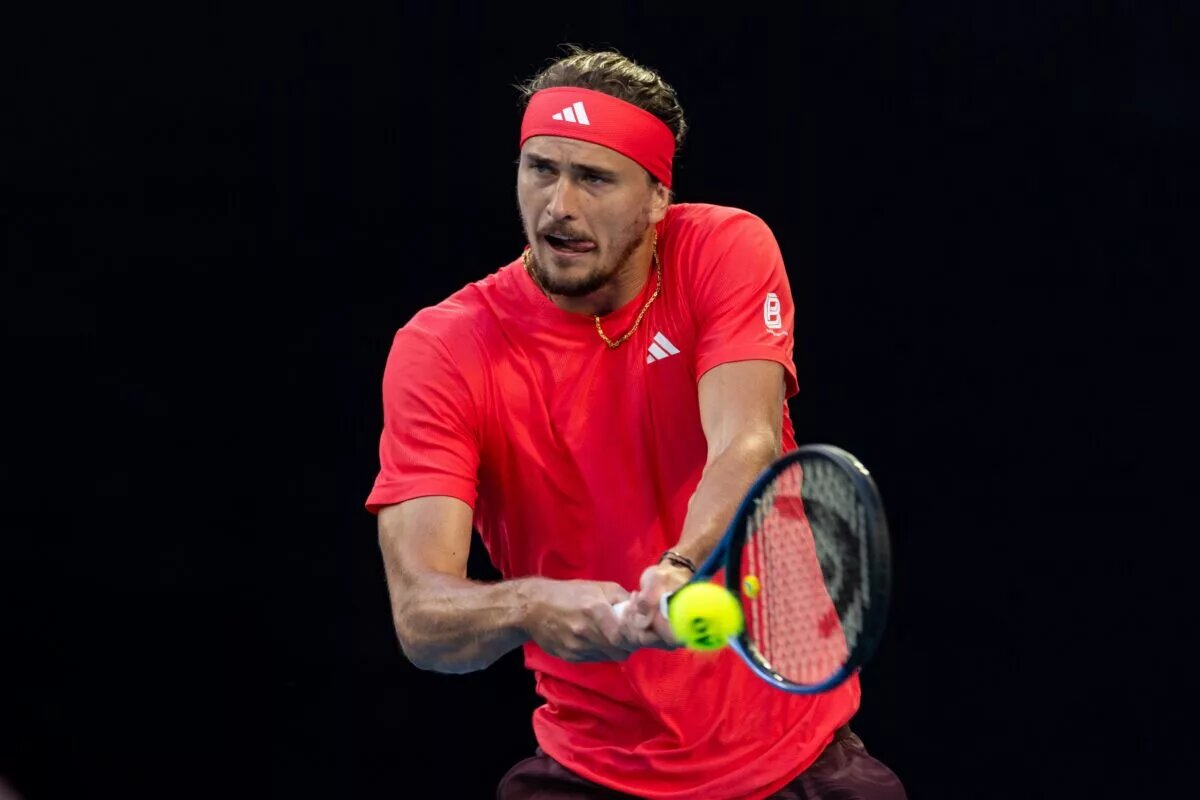

The French Open will crown a first-time Grand Slam champion on Sunday, and it will do so in a final that very few people predicted. Alexander Zverev advanced to the final after defeating rising Czech star Jakub Mensik 7-5 6-2 3-6 6-3 in the semifinals, his fourth career Grand Slam final and second appearance in the Roland Garros championship match
His opponent will be Italy’s Flavio Cobolli, who reached his first Grand Slam final after Matteo Arnaldi withdrew due to illness from their semifinal, having previously knocked out fourth seed Felix Auger-Aliassime in the quarterfinals 4-6 6-4 6-4 6-4. One player has been here before and failed. The other has never been here at all.
Between them, they will produce a first-time French Open champion on Sunday afternoon.
French Open Chaos
To understand how we arrived at this final, it is worth cataloguing everything that happened so far because a lot of things happened.
Carlos Alcaraz, the two-time defending champion, did not even arrive. A wrist injury classified as an overuse condition kept the most marketable player in the game away from the tournament he had owned for the past two years. Then Jannik Sinner, the world number one and the man who had beaten Zverev in three sets in the 2025 Australian Open final, was eliminated in the second round by Juan Manuel Cerundolo, one of the most stunning early exits a number one seed has ever produced at a Grand Slam, having led 5-1 in the third set. Then Novak Djokovic, the 24-time Grand Slam champion, lost in the third round to 19-year-old Joao Fonseca. By the time the second week arrived, not a single former champion remained in the draw, for the first time in the Open Era.
And the chaos did not stop with the big names. Matteo Berrettini, who had been arguably the most compelling story of the first week, back at the French Open for the first time since 2021, playing superb tennis and reaching the quarterfinals, retired mid-match against Arnaldi with a hip injury having led 3-0 in the first set. Then Arnaldi himself, having reached the final four by virtue of that match and a gruelling five-hour win over Frances Tiafoe, withdrew from his semifinal against Cobolli with a viral illness, handing the Italian a walkover into Sunday’s final. The road to the French Open final opened dramatically for both men, but for Cobolli in particular, the sequence of events that put him on Philippe-Chatrier on Sunday belongs somewhere between fortune and farce.
None of which diminishes what either of them has done to get here. Zverev has been the class of the draw throughout, calm, dominant, and focused in a way that suggests a player who knows exactly what this moment means. Cobolli has earned every point he has played, and the walkover does not erase the quality of his wins against seeded opponents in the rounds before it. They are both here. They both deserve to be. The French Open does not care how you get there.
Redemption for Zverev
The word that follows Alexander Zverev into every Grand Slam final is the same one, and it is not a kind one: again. He has been here three times. He has lost all three. The most painful was the first, the 2020 US Open final against Dominic Thiem, where he led by two sets and could not close it out, eventually losing in a fifth-set tiebreak as Thiem became the first man in 71 years to win a Grand Slam final from two sets down. Then came the 2024 French Open final against Alcaraz, where Zverev led 2-1 in sets and again could not hold on. Then the 2025 Australian Open final, where Sinner beat him in straight sets without allowing him to get comfortable.
He is now just the seventh man in the Open Era to lose his first three Grand Slam finals, a list that includes Andre Agassi and Ivan Lendl, both of whom eventually won their first major when the chance came around again. The French Open, in 2026, is that chance.
He is 29 years old. The window, while not closed, is not getting wider. “I feel like the draw opened up a lot on the top half,” Zverev said. He is right, but the observation cuts both ways, it means the opportunity is real, and it also means the pressure to take it is enormous. He is the clear favourite. He is on his best surface. His three previous finals losses were all against the best players of his generation at the top of their games. Cobolli, ranked 14th in the world, is a genuinely talented player but a level below the men who beat Zverev in those other three finals.
“That’s in the past,” Zverev said of his Thiem loss. “I don’t try to think too much about it before Sunday.” Whether he can actually keep it in the past when he is serving for the French Open title in the third set on Sunday afternoon is the only question that matters. The talent has never been in doubt. The nerve, at the decisive moment, has been the variable.
What It Would Mean for Cobolli
Flavio Cobolli was born on 6 May 2002 in Florence. He is 24 years old. He is, by almost any realistic projection, ahead of schedule. He picked up his first two ATP titles in Bucharest and Hamburg in 2025, reached his first Grand Slam quarterfinal at Wimbledon that same year where he pushed Djokovic to four sets, and was the hero of Italy’s Davis Cup title, saving seven match points in the semifinals before clinching the tie in a deciding third set.
The French Open final is a different proposition from anything he has experienced before, and the honest assessment is that Cobolli should not be here yet. His ranking, his experience, his Grand Slam results prior to this fortnight, none of it pointed to a man ready to contest a major final in 2026. But tennis, as this tournament has demonstrated comprehensively, does not care about projections.
The head-to-head between the two players stands at 3-1 in Zverev’s favour, though Cobolli beat the German 6-3 6-3 in Munich earlier this season, his first top-ten win. That result matters because it proves Cobolli can play at that level and execute against Zverev specifically. Playing an emotional match after the death of his friend’s son, Cobolli played some of the best tennis of his career that day, regularly notching winners and landing seven aces in two sets. He knows he can beat this opponent. He has done it on clay this year
The beauty of Cobolli’s position is that the pressure flows almost entirely in one direction, and it is not towards him. He is the Italian 14th seed who was handed a semifinal walkover. Nobody expected him here. Nobody expects him to win. If he loses, it was a wonderful, unexpected run. If he wins, if he hits his forehand cleanly, plays without fear, and catches Zverev at one of his vulnerable moments, he will have pulled off one of the more surprising Grand Slam upsets in recent memory, and the French Open title will be his.
Verdict
Sunday’s final is, on paper, Zverev’s to win and Cobolli’s to steal. But the French Open has spent two weeks making a mockery of paper. One of them lifts the Coupe des Mousquetaires at the end of the day, one of them does not, and the one who does will have earned it through two weeks of a tournament that kept handing out chaos and waiting to see who dealt with it best. Both of them are still standing.
That counts for more than the seedings suggested it would, and Sunday will be better for it.
Main Photo Credit: Mike Frey – Imagn Images