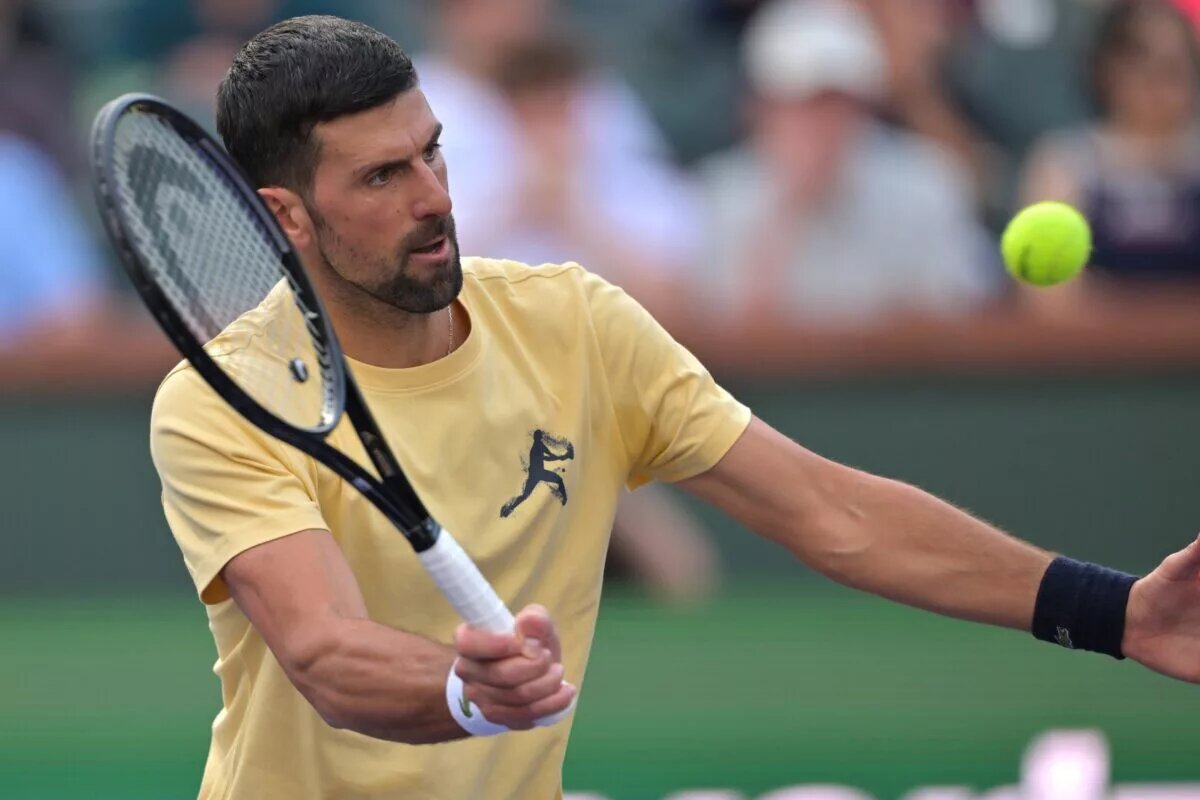

Tennis’ unwritten rules have been part of the sport almost as long as the sport itself, and on Wednesday on Philippe-Chatrier, one of them was broken in full view of a packed house, at the expense of arguably the greatest player in history. During the third-set tiebreak of his second-round match against Valentin Royer, Novak Djokovic found himself on the wrong end of a net cord at a critical moment. Royer won the point. And then, instead of offering the customary apology or the small acknowledging gesture that etiquette demands in that moment, the Frenchman pumped his fist and celebrated.
Djokovic, who did not take it quietly, turned toward him and pointed at him, clapped his racquet frame in applause and raised a deliberate thumbs up. The sarcasm was unmistakable, and so was the irritation behind it.
Djokovic won the match 6-3 6-2 6-7(7) 6-3. The point arguably did cost him the tiebreak, but the tiebreak did not cost him the match. Royed did eventually apologize to Djokovic following his celebration but the situation made us think whether all of this is really necessary.
Novak Djokovic and the Unwritten Rule
The code that governs how tennis players are expected to behave in these moments was never written down, because it was never supposed to need to be. You apologize for the net cord. You raise a hand when a ball catches the line and you weren’t sure. You don’t celebrate a double fault. You don’t linger over a big point when your opponent is injured. These conventions exist because tennis has always positioned itself as something apart from the grunt-and-grind of other professional sports. The handshake at the net. The “good shot.” The quiet nod. The idea that you can compete with ferociousness and still conduct yourself with a kind of dignity that the sport considers its inheritance.
Where does that come from? Partly from tennis’s origins in the lawns of country houses in 19th-century England, where sport was inseparable from social behavior and certain things simply were not done. Partly from decades of image management by the sport’s governing bodies, who understood that the televied product they were selling was as much about aesthetics and elegance as it was about the score. And partly from the players themselves, who have mostly upheld the code because it was the culture they inherited and, by and large, respected.
Royer broke it for a moment. Deliberately or not, he made a choice to celebrate a lucky point without acknowledgment, in a tiebreak, against a legend, on the biggest court in Paris. You can understand why Djokovic reacted. The transgression was real, even if the stakes were not.
Whether It Matters Is a Separate Question
Here is where it gets more complicated, and where this piece moves firmly into opinion: tennis’ unwritten rules are genuinely voluntary, and the sport is quietly in the middle of a generational negotiation about how sacred they actually are.
The counterargument to the apology convention is reasonable enough. A net cord is not a mistake by the player who benefits from it. It is not a double fault, an unforced error, or a shot that went in off the frame. It is the net, which belongs to both players equally, intervening at random. Why should a player apologize for something they did not do? The answer the tradition offers is that it is not really an apology for an act, it is an acknowledgment of good fortune, a gesture that says “I know that point did not fairly represent what we are doing here.” It is a social nicety, not a confession of wrongdoing.
Novak Djokovic himself, for all his perfectly earned indignation on Wednesday, is not the most straightforward standard-bearer for tennis’s gentlemanly code. He has done the thumbs up before, most memorably to ground staff at the 2024 French Open after a fall he considered preventable. He has pumped his fist and screamed on Philippe-Chatrier while opponents were struggling with injury, drawing significant boos from crowds who felt the celebration was excessive in those circumstances, while others defended him for simply trying to stay focused and compete. He has written political messages on courtside cameras in full view of broadcasters. He has, at various points, been both the sport’s greatest representative and one of its more complicated ones.
None of this means he was wrong to be annoyed on Wednesday. He was right. The convention exists for a reason. But it is worth noting that the person most visibly upset by a breach of the unwritten rules is someone who has himself, on other days, found them negotiable.
Conclusion
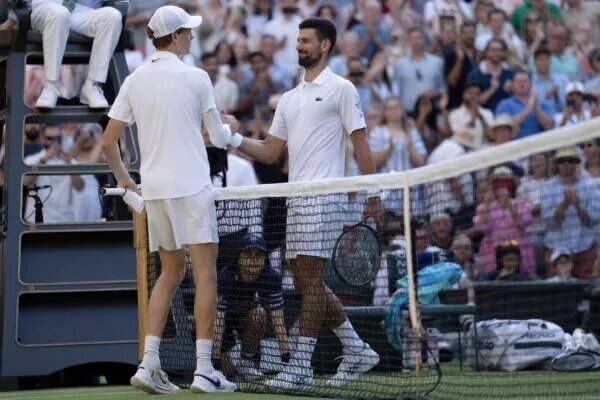
The broader truth is that tennis’ unwritten rules survive because most players, most of the time, choose to honor them. When they do not, the moment tends to be noticed and discussed, which is itself a form of enforcement. Royer’s fist pump will not follow him through the tournament. The crowd moved on. Djokovic moved on, he won the next set 6-3, and shook hands at the net without incident.
In the end, that is probably the right place to land on all of this. The unwritten code matters enough that its violation feels like something. It does not matter enough that its violation changes anything. Tennis carries it forward because the sport genuinely believes, in some institutional way, that how you win is part of what winning means. Whether every 24-year-old wild card on Court Chatrier shares that belief is another question entirely and one the sport will keep answering, one net cord at a time.
Main Photo Credit: Jayne Kamin-Oncea-Imagn Images