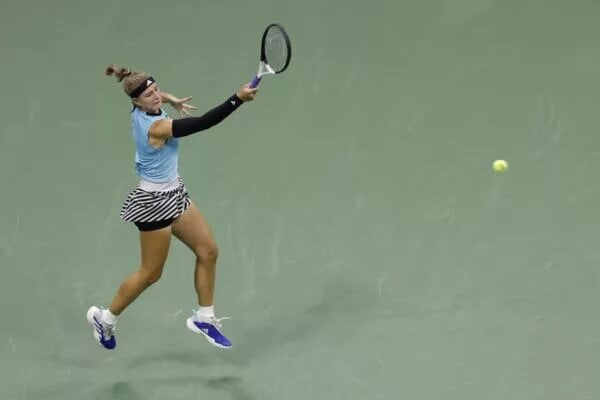



There is a pattern forming around Coco Gauff’s matches, and it is becoming difficult to ignore. It is not about her tennis, which remains among the most compelling on the WTA Tour. It is not about her character, which by all accounts is exemplary. It is about the people sitting in her box, and the increasingly persistent complaint from opponents that their behaviour during play crosses a line that courtesy demands should not be crossed.
Two complaints in recent months, from two different players, at two different tournaments, with almost identical grievances, is not a coincidence. So it deserves a clear-eyed look.
What Actually Happened
The first incident came at the China Open in Beijing in September 2025. Belinda Bencic, leading by a set and competing well, grew visibly agitated with noise coming from Gauff’s coaching box during her service games. With Bencic serving at break point in the second set, she snapped at Gauff’s box telling them to “shut up,” arguing that they should not be cheering before she had started her serve. When Gauff attempted to interject, Bencic turned on her directly. “No one’s talking to you. Your team is chanting. I’m too old for these mind games,” she said, loud enough to be picked up on broadcast microphones.
Gauff’s response was measured and fair. She said afterward that she did not hear what Bencic said at the time, and that she told Bencic to be respectful because she felt her team deserved that. She won the match 4-6, 7-6, 6-2 and was gracious about Bencic in her press conference. She had done nothing wrong on court herself.
Then, seven months later in Madrid, it happened again. During Gauff’s third-round match against Sorana Cirstea, Cirstea brought the same complaint to the umpire. She was clear about it. “Her coach is screaming from that end, ‘Come on, aggressive, let’s go, do this all game long, come on, forehand, backhand, first serve.’ This is coaching. Because I’m there and they are bothering me because they are screaming in my ear,” Cirstea said. The umpire replied that she could not hear any coaching, which is either a genuine assessment or an indication of just how normalized this behavior has become. Cirstea, as she walked away, simply shrugged and said: “It’s sportsmanship.”
Gauff won that match too, 4-6 7-5 6-1. She had been sick. Her team had been vocal. And another opponent had left the court feeling hard done by.
The Broader Question Nobody Wants to Ask
Here is the awkward part. Nothing Gauff’s team has done appears to violate any specific WTA rule as it is currently written and enforced. The umpire in Madrid heard nothing that warranted intervention. Coaching boxes cheer. Players get fired up. That is part of professional sport and always has been.
But rules and sportsmanship are not the same thing.
What Bencic and Cirstea described is not thunderous applause after a winner. It was targeted, tactical noise timed around an opponent’s service motion. Bencic was specific: it was happening before her serve, not after Gauff’s shots. Cirstea was specific: it was a running stream of instructional encouragement, delivered loudly enough that she could hear it on the baseline. That is different in nature from a box erupting when their player hits a winner. It is, at minimum, a gray area, and gray areas in sport tend to expand unless someone draws a line.
The uncomfortable truth for Gauff, who is a genuinely likeable person and one of the sport’s most important figures, is that she cannot fully control what her team does from the stands, and she should not be held personally responsible for their behavior. What she can do, and what the evidence suggests has not yet happened, is ask them to be more mindful. She is the one who has to face these opponents at the net, share locker rooms with them, travel the same tour for years to come. The goodwill of the locker room matters, and two public complaints from two different players within one season is a thing that erodes it over time.
There is also a broader question for the WTA, which has been quietly expanding the scope of permitted on-court coaching in recent seasons. Since on-court coaching was formally expanded, the our has effectively invited more noise, more interaction, more box involvement into the fabric of matches, and it has not fully reckoned with what that means for the player on the other side of the net who is trying to hold their serve with someone screaming tactical instructions two metres from their ear. Some might say it’s a problem–but here is the thing: it’s not a Gauff problem; it’s a structural one.
Worthy Of A Conversation
None of this is to say that Gauff or her team are cheats. They are not. None of this suggests she has won matches through gamesmanship rather than talent. She has not. She is a Grand Slam champion who wins because she is exceptionally good at tennis. But sport does not only ask whether something is technically legal. It also asks whether it is right. And when two opponents, independently, describe the same experience and use the same word, sportsmanship, the least this situation deserves is an honest conversation.
Coco Gauff is better than this issue. That is precisely why it is worth raising. In the end, does it matter?
Main Photo Credit: Susan Mullane-USA TODAY Sports