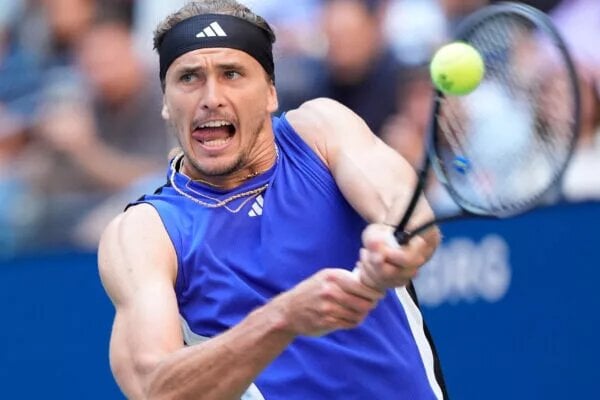

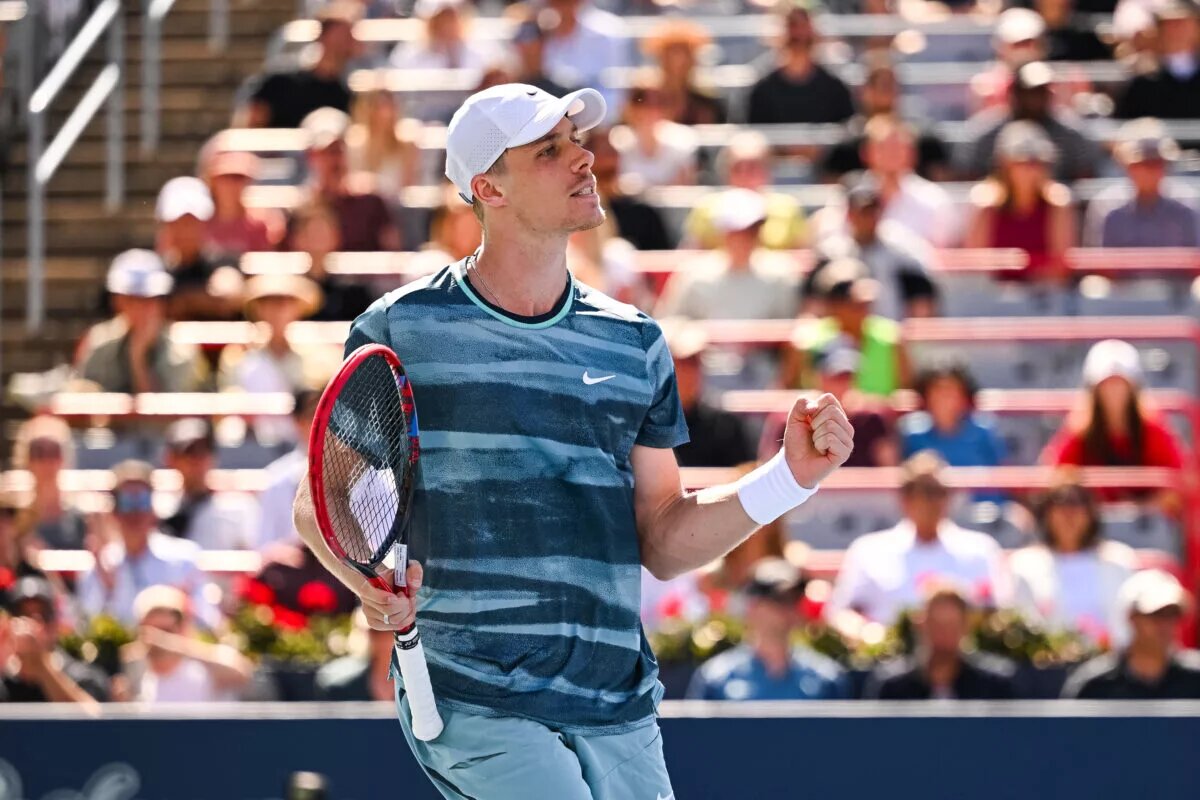

Denis Shapovalov progressed to the second round of the BNP Paribas Open with a narrow three-set victory against Stefanos Tsitsipas. It was a typical Jekyll-and-Hyde performance from the Canadian. Still, ultimately, he produced the better tennis when it mattered and now faces Tomás Martín Etcheverry in the next round. How far can he advance?
Shapovalov Defeats Tsitsipas in Indian Wells
Similar Stories
There was a certain sporting sadness to this clash in many ways, as two struggling players with an unlikely symmetry battled it out at the non-seeded stage of the Masters event.
Shapovalov made his name as a youngster with a famous home-crowd win against Rafael Nadal at the National Bank’s Open. His exuberant personality and game style radiated the signs of a future superstar. Instead, the moments of brilliance have flickered, and it’s been a career full of frustration compared to expectations.
Similarly, Tsitsipas announced himself with a comeback win over none other than Roger Federer at the 2019 Australian Open (although he had shown great signs of promise beforehand). In comparison, he has enjoyed an illustrious career for most, reaching as high as number two in the world, reaching two Grand Slam finals, winning two Masters events, and, the small matter of an ATP Finals.
Yet, the what-if factor remains for both to varying degrees. For Shapovalov’s immense talent, the fact that he has never truly been a factor at the top of the game remains a disappointment. Tsitsipas’s demise in recent seasons, at a time when he should be in his prime, has been a headscratcher. Nevertheless, the two own somewhat of a “has-been” label, which shouldn’t match their ages of 26 and 27.
A Narrow Win For Shapovalov
Either way, both took to the court in the here and now, looking to build some form. Shapovalov started better, earning an early break courtesy of an excellent backhand drop volley on the stretch and an even better angled passing shot on the same wing. In a comfortable first set that he won 6-2, the Canadian was showing off the weaponry that can make him so dangerous at his best. Moreover, his serving was superior, with 85% of his first serves and a 82% winning rate, compared to Tsitsipas’s 48% and 64%.
Yet, as we have seen so often throughout Shapovalov’s career, he can very rarely maintain the hotline. In the second set, this form dropped considerably, with some wayward backhands and loose unforced errors gifting the Greek a break from which he never looked back. In fairness, Tsitsipas increased his intensity with his forehand’s potency.
It left the match in a third-set decider, with a great sense of jeopardy and entertainment present at the Indian Wells Tennis Garden. After a tight set, it came down to match point at 4-5 and 30-40. Tsitsipas had the upper hand throughout the point, dominating on the forehand, yet as Shapovalov pinned his return into the backhand side, the former Australian Open runner-up unconvincingly tried to take on the inside-out stance. It was too aggressive an attempt; he had to switch at the last minute, so he was ill-prepared. As Shapovalov seized the chance and came into the net, Tsitsipas was tentative in his passing shot and sliced into the net.
Positive Comments
Shapovalov rejoiced and said afterwards,
“Definitely never easy to draw a guy like Stefanos in the first round. I think for both of us it was a very tough matchup. I knew I had to come out and play my ‘A game’ and come out on fire. It’s never easy to do that in the first rounds, but luckily, I was able to do that today. Definitely very happy with the win.”
Consistency Necessary
It’s the obvious thing to say, but his victory against Tsitsipas revealed as much; he needs to find a way to solidify his game. His shot-making ability can mesmerise and be unplayable at its best. Yet, his lack of adaptation or plan B has made him all too easy to defeat. He often beats himself.
Next up, against the solid Argentine, it is the very type of match that could unravel his lack of base.
Main Photo Credit: David Kirouac – USA TODAY Sports