

The ATP Golden Swing has long served as a proving ground for South American tennis players—an annual stretch of clay-court tournaments that rewards patience, endurance, and tactical intelligence, along with the enthusiasm of South American crowds. Yet the future of this tradition is increasingly uncertain. With a Masters 1000 event set to arrive in Riyadh, Saudi Arabia, concerns are real that the Golden Swing could be reduced or eliminated on the calendar as part of “tournament buybacks”. If that happens, players like Tomás Martín Etcheverry stand to lose far more than ranking points.
Tomas Martin Etcheverry’s 2026 Golden Swing results illustrate these tournaments still matter
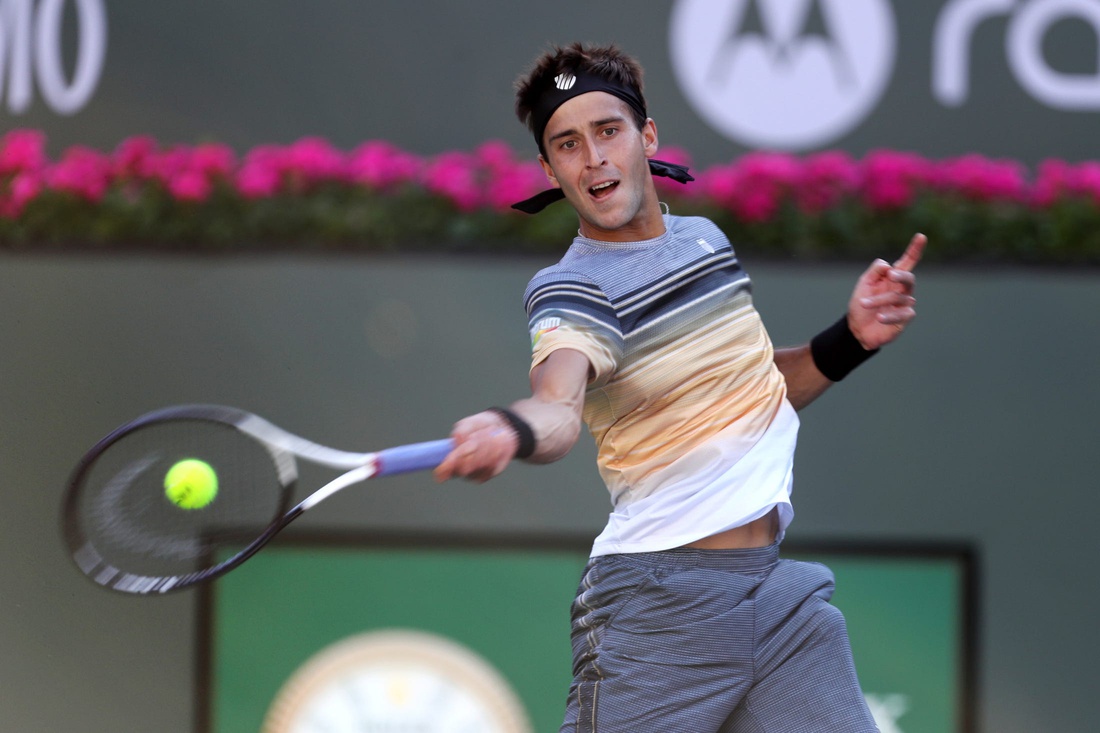
Coming into February ranked just outside the Top 50, the Argentine put together a gritty and impressive run across Buenos Aires and Rio de Janeiro, culminating in a breakthrough title on one of the most demanding surfaces in the sport. His performances weren’t built on easy draws or dominant wins—they were forged through long matches, pressure moments, and repeated comebacks that clay specialists learn only through opportunity.
At the ATP Buenos Aires, his home tournament, Etcheverry reached the semifinals, dispatching Alejandro Tabilo and fellow Argentines along the way before falling in straight sets to eventual champion Francisco Cerúndolo. The Buenos Aires final reinforced a familiar Golden Swing theme: local players feeding off home crowds, turning the tournament into both a ranking opportunity and a national showcase.
The following week in Rio de Janeiro, Etcheverry went even further—and deeper into physical and mental reserves. His title run at the ATP Rio Open included five consecutive three-set matches, four of them featuring tiebreaks. In the final, he recovered from a set and a break down to defeat Chile’s Alejandro Tabilo, showing the resilience that only comes from being highly motivated to win. It was Etcheverry’s first ATP title, and it came after having to win two matches on the same day. In the semifinal that was delayed by rain, Etcheverry battled past Vit Kopriva by winning consecutive tiebreaks. Etcheverry was previously 0-3 in ATP finals, all of which came on clay. He is now on track to be seeded for the French Open.
ATP Rio Helps Create Regional Depth
That Rio draw also underscored the regional depth these tournaments nurture. Peru’s Ignacio Buse, a dirtballer, reached the semifinals—a result that would be nearly impossible for a player from outside the elite to replicate at a hard-court Masters event. These moments are not anomalies; they are the ecosystem working as intended, allowing tennis to thrive beyond the marquee clashes like Jannik Sinner vs Carlos Alcaraz.
This week’s stop in Santiago, Chile another ATP 250, continues that tradition. With no dominant favorite, the ATP Santiago tournament once again offers space for a new winner to emerge—exactly the kind of opening Etcheverry and his peers rely on to consolidate rankings and confidence.
The Golden Swing’s history reinforces this pathway. Past champions in Santiago include Chileans Nicolás Jarry and Cristian Garín, while Viña del Mar famously produced a moment of global attention when Horacio Zeballos defeated Rafael Nadal. Brazil’s clay-court lineage runs through champions such as Thiago Seyboth Wild, João Fonseca, and Thomaz Bellucci, while Buenos Aires has crowned winners as varied as David Nalbandian, Juan Mónaco, and Facundo Díaz Acosta.
The former Brasil Open in Costa do Sauipe and Sao Paulo had winners like Federico Delbonis, Guido Pella, and Gustavo Kuerten.
In Rio de Janeiro, recent champions include Argentines Sebastián Báez, Diego Schwartzman, and Uruguay’s Pablo Cuevas—players who built their careers through precisely these types of opportunities.
If the Golden Swing is weakened or displaced by new commercial priorities, that ladder narrows dramatically.
South America’s Tennis Future
The consequences would extend beyond Argentina, Brazil, and Chile. High altitude Bogotá, Colombia and Quito, Ecuador once hosted ATP events before disappearing from the calendar. Ecuadorian tennis recently delivered a reminder of its latent potential by defeating Australia at home in the Davis Cup—proof that fans and players still hunger for moments on the global stage. Colombian tennis, meanwhile, has struggled to maintain momentum since the era of Alejandro Falla and Santiago Giraldo, in part due to the absence of top-level home tournaments.
The Riyadh Masters represents progress for the ATP Tour in one sense, investment, spectacle and more money for players. But if it comes at the expense of regional ecosystems, the sport risks narrowing its development funnel. Players like Etcheverry (26) are not produced overnight; they are shaped through years of matches like those he endured in Rio—three-hour battles, pressure tiebreaks, hostile crowds, and imperfect conditions. While the ATP Challenger Tour remains a great incubator, winning a half dozen Challenger Titles will still never match the joy of a single ATP title, even a 250.
Etcheverry’s Golden Swing wasn’t just a title run. It was a reminder of what these tournaments do best: create meaningful opportunity. Remove that, and South American tennis doesn’t just lose events—it loses identity, continuity, and a pathway for the next generation, as tennis continues to lose ground against sports like football, rugby and basketball that continue to be part of South America’s sporting landscape.
For now, Etcheverry is taking full advantage of his opportunities. The question is whether future players will still have the same chance.
Main Photo Credit: Taya Gray/The Desert Sun/USAToday Sports