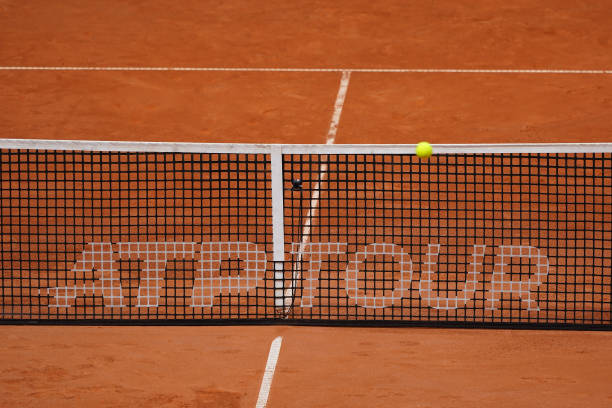

The ATP Tour’s announcement of a new Masters 1000 tournament in Saudi Arabia represents one of the most consequential moves in men’s tennis this decade. Scheduled to debut in 2028 under a non-mandatory, one-week format similar to Monte Carlo, the Saudi Masters would become the tenth ATP Masters 1000 event. Early indications suggest it will be held early in the year, offering record prize money and appearance fees for its 56-player draw — particularly the top 10 players.
Ben Rothenberg Reports The ATP Tour Will Cancel Five Tournaments
Veteran tennis journalist Ben Rothenberg reported that the ATP Tour’s deal with Saudi Arabia includes a “Saudi-funded buyback program” which could lead to the cancellation of up to five ATP 250 or 500 events. The reason is simple: calendar congestion. With only 52 weeks in a year and travel logistics to consider, there is limited space for new top-tier events as Masters 1000s and Grand Slams expand to two-week formats. Two-week Grand Slams combine for eight calendar weeks on tour, as is, and are not controlled by the ATP.
While the Challenger Tour can still host a growing number of events worldwide, the pool of top 50 players capable of selling tickets and drawing viewership remains limited. The result is a classic supply and demand problem — demand for elite tennis is rising, but opportunities for smaller tournaments are shrinking. Saudi Arabia’s financial power means someone else inevitably loses, and in this case, it may be smaller ATP events.
The Saudi tournament won’t begin until 2028, but it already signals further consolidation on the men’s tour. Even as Grand Slams and Masters events enjoy record attendance and broadcast audiences, the grassroots of the sport face pressure — from rising costs for junior players to competition from emerging sports like pickleball and padel.
The Two-Week Masters Conundrum
Even before the Saudi announcement, the ATP calendar had been tightening. The expansion of Masters 1000 events to two weeks, usually alongside the WTA, created larger draws and more commercial opportunity. Organizers can now sell “two weekends” of tennis, maximizing revenue when fans are off work.
However, players have voiced frustration about the extended schedule. Many feel that constant travel and competition leave little time for rest and recovery. Carlos Alcaraz admitted that the tight calendar makes it difficult to stay motivated and increases injury risk.
“It is difficult. Sometimes I didn’t feel motivated at all,” Alcaraz said. “The calendar’s so tight. A lot of tournaments… not as many days off as I want.”
The ATP argues that longer events improve financial stability and increase prize money, expanding main draws from 56 to 96 players. Yet both sides agree on one thing: the mainstream part of the tennis calendar is shrinking for everyone.
A Shrinking Tennis Calendar
Europe remains tennis’ epicenter, with stars like Jannik Sinner and Carlos Alcaraz leading the way, but North and South America’s presence has diminished. Earlier this year, I wrote that the US Open Series is shrinking, while the South American Golden Swing faces serious threats. Some clay events could be cancelled or forced to switch to hard courts, reducing diversity in surface and style.
Australia’s tennis scene appears secure thanks to its strong federation and the Australian Open’s prominence. Similarly, the United States and Canada remain well positioned with the US Open, the massive Indian Wells Masters that serves as the west coast outpost for the sport, and the Canadian Masters. But smaller events like the Dallas ATP 500 and Delray Beach 250 face an uncertain future. Even long-standing European events such as Rotterdam are rumored to be vulnerable. The most extreme claim? That the ATP/WTA Miami Masters could lose out due to the Saudi bid. With Miami’s role as the gateway to Latin America and an extremely wealthy part of the world, that still seems unlikely.
Is Latin American Tennis the Most at Risk of Buyback?
The Golden Swing — Latin America’s signature clay-court stretch — may be the most vulnerable. The region lacks the financial muscle to compete with Gulf investors, and lower appearance fees make it difficult to attract top stars. While tournaments in Chile, Argentina, and Brazil have survived, their long-term security is questionable. Mexico’s events have fared better comparatively and may have secured a place on tour long term, despite the nation not producing elite talent.
Historically, Latin America has produced legends like Guillermo Vilas, Gustavo Kuerten, Gaston Gaudio, and Juan Martin Del Potro, alongside shotmakers such as Andres Gomez, David Nalbandian, Marcelo Rios, Diego Schwartzman, and Fernando Gonzalez. Smaller nations like Colombia and Uruguay once had players like Santiago Giraldo and Pablo Cuevas competing in these events, adding local flavor to the swing.
Losing these tournaments would harm the next generation’s opportunities, even as new stars like Brazil’s Joao Fonseca rise. Nostalgia and fan interest alone may not be enough to preserve the region’s role in the ATP ecosystem.
Saudi Tournament Underscores Overall Growth of Tennis in Asia and MENA
Saudi Arabia’s deep push into sports mirrors a broader regional trend. Alongside Qatar and the UAE, it has attracted global spectacles like Formula 1, boxing, and the Six Kings Slam. The 2025 Asian Swing delivered record attendance, and February stops in Dubai and Doha remain player favorites.
While a Saudi Masters 1000 felt inevitable given the direction of global sports, the MENA’s region’s long-term challenge remains player development. Morocco once had three top-50 men, including Younes El Aynaoui and Hicham Arazi, while Tunisia’s Malek Jaziri became a popular wildcard regular. But consistent top-10 singles contenders remain elusive.
In the short term, the Saudi Masters will expand tennis’ global reach to a new market and deliver unprecedented prize money. But long term, the sport risks consolidating around elite markets and major investors — with fewer opportunities for smaller nations (commercially speaking) and events to survive. As stars like Sinner, Alcaraz, and Djokovic draw global audiences, the ATP’s middle class of tournaments faces extinction, in part because these stars are content to play a lighter schedule for more prize money, compared to the road shows of past legends like Jimmy Connors. Five different locations on the globe will see their tournament taken away, for a single weeklong event in Saudi Arabia.
The Saudi Masters symbolizes tennis’ future: richer, more centralized, and globally ambitious, but also more fragile for the regions and events left behind.
Main Photo Credit: Photo by Markus Tobisch/SEPA.Media /Getty Images