

Tennis can be said to be a safe sport compared to most contact sports. In football, for example, injuries to the anterior cruciate ligament, which require months of recovery, are a relatively common occurrence, although they often happen without direct contact with an opponent, leg fractures occasionally occur, and there is also increasing awareness that head injuries are far from harmless.
In rare cases, unfortunately, cardiac arrests with fatal consequences also occur. There have been no such incidents in tennis, and all indications are that not a single fatality has been recorded at the professional level. Tennis, therefore, is relatively safe compared to other sports, but that does not necessarily mean the sport’s leaders care about the health of their athletes.
In fact, judging by the scenes we witnessed over the past few weeks at the ATP Shanghai Masters and the WTA Wuhan Open, it can be said that tennis is now lagging behind a lot of sports in this regard. It is not surprising, then, that it was linked to death in the world media. Death, tragically, is what demands immediate change, but tennis’ authorities are essentially to blame for the fact that all media outlets highlighted the sentence uttered by Holger Rune during one of his matches: “Do you want one of us to die on the court?” he asked the main umpire, Gerry Armstrong, at a changeover.
Not irrelevant to the whole story was his previous question, which referred to why the ATP does not have clearly regulated rules in case of extreme or extremely hot weather conditions. Armstrong’s obviously completely honest response was telling: he said he “didn’t know” why this was the case and that it was a “good question.”
Survival on the Court
The past two weeks in Shanghai and Wuhan were marked by extreme weather conditions. Playing in high temperatures and conditions of (extremely) high humidity was most often described by the tennis players as playing tennis in a sauna.
At both tournaments, there were seven matches that ended in retirements. Not all were retired as a result of playing in the aforementioned conditions, but most of them were, and quite a few matches came down to pure (tennis) survival.
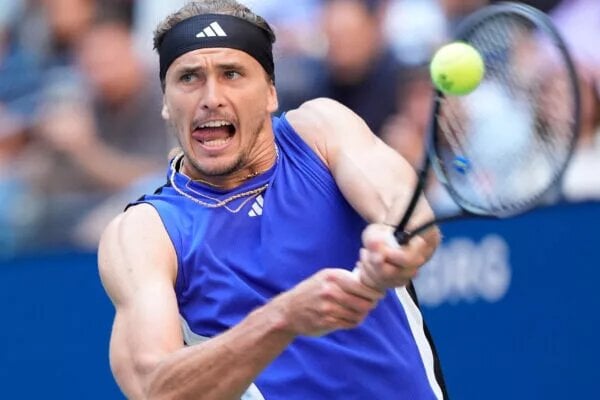
One of those who failed to ‘survive’ was Jannik Sinner, who, despite it being a late-evening match, broke down in his match against Tallon Griekspoor. During the match, he struggled with cramps and eventually reached a state where he could no longer walk unassisted. It should be noted here that in tennis, you cannot receive a medical timeout for cramps because it is not considered an injury.
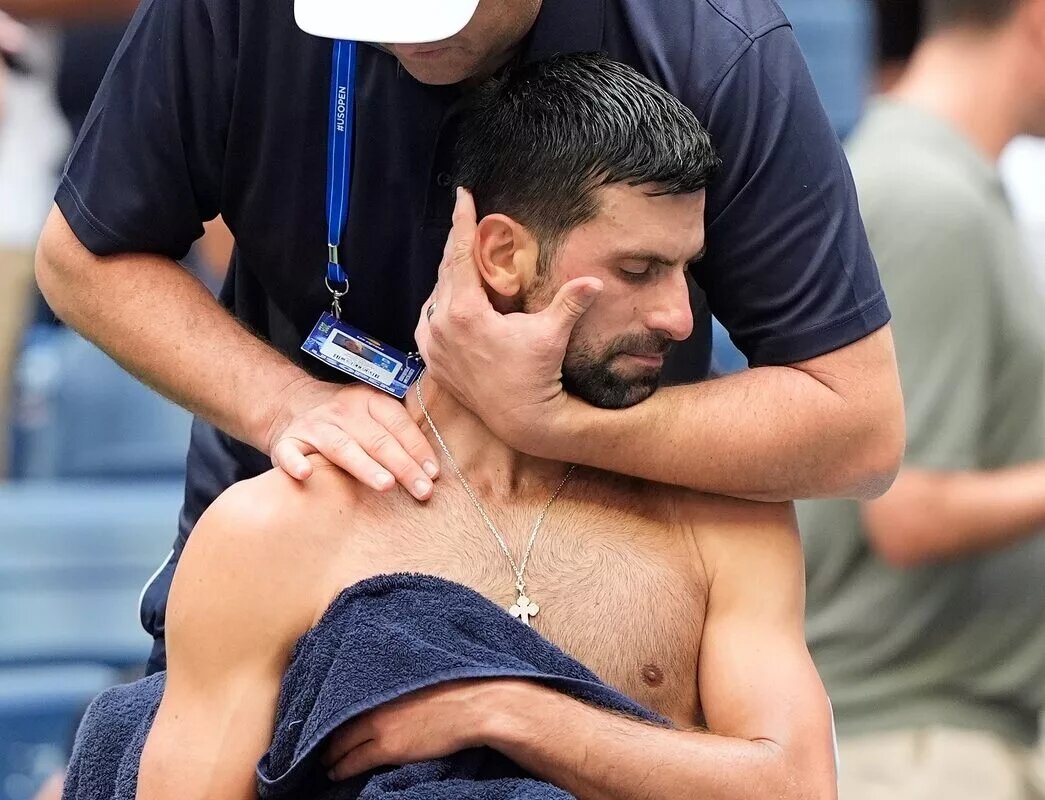
Several other players retired from their matches because they could not withstand playing in such conditions; some managed to finish (and lose) their matches but nearly collapsed; some, like Novak Djokovic, vomited on the court during matches. Somewhat symbolic of the whole situation was Arthur Rinderknech literally collapsing onto the ground with cramps during the post-final ceremony itself. Similar scenes were witnessed in Wuhan, and generally, the image that tennis projected over the last two weeks is very poor.
It is paradoxical that there has long been talk about the potentially negative consequences of global warming—although this may not even be the case here—and also that Grand Slams have clearly regulated rules regarding play in extremely hot weather conditions. The WTA also has a so-called heat policy—parameters based on which decisions are made about whether a match will be played, whether there will be 10-minute breaks between sets, and so on—but the ATP essentially does not. Decisions are made by tournament supervisors in coordination with the medical service, but this clearly does not work in practice.
This will likely change in due course, but the example of the Wuhan tournament shows that it will not necessarily change things significantly. In any case, the large number of matches that ended with a retirement should also be viewed through a different lens: we certainly must and should talk about the fact that the season is already nearing its end and that the tennis players are tired and exhausted.
The Shanghai Fiasco
This brings us to the fact that, regarding men’s tennis, this is the first season in which seven of the nine Masters tournaments have been played in an extended format, lasting 12 days. During this time, 96 players in the draw play a total of 95 matches (40 more than in previous Masters with 56 players in the draw), and it is fair to say that this ‘experiment’ is failing ignominiously before the eyes of those who promoted it. The idea is not inherently bad, and the argument of greater money for tournament organizers, the ATP, and the players themselves is perhaps undeniable.
However, things in practice certainly work worse than envisioned. Although they lose a share of the end-of-season bonus money, the top tennis players simply do not care and occasionally skip Masters tournaments as they will earn that money or even more at an exhibition anyway and on top of that some Masters tournaments in the already overcrowded tennis calendar have bad timings and are starting to resemble less important tournaments, which now last unnecessarily long.
It is in this light that what happened over the last two weeks should be viewed. The Shanghai Masters essentially turned out to be a fiasco, despite the sensational winner, Valentin Vacherot, who played the final against his close relative and another outsider, Rinderknech. The world’s best player, Carlos Alcaraz, decided to skip Shanghai because he (correctly) judged that it was time to heal a bit and prepare for the last month of the season; some did not appear due to injury, others were already tired and exhausted, and on top of all that came the extremely hot weather conditions and the fact that the ATP has no clearly regulated rules about playing in such conditions.
In the end, two outsiders emerged, but the extremely poor image of tennis remains, as does the number of seven retired matches. It is also interesting to note that this season we are recording a large increase in retired matches at the Masters (including walkovers).
We did not include the 2020, 2021, and 2022 seasons in the table above because they were seasons with a smaller number of Masters—Shanghai, for example, only returned to the calendar in 2023—and it is evident that this season is somewhat extreme in this regard, even when the data on retired matches is expressed in relative numbers; and the Paris Masters is still yet to be played.
For example there were 17 retired matches at the Masters last year but 41 this season. What does this tell us? Well, perhaps nothing special. It is only one season and too small a sample to draw major conclusions, but the fact is that we have a large number of retired matches in a season that also, for the first time, features such a large number of Masters tournaments in the new format.
The one in Shanghai was merely confirmation of how brutal tennis actually is, and that the sport’s leaders do not seem care about the health of their athletes. Unfortunately, to the extent that tennis has started to be mentioned in the world media in a context in which it should never be mentioned: that is, in the context of a sport allegedly dangerous to life.
Main photo credit: