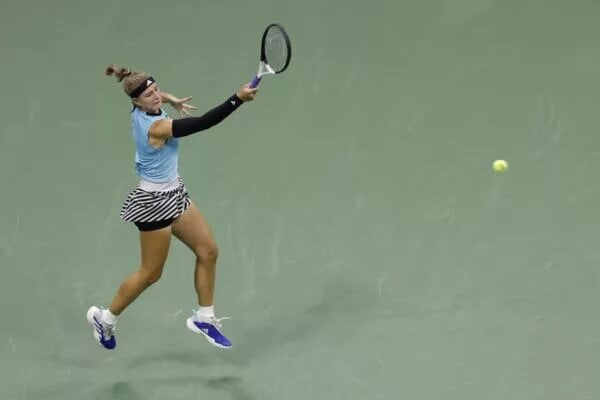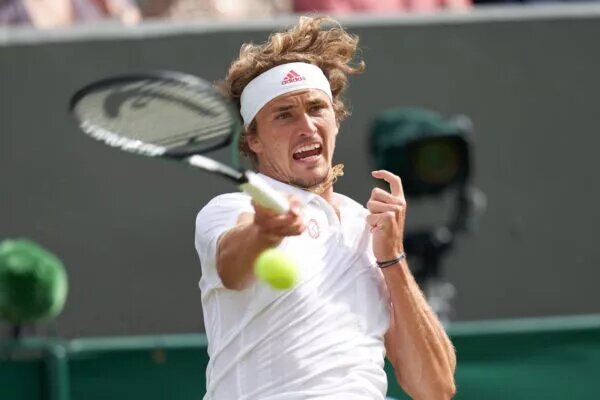



The Wimbledon women’s singles final between Iga Swiatek and Amanda Anisimova was something of a disappointment for anyone who wasn’t a diehard fan of the Pole. That is a fact. It was so one-sided it couldn’t be anything other than a disappointment, especially for thos who had paid a princely sum for a Centre Court ticket.
But this can happen — particularly when arguably the best female tennis player since Serena Williams is delivering an almost perfect performance, as she consistently does in finals (her incredible 23–5 record speaks for itself). The chances of it happening are increased further when on the other side of a net is a player who was clearly struggling to handle the pressure of playing in her first Grand Slam final.
A new Wimbledon champion is crowned 🇵🇱
Iga Swiatek defeats Amanda Anisimova 6-0, 6-0 to win the 2025 Ladies’ Singles Trophy 🏆#Wimbledon pic.twitter.com/ZnznTxwO5A
— Wimbledon (@Wimbledon) July 12, 2025
What’s hard to understand is how this has been used as an opportunity to reignite the pointless debate over equal pay at the Slams. After all, it’s not as though one-sided finals are either common or unique to the women’s game. Indeed, this was only the second time in the Open Era that a final had ended without both players winning a game (the first was at the 1988 French Open when Steffi Graf defeated Natasha Zvereva). It was the first 6-0 6-0 final at Wimbledon since 1911, when Dorothea Lambert Chambers defeated Dora Boothby.
One-sided finals happen on the men’s side too. Take the 2008 French Open, when Rafael Nadal dismantled Roger Federer 6-1, 6-3, 6-0 in under two hours. Spectators likely weren’t thrilled then either — but no one was arguing that the Swiss and Spaniard didn’t deserve their paychecks.
So whilst the match was a disappointment, that is just the nature of sport and attempts to extrapolate a wider significance are rightly condemned. Using this match as a stick to beat women’s tennis is particularly lazy given that this year’s first women’s Grand Slam finals were thrilling three-set battles. There was also plenty of thrilling tennis through the women’s singles at Wimbledon, not least the third-round clash between Aryna Sabalenka and Emma Raducanu which was one of the best matches of the entire tournament.
The argument that women must play best-of-five matches to “deserve” equal prize money has also reared its ugly and frankly sexist head following the final. It was even suggested in some quarterts that, in a best-of-five format, Anisimova might have turned the match around. That’s unlikely. Indeed, in Grand Slam history, only one player — male or female — has ever come back to win a final after losing the first set 6-0: Argentina’s Gastón Gaudio at the 2004 French Open so the prospect of Anisimova rallying from 0-6 0-6 down is scarcely believable.
But what really matters is that this isn’t about equality in the sense that men and women have to play the same format to be paid the same. It’s about equity — ensuring all players have the conditions to perform at their best while being compensated equally. In 2025, that shouldn’t be a controversial idea.
Main photo credit: Susan Mullane-Imagn Images