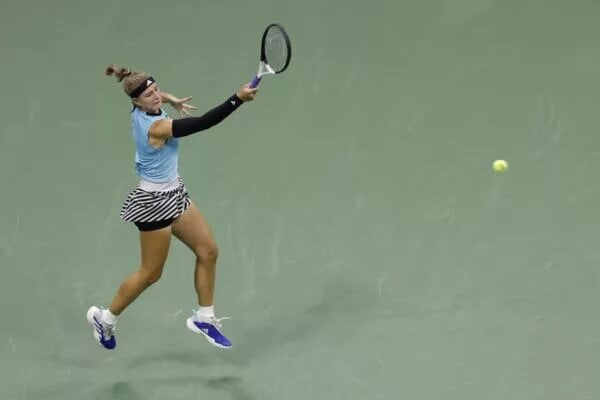

British tennis star Katie Boulter offered a raw and unsettling insight into the relentless online abuse professional players endure, revealing the shocking messages she received during this year’s Roland Garros tournament.
The 27-year-old, currently Britain’s No. 1 women’s tennis player, spoke openly about the scale and nature of the hateful messages, many of which cross deeply personal and dangerous lines.
Boulter speaks out
Reflecting on the disturbing message from a social media user that read, “I hope you get cancer”, Boulter shared her immediate reaction:
“I think I just wonder who the person is that has sent that, you know. I just wonder if they’re in that deep, that tough of a place. I don’t think it’s something that I would ever say to my worst enemy, let alone to anyone at all, or even think it. It’s just an awful, awful thing to say to anyone.”
Boulter added it was just one of the harrowing messages and the kind of vitriol players can face following matches, whether they win or lose.
For Boulter, it wasn’t just the insult itself but the terrifying uncertainty it left in its wake.
“Bringing your family into it, talking about even the subject of death — it just kind of shows how vulnerable we are,” she explained.
“You really don’t know if this person is on site. You really don’t know if they’re nearby or if they know where you live or anything like that. And I think for me personally, it makes me feel, yeah, very vulnerable. And it’s so sad to see someone actually type that out — it’s disgusting.”
“I hope you get cancer.”
No player should suffer social media abuse like this…
Tennis star Katie Boulter has shared some of the “disgusting” and “horrible” messages she regularly receives online.
The British number two says some threats leave her feeling “very vulnerabl pic.twitter.com/z5bN3ooOrB
— BBC Sport (@BBCSport) June 17, 2025
A Widespread Issue in Modern Tennis
Boulter’s experience is far from unique. In recent years, numerous tennis players — both male and female — have spoken out about the online abuse they receive, often from anonymous accounts, and frequently linked to sports betting losses.
Following a defeat, players are regularly bombarded with offensive messages, threats of violence, and calls for self-harm.
Grand Slam events like Roland Garros and Wimbledon have made efforts in recent years to curb this behaviour by increasing moderation on social media platforms and offering mental health resources for players, but the problem persists.
Boulter’s willingness to publicly confront the abuse is part of a growing movement within the sport, as more athletes refuse to stay silent about the mental and emotional toll of online harassment. For many, the hurt caused by anonymous messages can far outweigh the physical demands of the sport.
While tennis enjoys a global following, its digital spaces have increasingly become arenas of unchecked hostility.
Boulter delivered a stark truth about the reality of life as a public figure in today’s hyper-connected world: “It’s horrible. It really is,” highlighting the need for both sporting bodies and social media companies to take stronger, proactive measures in protecting athletes.
For those behind the screens, perhaps her words serve as a reminder that every message sent has a real human being on the other end.
Main Photo Credit: Geoff Burke – USA TODAY Sports