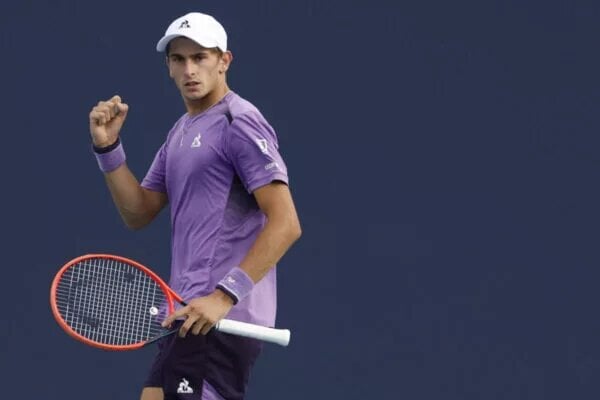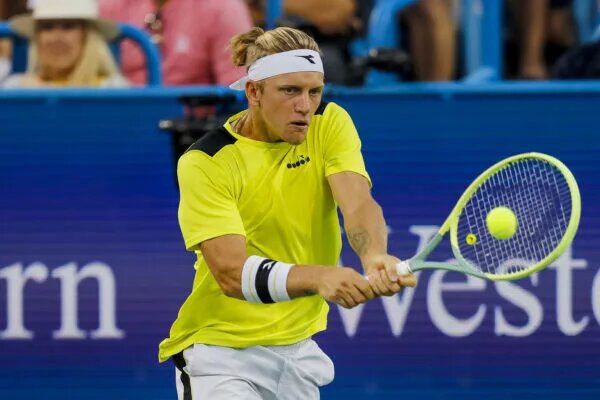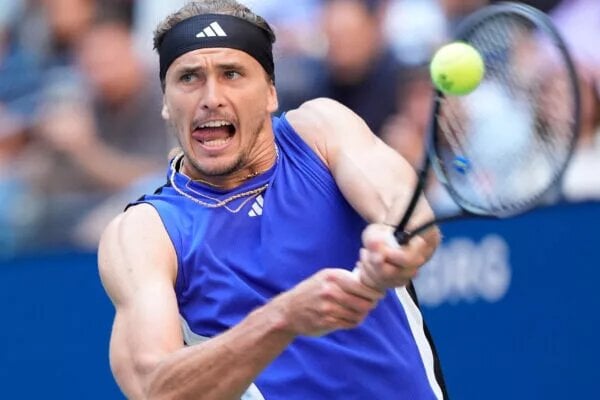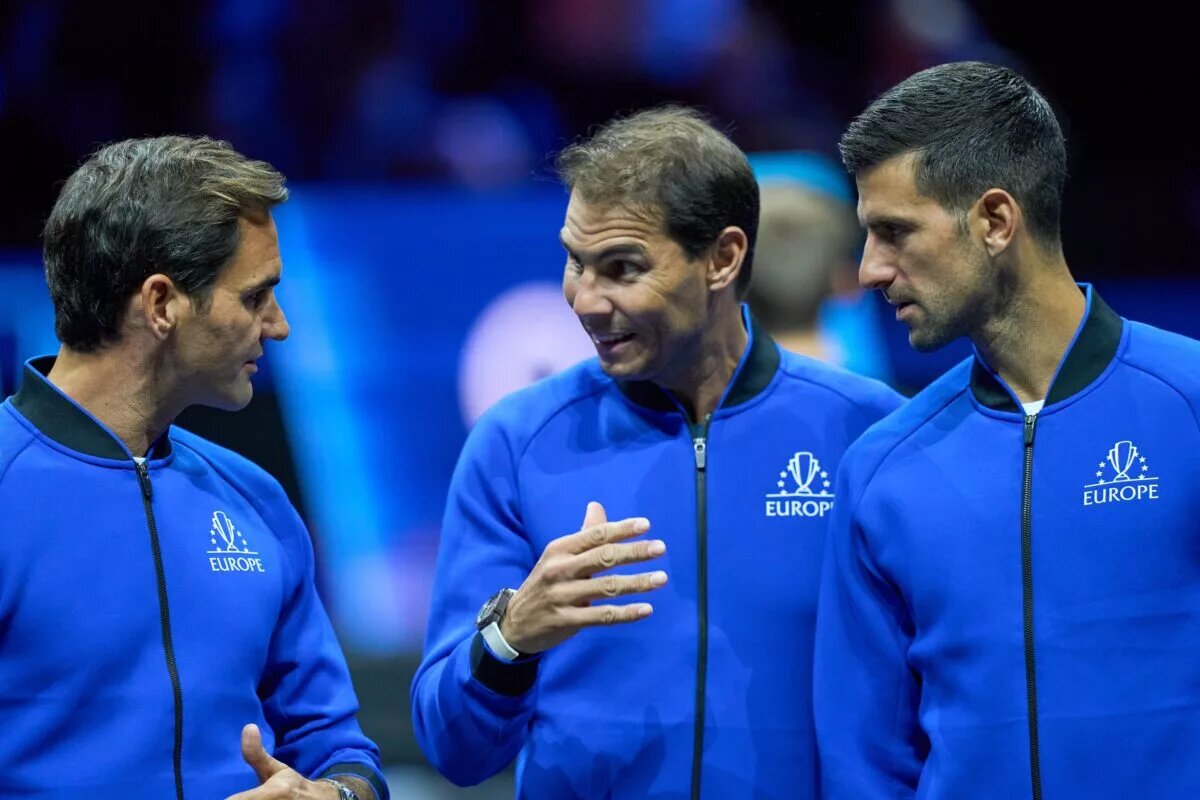

It is not just Novak Djokovic who is having to adapt to a “new reality”, as he put it after losing to Matteo Arnaldi in his first match at the Madrid Open (which was his third loss in a row), but men’s tennis in general. That is because the current physical frailties of so many top male players, including Carlos Alcaraz, Holger Rune and Lorenzo Musetti, contrast sharply with the remarkable physical endurance demonstrated for so long by Djokovic, Federer and Nadal. Among all their other extraordinary qualities, The Big Three had an epic resilience, both mental and physical, that perhaps unsurprisingly none of their successors are yet to exhibit.
Injuries Have Ruined a Succession of ATP Finals
That contrast between old and new (notwithstanding Djokovic’s present difficulties as he closes in fast on his 38th birthday) has been particularly dramatic at the start of the 2025 European clay-court season, one of the most glittering jewels, or string of jewels, in the tennis calendar. In fact, in recent weeks a succession of high-profile men’s finals have been largely ruined by injury to one of the contestants.
In Monte Carlo, which provides the grandest of openings for the clay-court season, it was Lorenzo Musetti who succumbed first. Having enjoyed a brilliant run to the final and then commandingly won the first set against Carlos Alcaraz in front of what was virtually a home crowd so near to the Italian border, he then effectively pulled up lame in the second and third sets, which he lost 6-1 and 6-0 (the latter set a dreaded “claygel”, or bagel on clay). It still remains unclear exactly what happened to Musetti in that final—it may have been a combination of physical issues and sheer exhaustion after spending nearly twice as long on court as Alcaraz in his run to the final—but whatever the precise reason, it was a hugely disappointing end to what could have been an epic clash to match their only previous meeting in a final, the superb 2022 Hamburg final that Musetti won.
The following week in Barcelona, it was the turn of Alcaraz himself to succumb to injury in the final against Holger Rune, in a situation that was bizarrely similar to what had happened to Musetti in Monte Carlo. In the Catalan capital, Alcaraz had looked imperious and ready to build on his Monte Carlo success until Rune won a tight first-set tie-break 8-6. Then the Spaniard, either right at the end of the first set or early in the second, suffered the groin injury that made it impossible for him to compete with the rejuvenated Rune. Like Musetti in Monte Carlo, he gamely fought on rather than retire injured, but in the second set he provided little more than Musetti had in the last two sets in Monte Carlo, as he limply lost it 6-2 before withdrawing almost immediately from Madrid.
Then, to complete the chain reaction (or game of skittles), Rune was unable to build on his Barcelona triumph, which was probably his best tournament win since his breakthrough Paris Masters triumph in 2022, as he had to retire injured in his first-round match in Madrid against Italy’s Flavio Cobolli. He lost the first set 6-2, eventually retired injured (perhaps having learned from both Musetti and Alcaraz the futility of playing on when hurt) and revealed soon afterwards that he had twisted his knee before the Cobolli match.
The Difficulties of Adjusting to Clay
Of course, part of the reason that Musetti, Alcaraz and Rune all suffered injuries so quickly in succession was almost certainly the difficulty of adjusting to clay again after the first few months of the season, which are largely played on hardcourt, with a few notable exceptions such as the South American swing through Argentina, Brazil and Chile. Indeed, the difficulties of adjusting from one surface to another, for example from clay to grass for Wimbledon or from grass to hardcourt for the North American swing and the US Open, are one of the major reasons for the general uptick in injury rates in the run-up to the summer Grand Slams.
However, it is worth remembering (if it could ever be forgotten) that Rafael Nadal, especially in the early stages of his career (i.e. the position that Alcaraz, Rune and Musetti are in now), rarely had trouble in adjusting to his favourite surface after beginning the year mostly playing on hardcourt. That is proven by his incredible record on clay, especially in the first decade of his career (2005-2015), when he invariably not only won the French Open but also the biggest clay-court tournaments in the run-up to Roland Garros, especially Monte Carlo and Rome.
Federer and Djokovic obviously never matched Nadal on clay, but that was never because of any physical issues that they experienced either in adjusting to clay or playing on it. Indeed, both men rarely had any major physical issues throughout their entire career. Federer’s ultra-fluid movement on a tennis court, whereby he seemed to embody the athletic ideal of “running on top of the grass”, meant that at his peak he reached 10 straight Major finals, 23 straight Major semifinals and 36 straight Major quarterfinals. And Djokovic was arguably even more impressive, as he effectively enjoyed over a decade of domination of men’s tennis after his breakthrough season of 2011.
Only Sinner Comes Close To Matching The Big Three’s Consistency
The fact is that of the successors to The Big Three, only Jannik Sinner has come anywhere close to matching their astonishing levels of consistency, which extended beyond the Majors to the regular ATP Tour. And so far he has only done it for just one season, last year, when he had a 73-6 win-loss record that encompassed two Majors, retaining the Davis Cup with Italy and numerous other titles.
Obviously, however, that phenomenal progress by the Italian, which also includes his retaining the Australian Open at the start of this year, has been curtailed, at least for the time being, by the ban from tennis that he had to accept in the wake of failing two doping tests last year. He has demonstrated incredible mental and physical resilience over the last 12 months, not least in winning two Majors after the story of the drug tests broke, but even he cannot know for certain that he will be able to retain the momentum that he had generated when he returns at the Italian Open in Rome next week.
None of Sinner’s contemporaries have come close to matching his levels of physical and mental consistency. Even Carlos Alcaraz, his main contender at the top of the men’s game after “splitting” the four Majors with the Italian last year, has been unable to match the week-in, week-out grinding aspect of Sinner’s game, not least because he still seems prone to both physical issues and occasional lapses of concentration in tournaments. For now, at least, Sinner remains the current king of consistency on the men’s tour.
We Will Probably Never See The Likes (and Levels) of The Big Three Again
However, even Sinner has a very long way to go—effectively, a decade or two of competing consistently at the top of men’s tennis—to match the truly epic physical and mental endurance of The Big Three. Like Federer and Nadal before him in recent years, Djokovic seems as if he is finally reaching the end of his career, as he admitted in the wake of his defeat in Madrid. But whenever he joins the other members of The Big Three in retirement, he will know that men’s tennis is highly unlikely ever to see their like, or levels of play, again.
That is not to say that the current crop of men’s players, led by Sinner and Alcaraz, cannot achieve greatness of their own and even feats (such as a Calendar Slam) that were beyond The Big Three. But it does suggest that for all the obvious brilliance of Sinner and Alcaraz, they are destined to struggle to match the decades-long consistency of Federer, Nadal and Djokovic. That is because in addition to all their other attributes, The Big Three were physical phenomena who seemed to defy the basic law of sport that even the greatest sportspeople get injured from time to time.
Main photo credit: Peter van den Berg-USA TODAY Sports