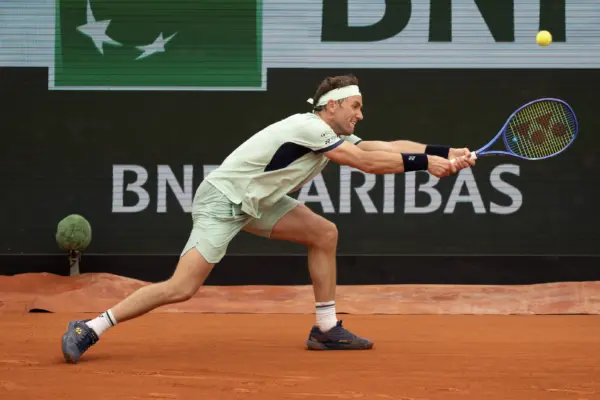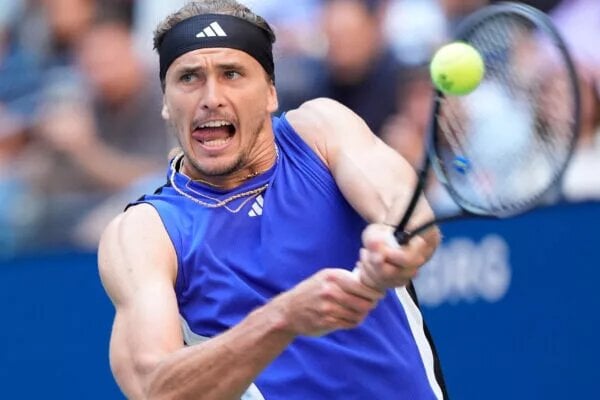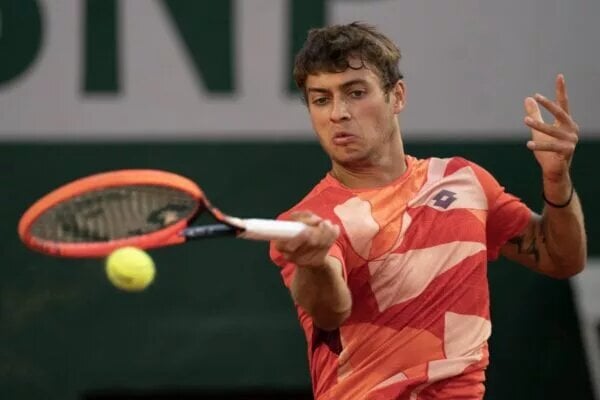

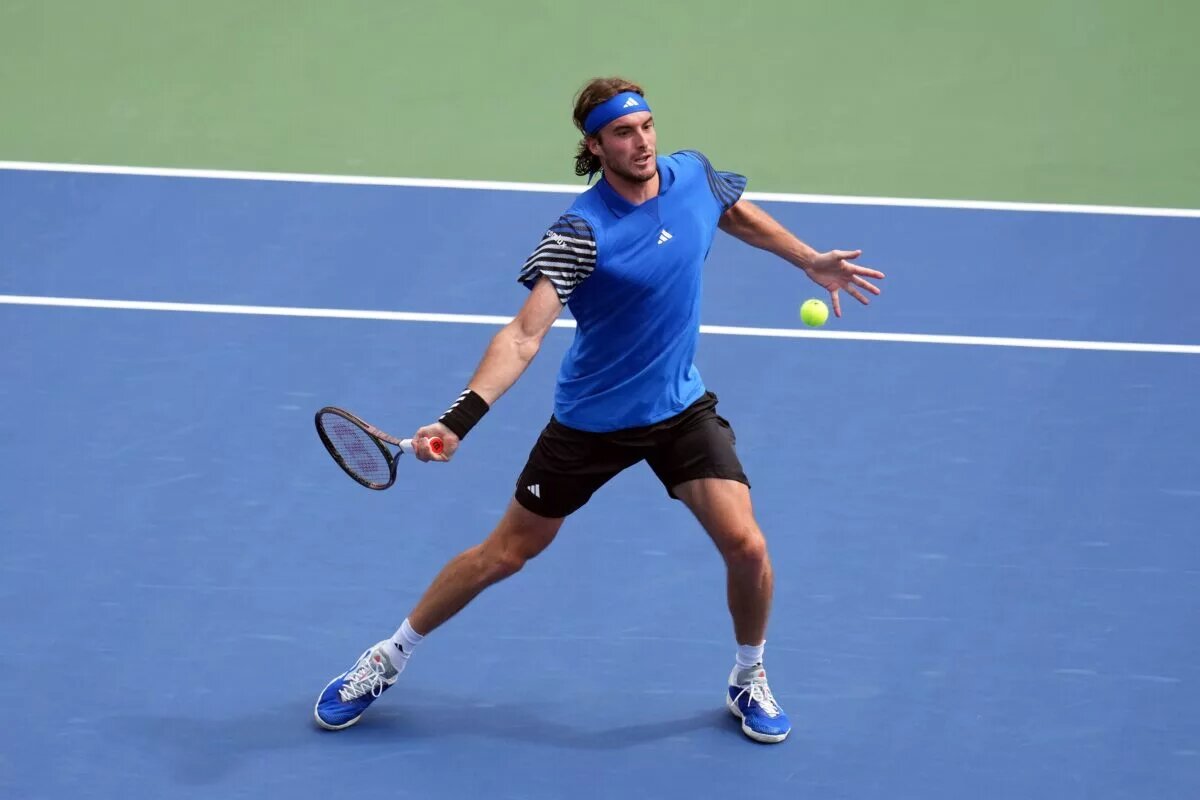

Stefanos Tsitsipas’s relative woes continued as he fell to defeat against world #78 Alexander Shevchenko 6-4 7-6. In a bout that lasted just under two hours, the 2023 Australian Open finalist resembled a shadow of his former self and consequentially was on the losing side of the net once more.
Tsitsipas’ struggles go on
The Match
Just a couple of days after a humiliating 6-2 6-1 loss to Pablo Carreno Busta, Shevchenko had to dust himself off and face up against the Greek giant. A once formidable force, nowadays few opponents fear him. It’s not to say he’s an easy opponent, but he is a simple opponent–the blueprint to defeat him is so clear: target the backhand.
Tsitsipas announced last season that just Dimitris Chatzinikolaou would be coaching him, with his father Apostolos finally taking a back seat. Many hailed the decision as a necessary step to freshen up a career which has been left to stale in recent times.
There were some positive signs against Carreno Busta, with a three sets victory, but from the off, he struggled against the Kazakhstani. The twenty-six-year-old made just 54% of his first serves and was unable to put any pressure on his opponent’s backhand. The amount of times a simple down-the-line shot caught him off guard was a cause for alarm bells to be ringing.
A set and a break down, he cut a frustrated figure in the Australian heat. He called over the physio and complained about the difficulties he was having on the backhand wing. With rumors already swirling that Tsitsipas was nursing a potential injury heading into this season, this all but validated the claims. Yet, to put such struggles solely down to aches and pains would be discarding the bank of evidence that previous years have provided.
He showed spirit to fight back and level the set but ultimately would capitulate in a tiebreak, failing to win a single point.
Bursting onto the Scene
Backtrack to 2019, the Greek was fresh. He announced himself onto the scene with a famous victory over Roger Federer and later that year lifted the ATP Finals trophy. Of the next generation, he seemed the man to beat. There were raw elements to his game, but his immense talent portrayed a likely future champion.
Two years later, he reached his first Grand Slam final, where he led Novak Djokovic by two sets to nil, although he would go on to lose in a heart-breaking afternoon in Paris. He finished the year World #4 with a win percentage of 74%. Since then, it’s been downhill, with that percentage dropping for three consecutive seasons.
Downfall
Truthfully, he has stagnated. The raw elements of his game haven’t been ironed out, and he is easily found out. To stand still is to fall back at the elite level of sport.
It’s just the clay season where he is a genuine contender thanks to his single-handed backhand enjoying a forgiving higher bounce. Off-court complications haven’t helped, but there seems a lack of maturity in his game.
Last season his win percentage of 61.7% was his lowest ever on Tour and saw him fall out of the Top 10.
The Future
With the stone-cold evidence in front of him, how does he rediscover his mojo?
It’s tough to say. It’s past the stage of poor form–this is a player who has struggled for two years. Not only has he been overtaken by Jannik Sinner and Carlos Alcaraz, but an even newer generation–including the likes of Arthur Fils, Giovanni Mpetshi Perricard, and Alex Michelsen–is closely approaching.
His main weapons, the serve and forehand, are no longer stand out shots. Sure, they are effective, but Sinner and Alcaraz are just as comfortable at the back, with the former’s serve arguably more reliable.
Admittedly, it feels slightly ridiculous to be mentioning him in the same bracket as the aforementioned two, Grand Slam contention seems so far out of the picture.
His aim needs to be to return to the Top 10, show some consistency and rebuild his shot confidence. Then, maybe then, we can talk about a serious contender. As the United Cup has revealed, though, it’ll take one mighty effort.
Main Photo Credit: Danielle Parhizkaran-USA TODAY Sports