
In recent years, the International Tennis Integrity Agency (ITIA) has faced mounting criticism for its inconsistent handling of doping and integrity-related cases. While the agency’s mission is to uphold the integrity of tennis, its uneven rulings have raised serious questions about transparency, fairness, and credibility.
Take the case of Simona Halep, a former world #1 and two-time Grand Slam champion, who received a four-year ban following accusations of doping violations, including irregularities in her biological passport. The decision came nearly a year after the initial suspension, leaving Halep in professional limbo and drawing sharp criticism over the protracted timeline.
Halep has maintained her innocence, citing potential contamination in her supplements, but the ITIA dismissed these claims outright, showing little willingness to consider her mitigating arguments. Simona Halep released a scathing statement criticizing the International Tennis Integrity Agency (ITIA) following the public disclosure of the Swiatek case and its handling.
A Tale of Two Players: Swiatek vs. Bartunkova
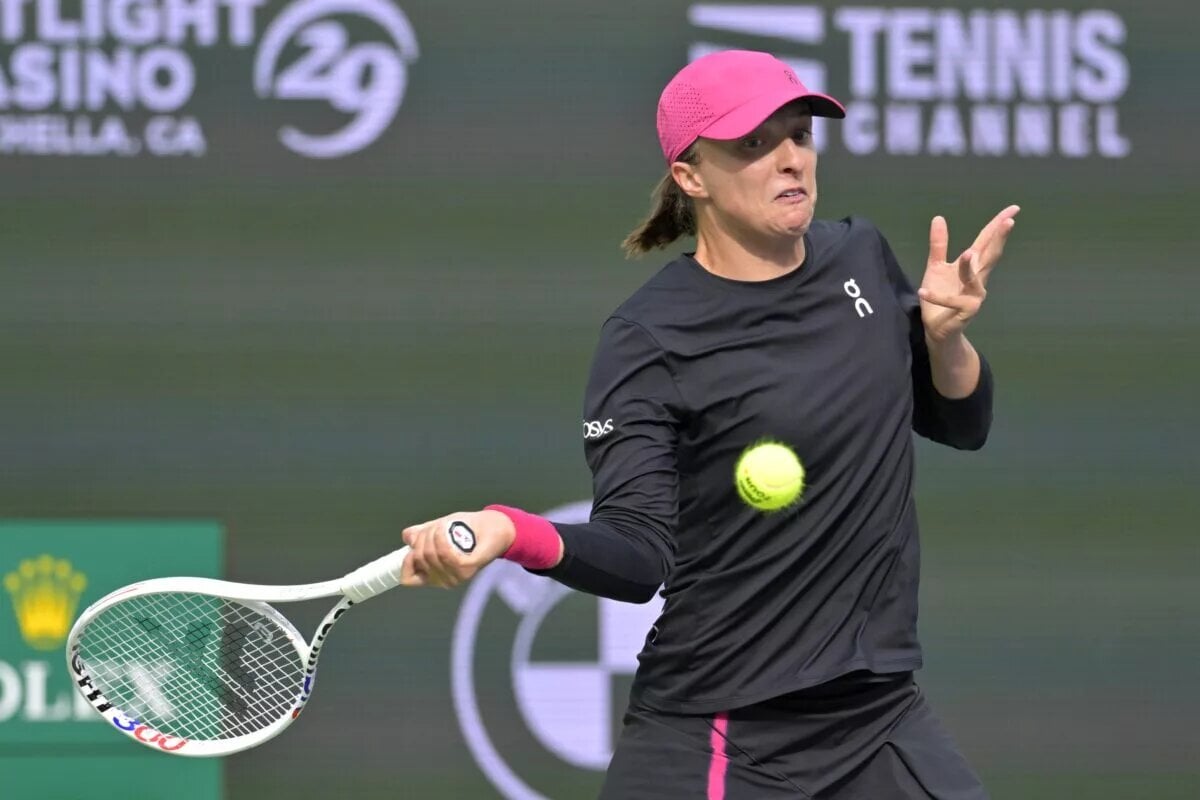
The ITIA’s inconsistencies are perhaps best illustrated by the cases of Iga Swiatek and Nikola Bartunkova, who were both found to have used the same prohibited substance trimetazidine but received drastically different treatment. While the Czech youngster received a six months ban after a no fault verdict, Swiatek, a Grand Slam champion and global tennis star, was cleared of wrongdoing after the ITIA determined her positive test was caused by a regulated medication prescribed for a legitimate medical condition and was provisionally suspended for a month. The agency justified its decision by citing “different circumstances”, explaining:
“The product contaminated in Ms. Swiatek’s case was a regulated medication, not a supplement. We deal with each case based on the facts and evidence, not a player’s name, ranking, or nationality.”
In stark contrast, Bartunkova, a promising Czech junior, was given a lengthy suspension despite also claiming that her positive test stemmed from an approved medication. Unlike Swiatek, Bartunkova’s case received minimal public explanation from the ITIA, and her defense was seemingly not afforded the same consideration. The agency’s handling of Bartunkova’s case fueled speculation that her lower profile and limited resources played a role in the harsher outcome.
These disparities suggest a troubling double standard. While the ITIA claims to base its rulings on evidence rather than a player’s name or ranking, the starkly different outcomes for Swiatek and Bartunkova—despite the identical substance involved—undermine the credibility of that assertion.
Jannik Sinner’s case?
Jannik Sinner, the current men’s world #1, tested positive for clostebol, a performance-enhancing steroid, in March 2024. Despite the severity of the substance, the ITIA cleared him of negligence or fault, concluding that he bore no responsibility for the failed tests. The World Anti-Doping Agency (WADA), however, has since appealed the ITIA’s decision.
While the ITIA’s explanation provides some clarity, it fails to address broader concerns about consistency. The agency urges players to “exercise extreme caution when taking supplements,” but this guidance rings hollow when its rulings often appear arbitrary and subjective.
The disparity extends to other cases as well. Jenson Brooksby, for example, received an 18-month suspension for missing three doping tests within a year—a violation that typically results in a two-year ban. Brooksby successfully argued mitigating circumstances, resulting in a reduced penalty. Brooksby reasons for missing the tests may well have been fully justified, but other players who have not managed to have a suspension overturned may wonder why there justifications were not accepted.
Eroding Trust in Integrity
The ITIA’s inconsistent rulings not only undermine fairness but also erode trust in its ability to govern tennis effectively. The agency’s frequent reliance on subjective interpretations of “different circumstances” suggests a troubling lack of coherent policy. These inconsistencies leave players and fans questioning whether the ITIA truly applies its standards evenly, or whether external factors such as player profile and resources influence outcomes.
For tennis to remain a sport defined by integrity and fairness, the ITIA must overhaul its procedures to ensure timely, consistent, and transparent rulings. Without these reforms, the ITIA risks alienating players and fans alike, undermining the very values it claims to protect.
Main photo credit: