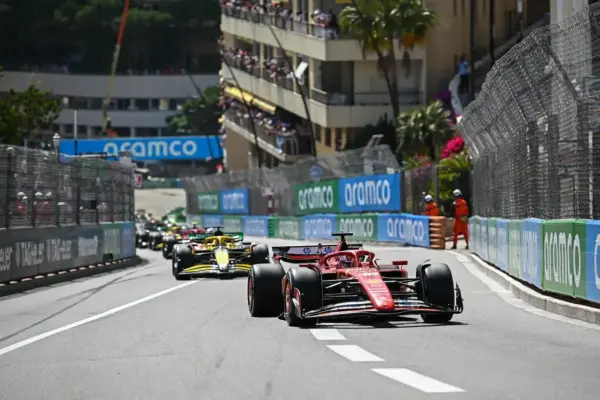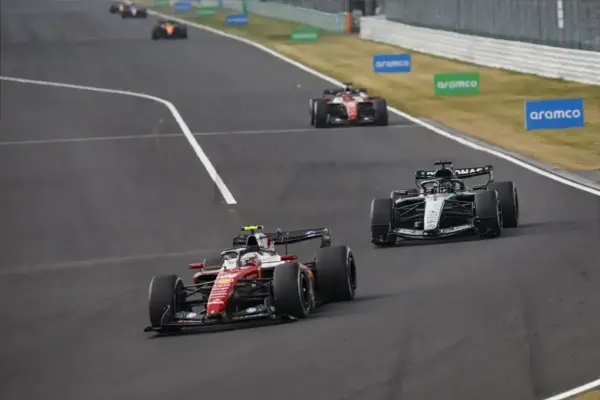


Even before the first round of the 2026 season commences, the F1 schedule faces significant changes. The overwhelming consensus is that Bahrain and Saudi Arabia will be unable to host Grand Prix this season.
Owing to the recently ignited conflict in the Middle East, with US-Israeli air strikes triggering retaliatory action from Iran, there are obviously great safety concerns.
Bahrain and Saudi Arabia are among the nations who have been attacked by missiles and other long-range weapons over the last week.
There are no concrete indications the conflict will stop in the near future, and with these countries set to host races just over a month, Formula 1 must take a decision soon.
Cancellation of Bahrain and Saudi likely
Formula 1 is no stranger to competing in potentially risky circumstances, but the current situation in the Middle East is entirely different to any of these instances.
Over the last few days, Bahrain and Saudi Arabia – alongside other nations in the Middle East – have seen attacks to their civilian and military infrastructure.
One of the most notable incidents came when Iranian missiles hit a US naval base in Bahrain’s capital. This strike was close to the circuit where the F1 Grand Prix take place.
Even in a best-case scenario, where tensions ease and escalation allows for a ceasefire, this offers little assurance. A temporary pause in fighting does not guarantee that renewed strikes will not resume in the foreseeable future.
At present, even this uncertain scenario seems unlikely. The consensus amongst analysts is that, at least for the foreseeable future, the situation in the region will remain volatile.
Other sporting events, such as the ATP 500 event in Dubai, have been caught off guard by recent events. Formula 1 has fair warning, though, and is duly collaborating with authorities to ensure the safest outcome.
In the increasingly likely event that Bahrain and Jeddah are cancelled, other circuits could theoretically fill in. However, this presents its own set of problems.
A potentially reduced calendar
There are a few circuits that are regularly on stand-by to be called upon in the circumstances require. Imola, Portimao and Istanbul are all potential alternatives that could host a race on short notice.
With that said, logistical constrains complicate things. At such short notice, it is extremely difficult for circuit organisers to put everything in place to host a functional event.
This is without mentioning the headaches that would come with ticket sales, promotional agreements and so forth.
Ultimately, with a 24-race calendar, missing two races is unlikely to justify a panic to find replacements at all costs. It is unlikely that drivers or teams themselves would voice any opposition to the season being reduced to 22 races.
In theory, F1 could host consecutive races in Japan. After the third round of the season in Suzuka, it would be possible to have another race at the Japanese circuit.
Another scenario includes going to other Japanese circuits, such as Fiji, to help fill the gap. However, the issues mentioned above would likely still apply – albeit to a lesser extent.
Overall, there is a minimal chance of the 2026 calendar finding last-minute replacements to stay at 24 races. For now, though, the more realistic scenario is for this year’s schedule to have two less destinations.