
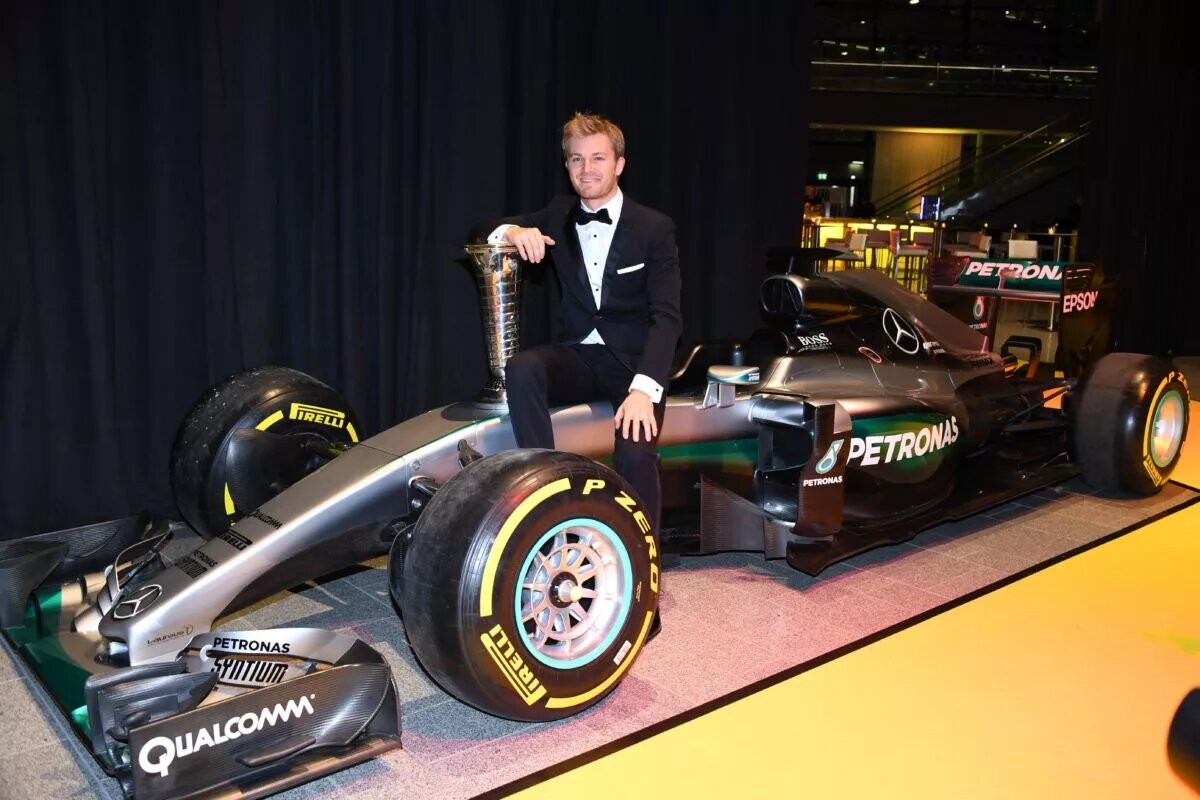
Nico Rosberg emerged victorious over Lewis Hamilton for Mercedes in the 2016 Formula 1 World Championship. Their battle, which had built up for years through their time as rivals and teammates, reached its peak during this season.
A Championship that Led to His Subsequent Retirement from the Sport
Rosberg’s triumph resulted from strategic excellence, early dominance, and a determined response to his teammate’s relentless pursuit.
It was a battle for the ages, which made Mercedes’ early dominance under the regulations they had mastered exciting.
.@nico_rosberg spent 957 of 1,268 racing laps (75%) inside the top 3 in 2016. He spent just 13 laps outside of the top 10#F1 #F1FastFact pic.twitter.com/EywyDyR9RR
— Formula 1 (@F1) December 4, 2016
Here is how the German defeated his long-time friend turned rival in equal machinery. Spoiler: it did not begin in 2016.
The Build-Up to 2016
The rivalry between Rosberg and Hamilton began to simmer in 2013 when Mercedes established itself as a strong contender in the Drivers’ and Constructors’ Championships.
Though relatively uneventful, the Malaysian Grand Prix offered an early glimpse of tension. Team orders kept Rosberg behind Hamilton despite his quicker pace, reflecting discontent. This would only heighten.
In 2014, the introduction of turbo-hybrid engines propelled Mercedes to dominance.
The season featured intense battles, such as the wheel-to-wheel duel at Bahrain, where Hamilton fended off Rosberg despite the latter’s use of banned engine modes. Hamilton would use the same banned engine modes in Spain, taking P1 over the German.
Tensions boiled over in Belgium when Rosberg collided with Hamilton, taking his teammate out of the race. This also drew widespread criticism, with Rosberg apologising for his actions. Hamilton ultimately claimed the title with 11 wins to Rosberg’s five.
The 2015 season further highlighted Hamilton’s dominance, as he secured the championship three races before the finale. Cracks in their relationship deepened, notably at the United States Grand Prix, where Hamilton aggressively forced Rosberg wide at turn one. While Rosberg led in the closing stages, he ran too deep at turn 12, allowing Hamilton to overtake him to victory.
Rosberg’s visible frustration reflected a growing determination to beat his rival. This led to the eventful 2016 F1 season many still speak of today.
A Dominant Start
Nico Rosberg kicked off the 2016 campaign with four consecutive victories in Australia, Bahrain, China, and Russia.
Weeks until lights out in Melbourne = 6️⃣
Car number of the race winner in 2016 = 6️⃣
@nico_rosberg started his title charge in the perfect way 💪#F1 #Unleash2018 pic.twitter.com/4A6CRmKNFS
— Formula 1 (@F1) February 11, 2018
These wins secured a substantial lead in the standings and set the tone for the season.
Hamilton, meanwhile, faced challenges in the early rounds, including poor starts and technical issues, which gave Rosberg the upper hand.
He had a 43-point lead heading to Spain where all eyes were on the pair.
Mid-Season Tensions
The middle phase of the season proved challenging for Rosberg. A dramatic first-lap collision with Hamilton in Spain resulted in a double retirement for both drivers.
His 43-point lead fell to a 24-point lead, where a win was important in Monaco.
Subsequent races, including Monaco and Canada, saw Rosberg falter, allowing Hamilton to close the gap with several victories.
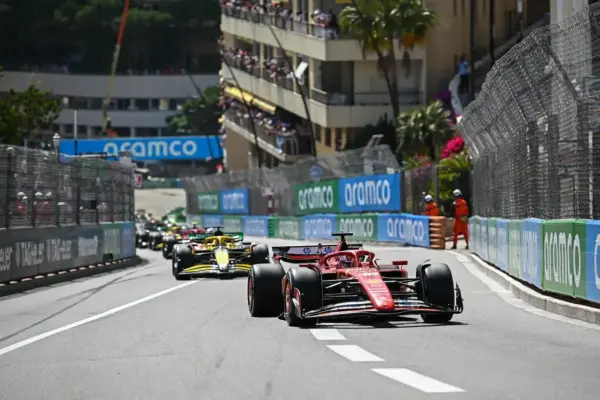
After struggling in the Monaco rain, he let Hamilton pass, where the Briton finished P1.
In comparison, after fighting Hamilton at turn 1 in Canada, he fell from P2 to P10. Rosberg finished 5th to Hamilton’s 1st.
The championship lead changed hands as Hamilton capitalised on Rosberg’s missteps.
READ MORE: How Nico Rosberg Became the First GP2 Champion
Turning the Tide
After the summer break, Rosberg returned to contention with victories in Belgium, Italy, and Singapore. These wins regained the lead for Rosberg, while Hamilton faced setbacks. Heading to Malaysia, he had an 8-point lead, after being 19 points behind after the German Grand Prix.
In Malaysia, Hamilton’s engine failure while leading handed Rosberg a significant points advantage. The German driver finished P3 after falling to P17 on lap one after being hit by Sebastian Vettel.
A solid win in Japan further solidified Rosberg’s position, giving him breathing space as the season entered its final stages. He was now 33 points ahead.
The Final Showdown
Hamilton fought back fiercely in the final races, winning in the United States, Mexico, Brazil, and Abu Dhabi. Despite this late-season dominance, Rosberg maintained composure and delivered consistent performances. Second-place finishes in the last four rounds ensured he retained a decreasing but decisive points lead.
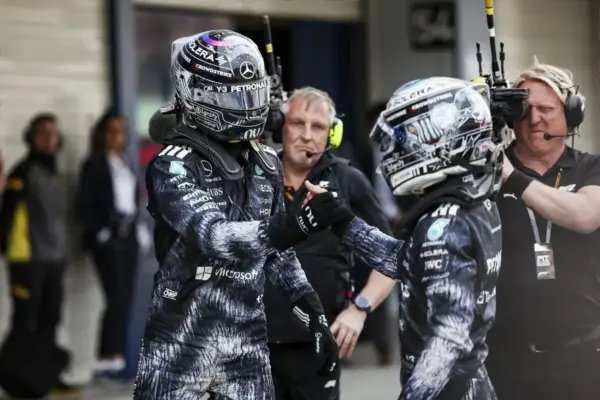
In the Abu Dhabi finale, Rosberg withstood intense pressure from Hamilton, who used strategic tactics to slow him down to jeopardise his title hopes. Rosberg held firm, crossing the line in second and securing his first and only championship by 5 points.
YOU MAY ALSO LIKE: IndyCar Stars in the 24 Hours of Daytona
Conclusion
Five days after his triumph, Nico Rosberg shocked the motorsport world by announcing his retirement from Formula 1 – the 2016 season was his last. His decision to leave on a high note brought an abrupt end to the on-track rivalry between himself and Hamilton. What remains is a Championship battle to remember.
Rosberg is still a popular figure in the paddock and can typically be seen on Sky Sports or through post-race interviews.
READ NEXT: How Aston Martin Plan to Reach “90%” Upgrade Success Rate