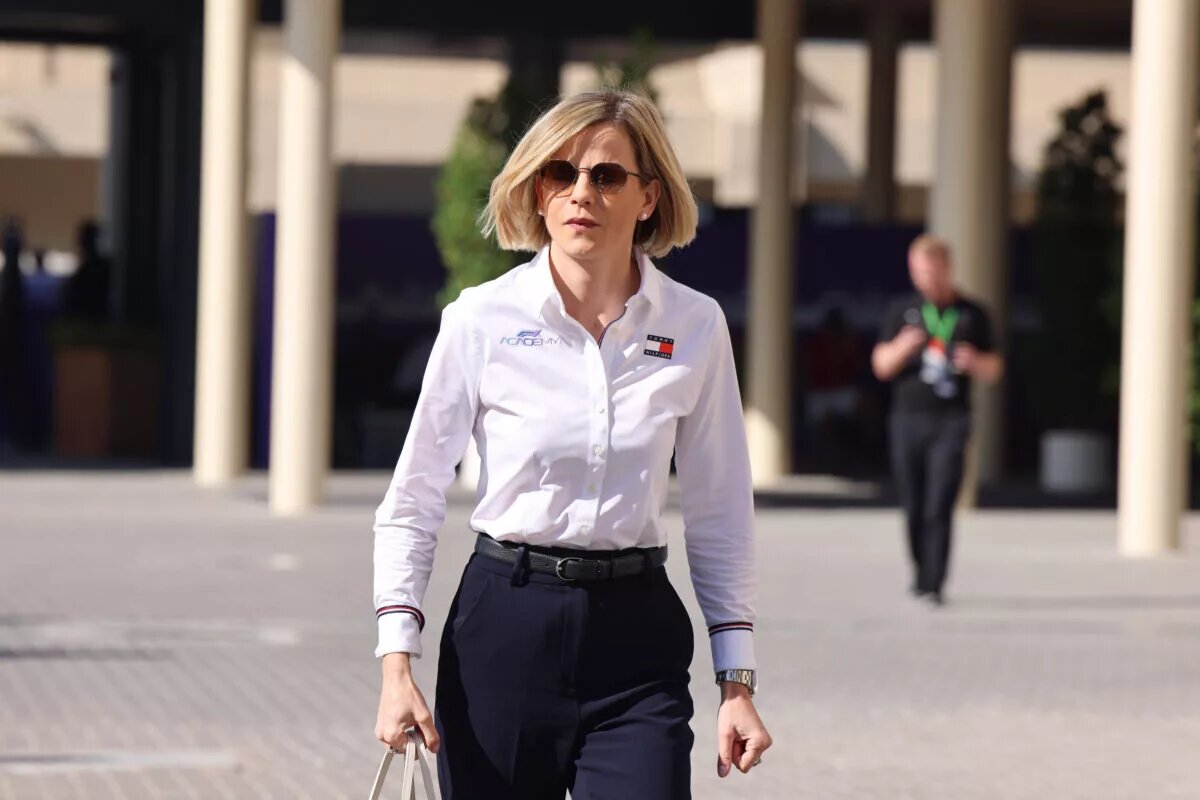

Formula 1, historically dominated by men, is beginning to value the contribution of women. Both on the track and behind the scenes.
The Role of Women in Formula One: Between Progress and Prejudice
Formula 1, one of the most-watched sports in the world, has historically been dominated by men – both on the track and behind the scenes.
However, in recent years, there has been an increasingly open debate on the importance of diversity and inclusion in this industry as well.
What opportunities exist for women in top-tier motorsport today? From the challenges faced by the few trailblazing female drivers to the increasing involvement of women in professional roles within teams, the landscape is evolving.
Women on the Track: Women Drivers and Competitions
In the history of Formula 1, only a few women have had the opportunity to compete behind the wheel. The pioneer was Maria Teresa de Filippis, who in 1958 became the first woman to qualify for a Grand Prix. She raced for Maserati.
In the 1970s, Lella Lombardi made history as the only woman to win world championship points, scoring half a point at the 1975 Spanish Grand Prix.
Other women, such as Divina Galica, Desiré Wilson and Giovanna Amati, attempted to qualify for Formula 1, but without succeeding.
In spite of their courage and talent, these women faced many problems. They faced not only technical difficulties but also the prejudices of a strongly male-dominated environment.
In recent decades, the absence of women on the Formula 1 grid highlights a combination of cultural, financial and physical barriers.
Gender stereotypes and lack of equal opportunities often limit women’s access to the highest levels of motorsport.
Not to mention, there are high career costs in karting and the other junior categories. These represent obstacles for those who do not have adequate sponsors.
Lastly, physical challenges continue to be used as an argument to justify the absence of women in a competitive environment. Which instead, should be based on talent and competition.
READ MORE: How High Feeder Series’ Costs are Influencing Motorsport’s Future
Women Behind the Scenes: Technical and Management Roles
In recent years, women have been gaining an increasingly prominent role behind the scenes in F1. They hold technical and managerial positions of great responsibility.
Susie Wolff, ex-driver and current managing director of the F1 Academy, is a key example of how female talent can positively influence motorsport.
Figures like Hannah Schmitz, strategist at Red Bull Racing, have shown how competence and astuteness can make a difference on the track.
Even in management roles, examples such as Claire Williams, ex-team principal of Williams, have marked a turning point, showing that leadership and vision have no gender.
Within the team, more and more women are working as engineers, aerodynamicists and analysts. Contributing to the technological evolution of the sport.
However, despite this progress, the number of female professionals remains limited, a sign that the road to true equality is still a long one.
YOU MAY ALSO LIKE: 2025 F1 Academy Lineup: Doriane Pin Returns with Mercedes
Women in Formula 1: Progress and signs of change
Formula 1 is slowly opening the door to greater inclusion. Significant progress has been made in recent years.
Initiatives such as the F1 Academy and the We Race As One programme aim to promote diversity. They also offer new opportunities for women in motorsport.
F1 Academy for example has been a great platform for drivers like Abbi Pulling who won the 2024 Drivers’ title in the championship. Pulling not only made history in F1 Academy but in the British F4 championship as well. Winning at Brands Hatch, the Alpine junior made history by becoming the first woman to win a British F4 race.
In 2025, for the first time in Formula 1 history, a woman called Laura Muller, will take over the role of track engineer for Esteban Ocon. This is an event that underlines an important change in the approach to technical roles.
This step forward is not only symbolic but represents an invitation to value talent regardless of gender. And also to build an increasingly inclusive and innovative Formula 1.
When will we see a woman back on the grid, competing on an equal footing with the world’s best drivers?
Formula 1 represents the pinnacle of technological innovation and sporting competition. But it cannot really be called complete for inclusion.
The progress made so far, with dedicated programmes and the increasing presence of women in key roles, is a positive sign. But the road to equality is still a long one.
The motorsport industry has a responsibility to continue to invest in talent, regardless of gender. By breaking down cultural and financial barriers.
Only by promoting diversity and equal opportunities can we see a Formula 1 that not only runs towards the future but truly represents it.
READ NEXT: 2024 F1 Academy Season Review