

Unknowns remain
Fundamentally, there are several unknowns that complicate any conclusive analysis from this week’s action in Spain.
First and foremost, the basics of testing – such as varying fuel loads and settings – makes comparing lap-times a fruitless exercise. Only towards the end of the Bahrain tests will teams begin pushing their cars on lower fuel and higher engine modes.
Even then, the first qualifying in Australia will be the first truly revealing data point.
Teams are still in the process of understanding how to optimise set-up, energy management and decide what direction to take the car.
This is partly why Mercedes can be described as winners from the Barcelona action. By their final day of running, the German squad were already focused on set-up work and fine-tuning the W17, something that isn’t usually achieved so early.
Another obvious question mark concerns the fuels used this week. Although teams are required to use sustainable fuels in 2026, the FIA granted an exemption for the Barcelona shakedown.
Of course, it is unknown which teams were already using sustainable fuels, and which ones were still running the older fuel mixes.
In some ways, this means the Bahrain tests could expose reliability issues that were obscured in Barcelona.
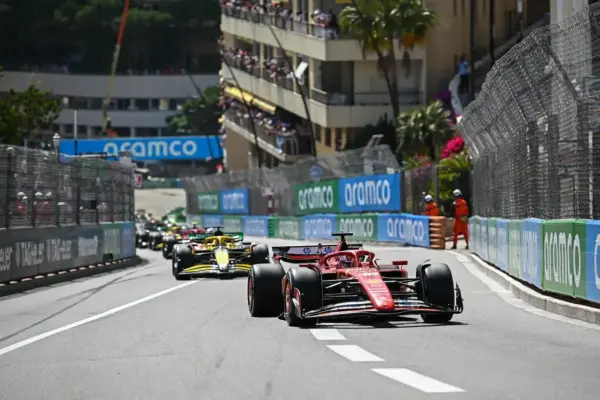
For Ferrari, the next few weeks are critical. They are now forced to make big decisions on the SF-26 and how aggressive their 2026 package will be.
This is not to say other teams are not facing a similar dilemma. However, it must be said Ferrari were arguably the most conservative of the front-runners in the Shakedown.
Now is the time for Vasseur’s personnel to prove if they are capable of pioneering potentially game-changing ideas with these cars.