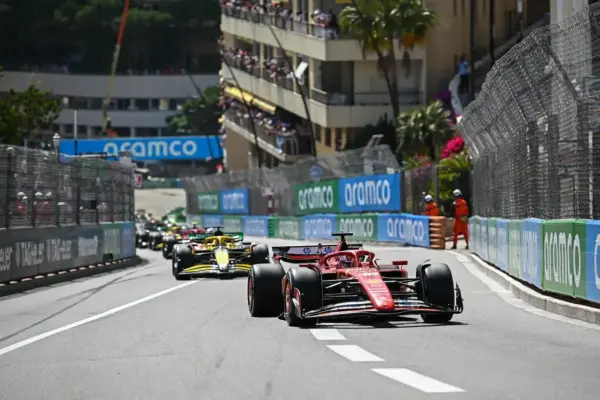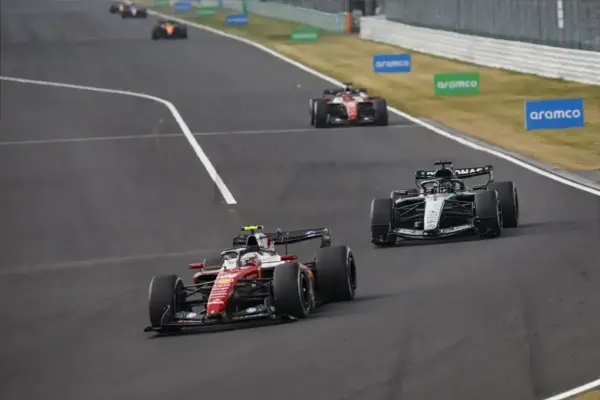

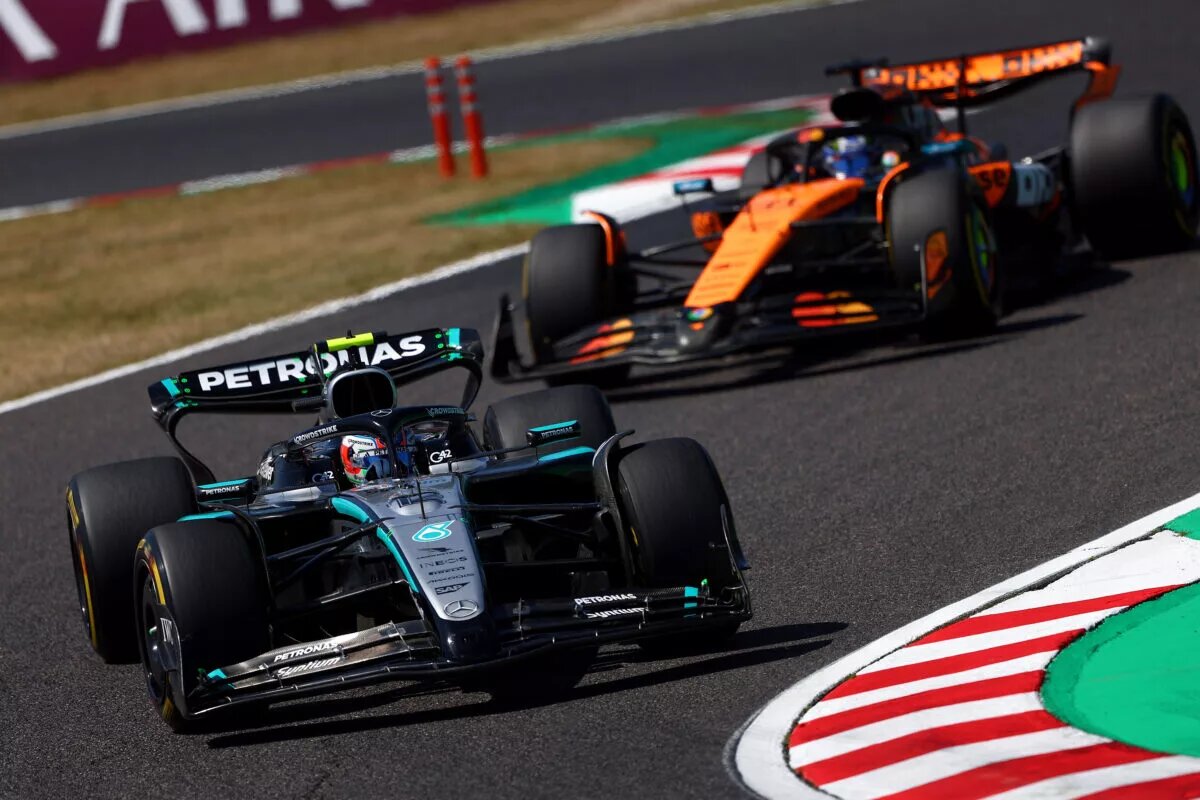

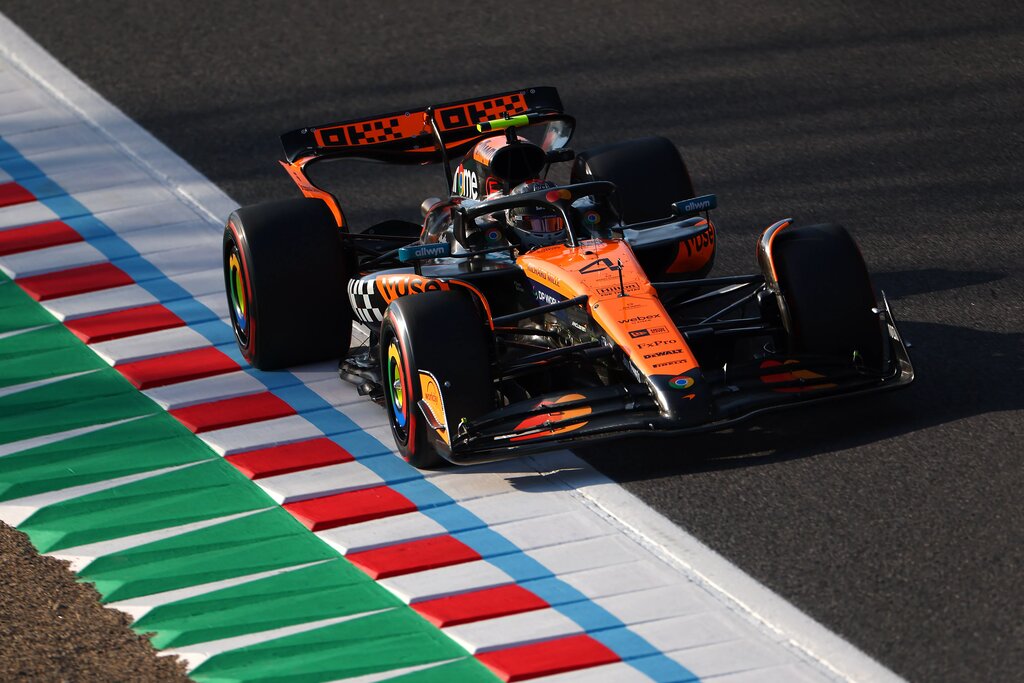
McLaren picked up where they left off with a strong showing across Friday practice in Japan. The MCL39 was fastest in both qualifying and race trim, with a notable – though not staggering – gap to the rest of field.
Further behind, it was the Mercedes of George Russell that presented the biggest threat to the McLaren duo.
Both in terms of consistency and peak performance, the W16 once again proved a well-rounded and consistent machine.
Red Bull’s RB21 continues to expose itself as a car with fundamental issues – which could be difficult to address.
McLaren with a cushion against the rest
To some extent, the threat of Mercedes, Ferrari and Red Bull should keep McLaren on their toes in 2025.
However, Andrea Stella’s team have enough of an advantage over their rivals – roughly three tenths – to maintain a decisive edge.
Provided that Norris and Piastri put their laps together, they should put themselves in Pole Position.
Race simulations were very limited, due to the four red flags in FP2, but the evidence so far suggests McLaren are stronger in race trim than in qualifying.
Tyre degradation in Suzuka has also been less extreme than anticipated, with a one-stop strategy likely if Sunday is dry.
Then again, wet conditions for the Grand Prix could throw a spanner in the works for the Woking squad.
Regardless of the conditions, George Russell and Kimi Antonelli should be firmly in contention for the podium.
Mercedes are faster than both Ferrari and Red Bull, whilst also benefiting from similarly strong performance in low, medium and high-speed corners.
Speaking of Ferrari, the SF-25 has more potential than the final lap-times of FP2 showed.
Whilst still a slightly tricky car, the SF-25 should be a threat in qualifying – though their ultimate pace might not be enough to displace Mercedes.
The greater concern for Ferrari is race day, with improved balance and tyre management two key areas to address.
Speaking post-session, Charles Leclerc said he experimented with set-up in FP1 and FP2 – which he believes provided some clarity for how to optimise the car moving forward.
Concern at Red Bull
Red Bull are still a few steps away from McLaren, as they were in the first two rounds.
Yuki Tsunoda already looks more competitive than either Lawson or Perez – though the RB21 is arguably the worst car produced at Milton Keynes in half a decade.
This will make securing a good points haul difficult, regardless of the gap to Verstappen.
Red Bull, should they put everything together, can aim to battle Ferrari and Mercedes this weekend.
However, some worrying trends emerging for the Austrian team – that could prevent them from unlocking the RB21’s potential.
Fundamentally, there is a discrepancy between the Red Bull simulator and how the car behaves on track.
This is something Tsunoda mentioned immediately after completing FP2, and explains why the Austrian team’s baseline set-up is off the mark.
Red Bull are consistently entering race weekends on the defensive, having to make adjustments to compensate for a poor baseline.
In addition to this, Max Verstappen and his new teammate are suffering with a very unpredictable machine.
The RB21 is prone to swings form oversteer to understeer, which partly explains why Lawson struggledso extensively.
When Red Bull find the ideal operating window, they can be competitive – Verstappen’s Championship position is evidence of this fact.
Still, as the Dutchman himself explained post-session, there is still a long way to go to find any kind of predictability:
“Of course, it was quite chaotic out there with everyone with the red flags.
“So, like everyone else, we couldn’t complete what we wanted to do.
“This means that today has been quite difficult for us.
“We were trying different things in the car, and a lot of things weren’t clicking as much as we would have liked.
“It is quite difficult to put a lap down, you need quite a lot of confidence and commitment around here.
“And at the moment, I feel like I still have a lot of work to do.”