
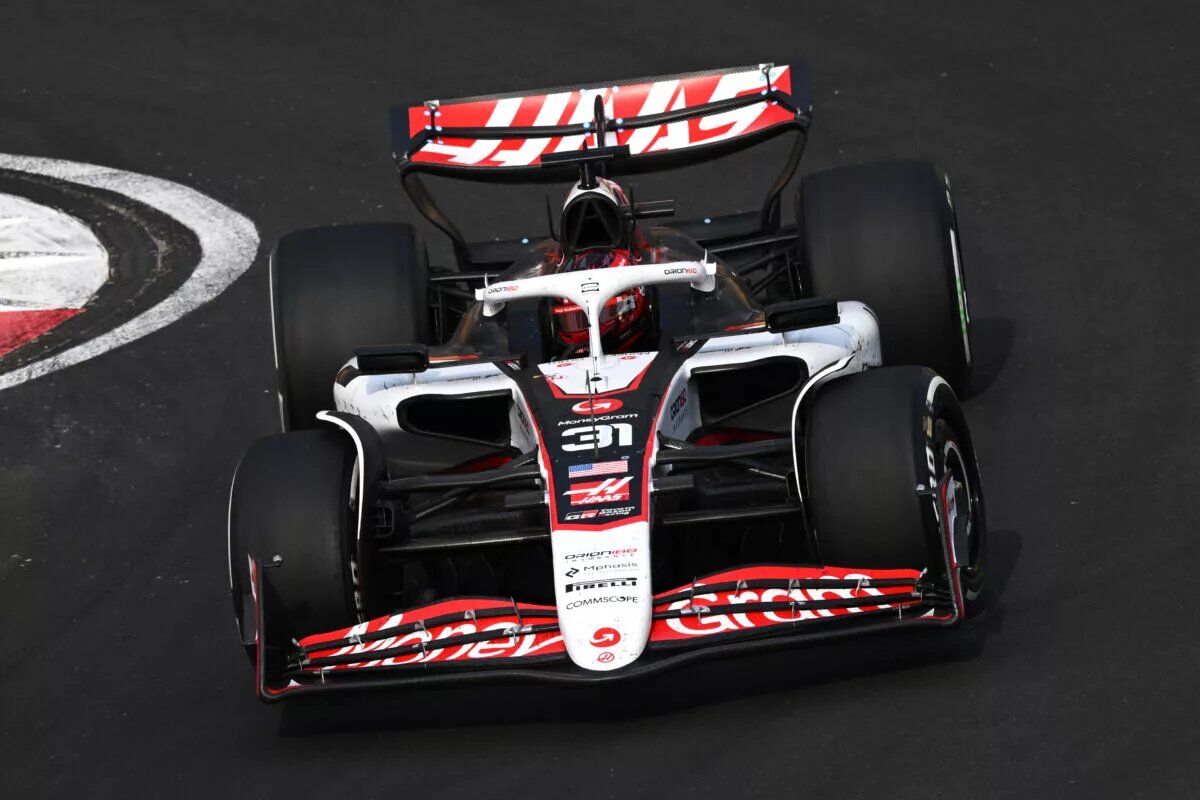

Haas were rock bottom in the standings after the Australian GP, with the VF-25’s performancee taking the team by surprise. There were genuine concerns at Haas about their baseline for 2025, especially given the incoming regulation changes.
Ayao Komatsu and his personnel made the brave choice not to follow Ferrari’s new front suspension – instead retaining the same specification from 2024.
This commitment is inevitably associated with some risk, especially for a team with such limited resources.
Thankfully for Haas, a series of set-up changes in Shanghai put the VF-25 into a better operating window. Ocon and Bearman both scored important points, propelling the US outfit to 6th in the standings.
Despite this encouraging result, Komatsu’s team are still pushing ahead with upgrades.
Haas react quickly after early stumble
Since becoming Haas team principal in 2024, Ayao Komatsu has made clear improvements to the operational efficiency at the US outfit.
Last year’s VF-24 was competitive to start the year, with Hulkenberg and Magnussen taking points in the early rounds.
However, it was the team’s mid-season trajectory that represented a major improvement from the past.
Unlike previous campaigns, Haas implemented a successful upgrade programme. They comprehensively out-developed VCARB, finishing the year an impressive 7th in the constructors’ standings.
In the first weeks of this season’s campaign, Haas can already be credited with an impressive correction.
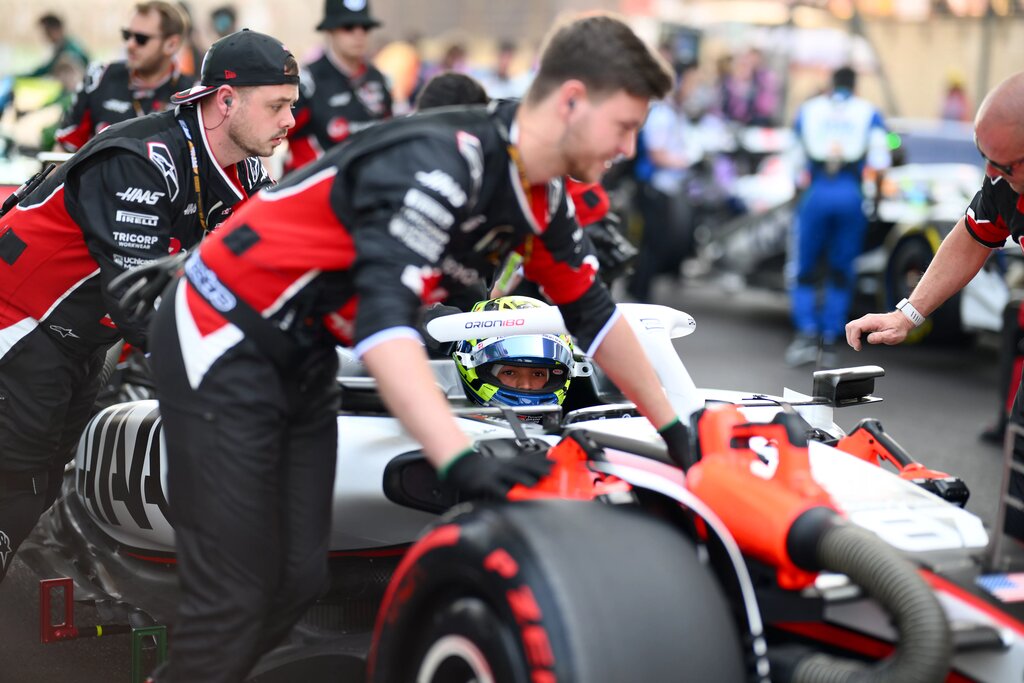
As Esteban Ocon explained post-race in Shanghai, the team worked hard to find solutions after Australia:
“Things were obviously looking difficult just a week ago in Melbourne
“But we haven’t slept much since then and it’s all been worth it as we’ve discussed everything and where to unlock the performance from the car.
“We knew there was more performance to be had.
“Obviously we’re keen to improve some more, but the signs for now are good.
Haas not satisfied, updates incoming
When the season began in Australia, Haas were surprised by the VF-25’s performance.
The car was not behaving as intended, with aerodynamic instability making it impossible for Ocon and Bearman to push the limits.
As explained by Ocon previously, the issue was not a lack of downforce in itself.
Instead, Haas were unbale to find a good operating window to regularly deploy this downforce.
The discrepancy between theoretical downforce (seen in the wind tunnel) and usable downforce has been integral under this generation of cars.
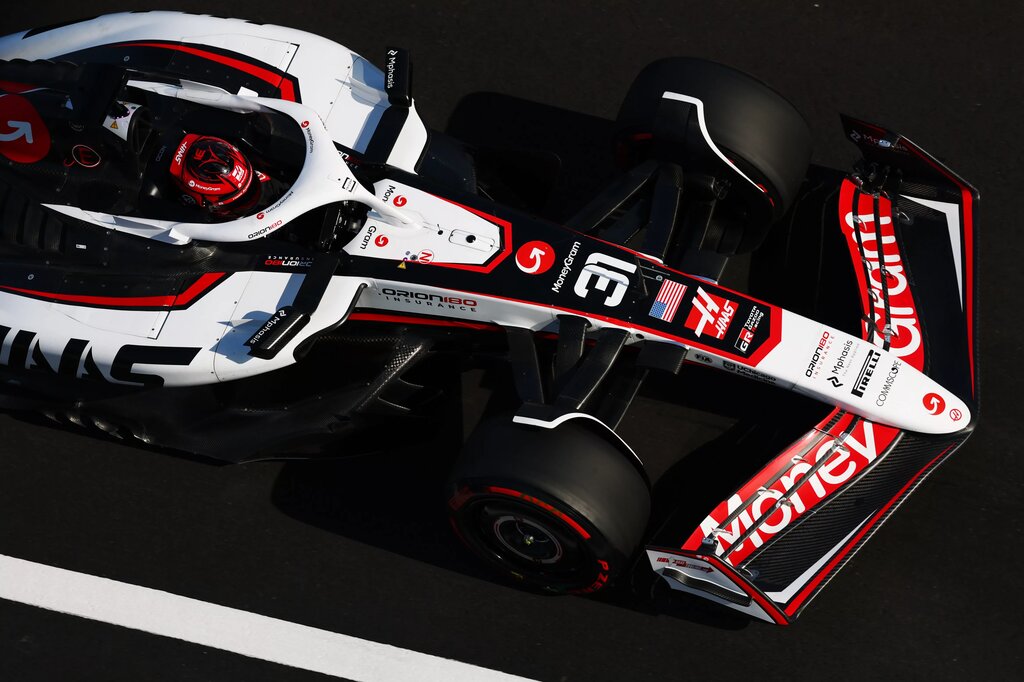
Haas were extremely concerned by their showing in Albert Park, as the VF-25 produced data that was difficult for engineers to decipher.
Because of this, the team’s strong result in Shanghai does not change the urgency of making corrections.
Haas will bring updates to the upcoming Japanese GP, as reported by Motorsport, with the intention of correcting the VF-25’s shortcomings.
Haas team principal Ayao Komatsu touched upon this post-race in Shanghai:
“We reacted to our change of circumstances very well.
“Like I said before, the reaction after the Sprint yesterday to change the car set-up, it really worked for qualifying and the race.
“Communication and execution in the race today was really good…
“It’s an amazing result. I’m looking forward to working together as a team and improving this car.”
Despite their Australia scare, Haas responded with a competitive package and operational competence to score points in China.
This gives them an important points cushion over several other midfield teams – which could be crucial as they assess the effectiveness of their Japan updates and work to further optimise their 2025 challenger.
The American team clearly have a car with potential. Their task is to ensure they put themselves in a position to consistently deliver in what remains of 2025.