


LWOS is continuing our IndyCar 101 series to help fans get familiar with all the different aspects of IndyCar racing. Today’s topic is all about IndyCar qualifying.
IndyCar Qualifying Differs Depending on the Type of Track
There are three different types of tracks that IndyCar races at throughout the season. There are road courses, street circuits, and ovals. Ovals make up about a third of the calendar.
It’s also important to note that qualifying for the Indianapolis 500 is different from the rest of the ovals on the schedule, but more on that later.
Qualifying on a Road or Street Course
Qualifying for road and street courses is broken down into three different parts.
For part one, the drivers are split into two groups. The groups are determined by the top times posted by each car in the final practice session before qualifying.
From there, the two groups are each given 10 minutes of track time, with the fastest lap set by each driver determining their qualifying position. The fastest six drivers from groups one and two then move on to part two of qualifying.
The cars that weren’t able to qualify within the top six of their group will fill out the grid in positions 13 and downwards based on their lap times. Group one fills in the odd-numbered positions (13, 15, 17, 19, 21) and group two fills the even-numbered positions (14, 16, 18, 20).
For part two of qualifying, the 12 remaining cars are once again given 10 minutes of track time. The fastest lap done by each entry is how its qualifying entry is determined. The fastest six move on to the Firestone Fast Six. The remaining cars make up positions 7-12 on the grid.
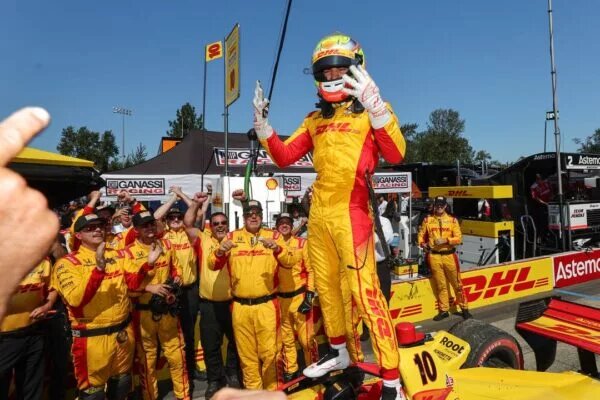
During the Firestone Fast Six, the cars are given six minutes of track time. By the end of the session, the cars are ranked from 1-6. Whoever records the fastest lap out of the Fast Six secures pole position for the race the next day.
Oval Qualifying
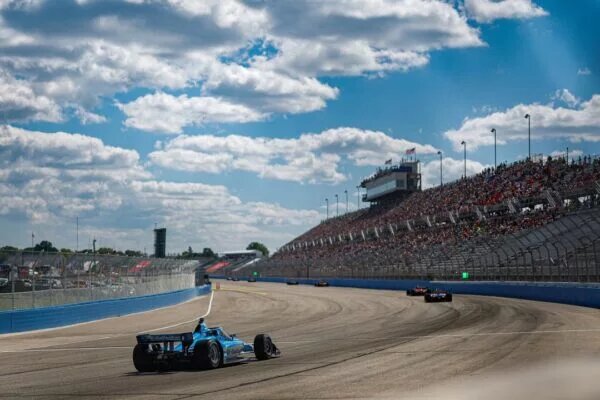
Except for the Indy 500, oval qualifying for IndyCar goes as follows.
The order for qualifying is determined by going in reverse order of championship points when entering the event. Essentially, whoever is first in the Driver’s Championship at that point will be going out last.
Teams that have no entrant points are placed at the front of the order, and the qualifying order is determined by a blind draw. Each driver is given at least one guaranteed qualifying attempt.
Each car is allowed to do two warm-up laps before their timed qualifying laps.
A qualification attempt consists of two consecutive laps – both laps are timed. Afterward, both of the lap times are combined and recorded as the official qualifying time for that car. The car with the fastest combined lap time earns pole position.
Qualifying at the Indianapolis 500
A blind draw is done the day before day one of qualifying to determine the qualification order. Each driver gets at least one attempt to qualify on day one. Each driver completed four consecutive laps with their average speed determining where they rank.
The top 12 drivers advance to Sunday’s Fast 12 session, while positions 13-30 are locked in at the end of the day. Drivers who finish outside of the top 30 must requalify on Sunday for the final three sports if there are more than 33 entries for the 500.
Day two is also the final day of qualifying. It includes the last-chance qualifying, where all the drivers outside of the top 30 fight to secure one of the final three spots to start in positions 31-33. The slowest car is bumped out.
Afterward, the top 12 drivers from Saturday get one more run, where the top six drivers move on to the Fast Six session. Once the Fast Six is over, a polesitter is determined, as well as the first two rows of the race.
The fastest four-lap average in the Fast Six earns pole position while the rest of the grid is set based on their qualifying results.
READ MORE: McLaughlin storms to record pole for the 108th Indy 500
Qualifying for a Double Header Race Weekend:
There’s only one doubleheader on the schedule this year. It’s happening over at the Iowa Speedway in July. For doubleheader races, the drivers are split into two groups based on practice times.
Each group is given a total of 12 minutes of track time. Similar to oval racing, each car has its qualification attempt recorded after completing two laps. Lap One will determine the car’s start for Race One, and lap two will determine the car’s starting position for Race 2.
And those are the basics to understanding the different types of IndyCar qualifying sessions. LWOS will continue to release more stories like this one as we get closer and closer to the first race of the season.
Featured Image Credit: Penske Entertainment, Chris Jones. May 20, 2024
READ NEXT: IndyCar 101: The 2025 Tracks