

Formula One is looking to the future with the new 2026 regulations, introducing sustainable fuels. This is to try to reduce environmental impact without sacrificing performance.
From E10 to the Future: The First Step Towards Sustainable Formula 1
In 2022, there was a turning point in the world of Formula 1 with the introduction of E10, a fuel containing 10% ethanol of sustainable origin.
This important choice represented an important first step towards a greener future. Thus, reducing CO₂ emissions without compromising performance on the track.
However, ethanol has both advantages and disadvantages. On the one hand, it has contributed to a significant reduction in the carbon footprint and made the fuel partially renewable.
On the other hand, it has shown criticalities such as a lower energy density than conventional petrol. This has required technical adaptations to engines to maintain expected performance levels.
Adapting Engines: How the E10 Redefined the ICE
The introduction of E10 brought consequences. The rethinking of the internal combustion engine (ICE).
The lower energy density of ethanol compared to conventional petrol required a redesign of key engine components in order to maximise efficiency and preserve power.
Formula 1 teams have worked to optimise the compression ratio and adapt the injection systems so as to ensure that at the same time, the materials are resistant to the corrosive effects of ethanol.
This process pushed engineering innovation to a new plane thus, demonstrating how F1 is able to meet and overcome the challenges posed by sustainability without compromising the performance on the track.
READ MORE: Liam Lawson: Driving Style Won’t be an Excuse at Red Bull
Ferrari’s Run-up: Engine Progress in 2021
In 2021, Ferrari made progress on the engine front, narrowing the gap to the giants Mercedes and Honda.
Thanks to the introduction of the high-voltage ‘cold’ system during the season, the Maranello team was able to significantly improve the performance of its power unit.
This technological innovation provided an advantage of over two-tenths per lap, thus demonstrating the effectiveness of the Prancing Horse’s development strategies.
This progress by Ferrari laid a solid foundation for the following seasons. This reaffirmed the team’s role as a competitive force in the fight for the top of F1.
The Red Bull Case: The Impact of Ethanol Evaporation on the Tank
One of the most curious episodes related to the introduction of E10 was experienced by Red Bull. The team was the victim of an unforeseen incident related to the evaporation of ethanol inside the tank.
This phenomenon led to the formation of a vapour cloud, that created a shield against the pump drawing in the last litres of fuel.
The force generated by the vapour cloud prevented the necessary fuel from entering the combustion chamber. This compromised the single-seater’s ability to complete some Grands Prix in 2022 – Bahrain and Australia.
This highlighted the technical complexities of using sustainable fuels. It therefore prompted the teams to investigate new solutions to deal with the problems of ethanol to ensure that the engines run optimally even under the most extreme conditions.
YOU MAY ALSO LIKE: Beyond Prejudice: The Women Who Are Changing Formula 1
The 2026 Regulation Between Progress and Controversy
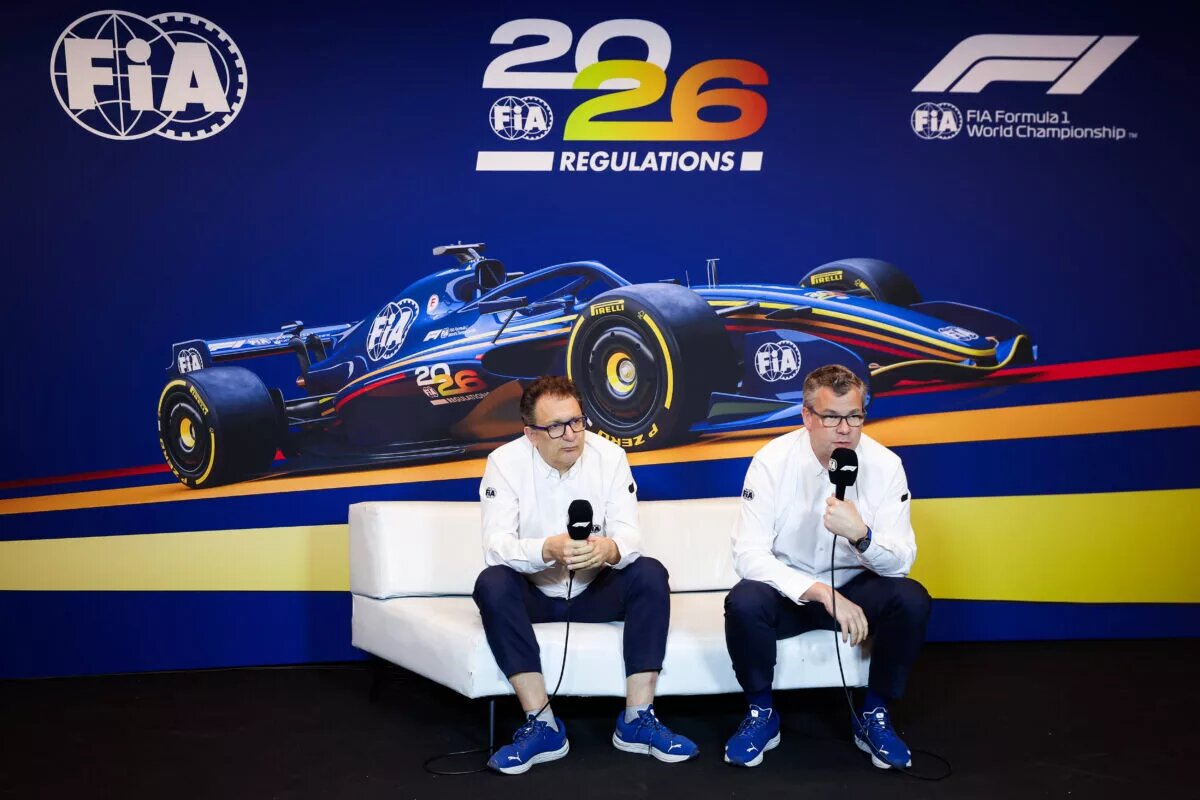
The 2026 technical regulations, although expected by the vast majority, have nonetheless stirred up a lot of controversy. One of the most discussed changes is the removal of the MGU-H.
This is the electric motor generator coupled to the turbocharger. It is one of the most technologically advanced elements of the current power units.
Claudio Lombardi, former head of the Ferrari engine department, called this decision a step backwards. He emphasised that the MGU-H represented technological excellence capable of improving energy efficiency and overall performance.
Its elimination, according to Lombardi, risks reducing the level of technical sophistication of the premier class.
The debate highlights the difficult balance between technological progress, sustainability and affordability. It is a debate which F1 must address to maintain its status as a laboratory of innovation in motorsport.
2026: Simplified Engines, New Horizons for Formula One
With the highly anticipated 2026 regulations, F1 is preparing to introduce 100% sustainable fuels. This is a revolution that promises to drastically reduce carbon emissions without sacrificing performance.
These 2026 technical regulations will mark a major turning point for F1, with the introduction of simpler, sustainability-oriented engines.
The goal is to reduce costs and encourage new manufacturers to enter the championship, increasing competitiveness and making the grid even more varied.
Among the possible new protagonists, there could be a possible return of Renault with a renewed project – a historic brand that has won so much in Formula 1.
Cadillac’s entry in partnership with Andretti and Audi’s debut have already been confirmed. Ford are returning to the Circus as power unit providers for Red Bull Racing in 2026, adding a further piece to the mosaic of constructors.
This simplification, while maintaining the focus on hybridisation and 100% sustainable fuels, represents a great opportunity, above all, to attract new investments and strengthen the spectacle on the track.
Formula 1 2026 thus aims to combine innovation, sustainability and accessibility to continue to be the pinnacle of global motorsport.