
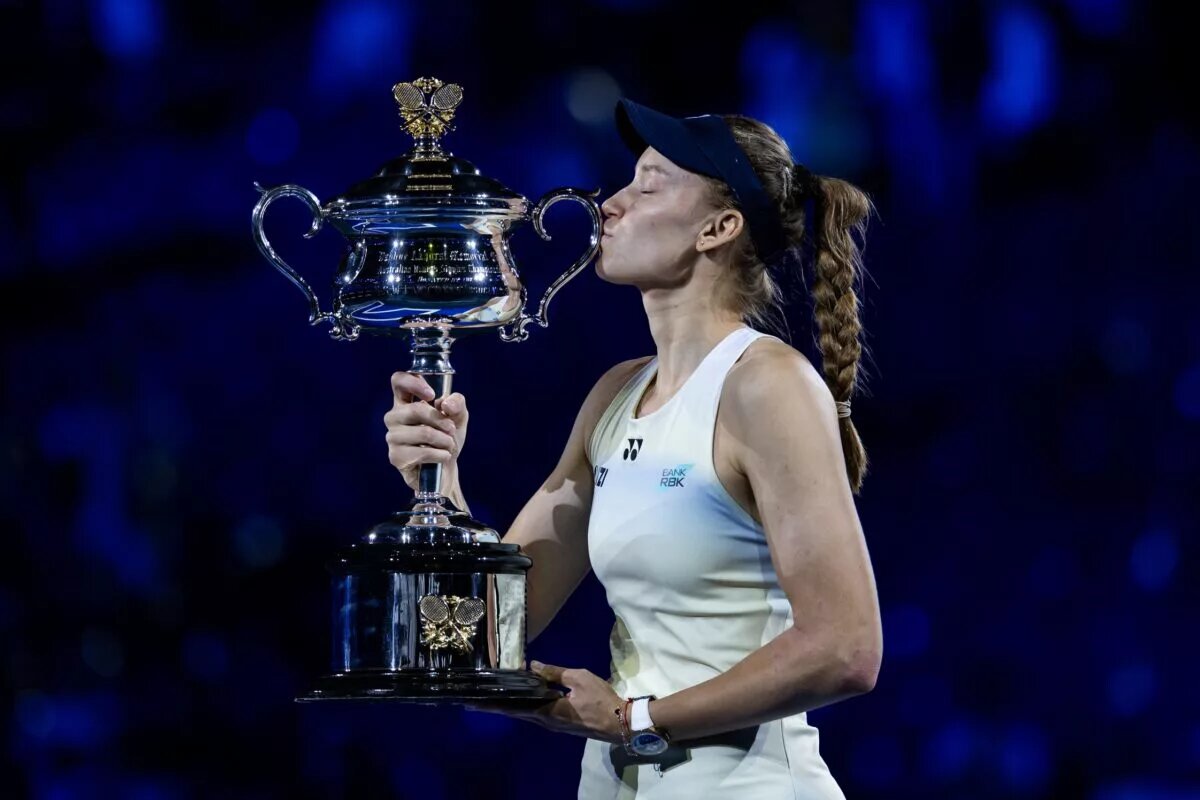
The first Grand Slam of the season has come and gone, and a new champion has emerged from the chaos. After falling agonizingly short of winning the Australian Open a few years ago, Elena Rybakina finally broke through, handing Aryna Sabalenka her second consecutive final loss in Melbourne. The landscape has shifted, and with it comes a new set of power rankings reflecting what we witnessed over these two weeks.
- Elena Rybakina
Considering she lifted the trophy, Rybakina has to occupy the top spot. She’s been playing at an exceptionally high level for an extended period, but what she produced in Melbourne was something different entirely. Very few predicted this outcome heading into the tournament, yet she delivered the most complete and dominant tennis of anyone in the draw.
- Aryna Sabalenka
If there’s one fundamental truth about women’s tennis over the past year, it’s that Sabalenka is either the best player in the world or the second best. That reality didn’t change in Melbourne despite the final result. She reached another final and had genuine opportunities to win it, which speaks to the relentless consistency she brings to every tournament. Until someone proves more devastating and more consistent over an extended stretch, we have to give Sabalenka the credit she’s earned.
- Iga Swiatek
Despite a disappointing Australian Open, the Polish star remains arguably the second best player in the world when considering the full body of work. The letdown after this event is substantial, particularly given the expectations surrounding her arrival in Melbourne. But we can’t simply ignore everything she’s accomplished over the past few years, even if her absolute peak has been conspicuously absent for some time now. The question is whether this represents a temporary dip or something more concerning. For now, she holds number three, though the gap between her and the players below has narrowed considerably.
- Jessica Pegula
Pegula once again entered the season with a strong result in Australia, but this time she pushed through to the semifinals, which represents tangible progress. The American played genuinely well throughout the tournament and has built a substantial history of relative consistency that can’t be dismissed. She may not generate the headlines that others do, but she keeps showing up and producing results that matter. That combination of reliability and steady improvement earns her number four on this list.
- Amanda Anisimova
This wasn’t the breakthrough Anisimova was hoping for. She reached the quarterfinals, which sounds impressive until you consider the expectations she carried into Melbourne. Many anticipated at least a semifinal run after the remarkable year she produced in 2025, and measured against those expectations, this felt somewhat underwhelming. She’s dropped on this list, though that has as much to do with what others accomplished as it does with her own performance. The talent remains obvious. The question is whether she can consistently reach the heights we know she’s capable of.
- Coco Gauff
It might seem harsh to place Gauff this low given her overall standing in the sport, but we simply cannot ignore what unfolded in Melbourne. She wasn’t very good. She didn’t look confident. The glaring technical issues in her game, particularly that forehand, remain stubbornly unresolved. Until those problems get addressed in a meaningful way, we can’t justify placing her higher. Other players simply have their games better assembled right now, and the results reflect that reality. Gauff possesses immense talent and athleticism, but talent alone isn’t enough at this level.
- Mirra Andreeva
Andreeva hasn’t made the spectacular leap forward that many expected from her recently. She seems somewhat stuck in the middle ground, neither disappointing significantly nor breaking through to the next tier. This position feels fair precisely because it reflects that in-between status. She’s too good to fall further, but she hasn’t done enough lately to climb higher. The potential remains enormous. Whether she fulfills it remains an open question.
- Elina Svitolina
Svitolina played some of the best tennis of her career to reach the Australian Open semifinals. She couldn’t advance further than that, which appears to be her ceiling in the current tennis landscape, but the run itself was genuinely impressive. She’s someone worth monitoring closely, though we’re not ready to bet heavily on sustained success just yet. She’s produced these kinds of flashes before without building on them meaningfully. If she can maintain this level consistently, she could climb significantly higher. If this proves to be another isolated spike, she’ll drift back down.
- Naomi Osaka
We witnessed plenty of encouraging signs from Osaka throughout the tournament, and we’re willing to believe she’s finally figured out how she wants to play again. We didn’t get to see how deep her run might have gone, but what she showed was genuinely promising after years of uncertainty. The shot-making looked sharp. The movement looked fluid. Most importantly, the confidence appeared restored. Number nine feels right for someone who seems to be finding her way back to elite status, even if the full picture hasn’t come into focus yet after an injury.
- Victoria Mboko
Mboko impressed us as well, even if her run didn’t extend as deep as some others on this list. After what she accomplished last year, we expect her to remain firmly in the conversation among the sport’s rising players. She’s clearly ahead of several other candidates for this spot right now, which is why she earns a place in our top ten. The trajectory looks promising, and if she continues developing at this rate, she won’t be lingering at number ten for long.
Main Photo Credit: Mike Frey-Imagn Images