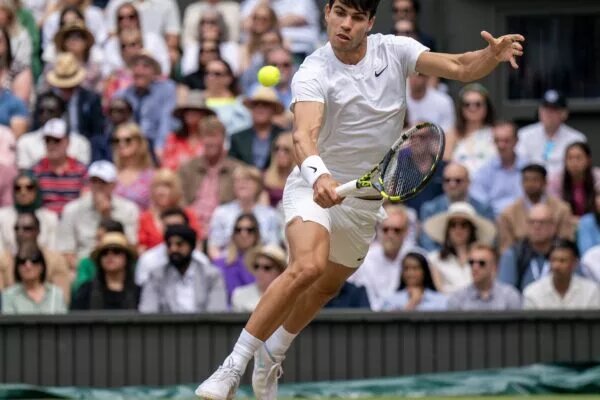



Despite finishing the 2025 season ranked No. 2 in the world, Jannik Sinner once again had a year to remember, adding a second elite campaign on the back of his outstanding 2024 season. The Italian became the first player since Roger Federer to record back-to-back seasons with a win percentage above 90 percent — something that showcases not only his consistency, but also just how high his peak level truly is.
And with Sinner still firmly established as one of the two dominant forces on the men’s tour, here is the case for why 2026 could see a familiar face back on top of the ATP rankings when it is all said and done.
Why 2026 Could Belong to Sinner
A Unique Ranking Window
Unlike most of his rivals, Sinner enters 2026 with a complete three-month block of tennis, having not played last year due to suspension. That alone gives him a rare opportunity to gain ranking points that others simply do not have access to.
Crucially for Sinner, the majority of those tournaments are played on his favourite surface, hard courts, where his baseline dominance and consistency are at their most effective.
Despite missing three months of tennis in 2025, Sinner still ended the year just 500 ranking points behind Carlos Alcaraz. On paper, that is a gap that can easily be overturned if he plays a full schedule in 2026, which he is expected to do barring any injury or health setbacks.
The Highest Floor
While at their absolute best, you can make a legitimate argument that Alcaraz has a slightly higher ceiling, based on how their head-to-head has played out over the past two seasons, Sinner still comfortably owns the highest floor in men’s tennis.
Even as Alcaraz continues to raise his base level, Sinner’s consistency allows him to beat the vast majority of the tour almost by default. If healthy, the Italian is simply not prone to early or poor defeats anymore, which results in deep tournament runs almost every single week.
More often than not, the only real question is whether Alcaraz is waiting for him in the final. And when a player has that much separation from the rest of the field, ending the year ranked No.1 is always a realistic outcome.
Coaching Stability
A sneaky but important factor that has largely gone under the radar is Darren Cahill’s decision to remain part of Sinner’s coaching team for another year. Earlier reports had suggested that the Australian mastermind, a key figure in Sinner’s rise, was set to retire from coaching duties, making his continued presence a significant boost.
At this stage of his career, Sinner’s development is less about technical overhaul and more about management, decision-making, and marginal gains. Having a voice like Cahill’s, someone who has worked with multiple former world No.1s, brings not only reassurance but also constructive honesty that few coaches can deliver when it matters most.
Just as on the court, stability off it can make the difference. And given the off-season changes surrounding his biggest rival, Sinner’s settled coaching environment could quietly tilt the balance in his favour.
History Suggests Opportunity at the Top
Repeating as year-end world No.1 has proven to be one of the hardest feats in modern tennis. In non-COVID-affected seasons, Novak Djokovic in 2015 was the last player to achieve it, in what many consider the greatest single season in the sport’s history. If that is the benchmark required to hold onto the top spot, then world No.2 Sinner begins 2026 with what could be described as a historical advantage.
Several factors come into play — health, motivation, and the natural letdown. More often than not, the reigning world No.1 has played the most matches and achieved career-best results the season before, making a slight dip almost inevitable.
Should even a modest regression occur for Alcaraz, Sinner will be perfectly positioned to capitalise and reclaim the No.1 ranking by year’s end.
Main Photo Credit: Mike Frey – Imagn Images