
Grand Slams get the glory. They’re the tournaments every player dreams of winning, the ones that define legacies and fill trophy cabinets that get photographed for magazine covers. But if you want to know who dominated the professional tour a bit more consistently, you need to look at the Masters 1000 circuit.
These nine prestigious tournaments represent the sport’s most grueling grind. They’re where rankings are built, where consistency is tested, and where players face elite competition multiple times throughout the season. Win one, and you’re having a good year. Win two, and you’re elite. Win three, and you’re in rarified air.
With the 2025 season officially concluded, we decided to examine how the Top 10 players stacked up based solely on their Masters 1000 performances. The results are fascinating. Some players rise dramatically from their year-end rankings, while others fall. It reveals who thrived under the relentless pressure of facing the world’s best players week after week.
To paint a clearer picture, we’ve included each player’s overall record at these events. Not everyone played the same number of matches due to injuries, scheduling decisions, or early exits, so the context matters.
The ATP Masters 1000 Points Rankings
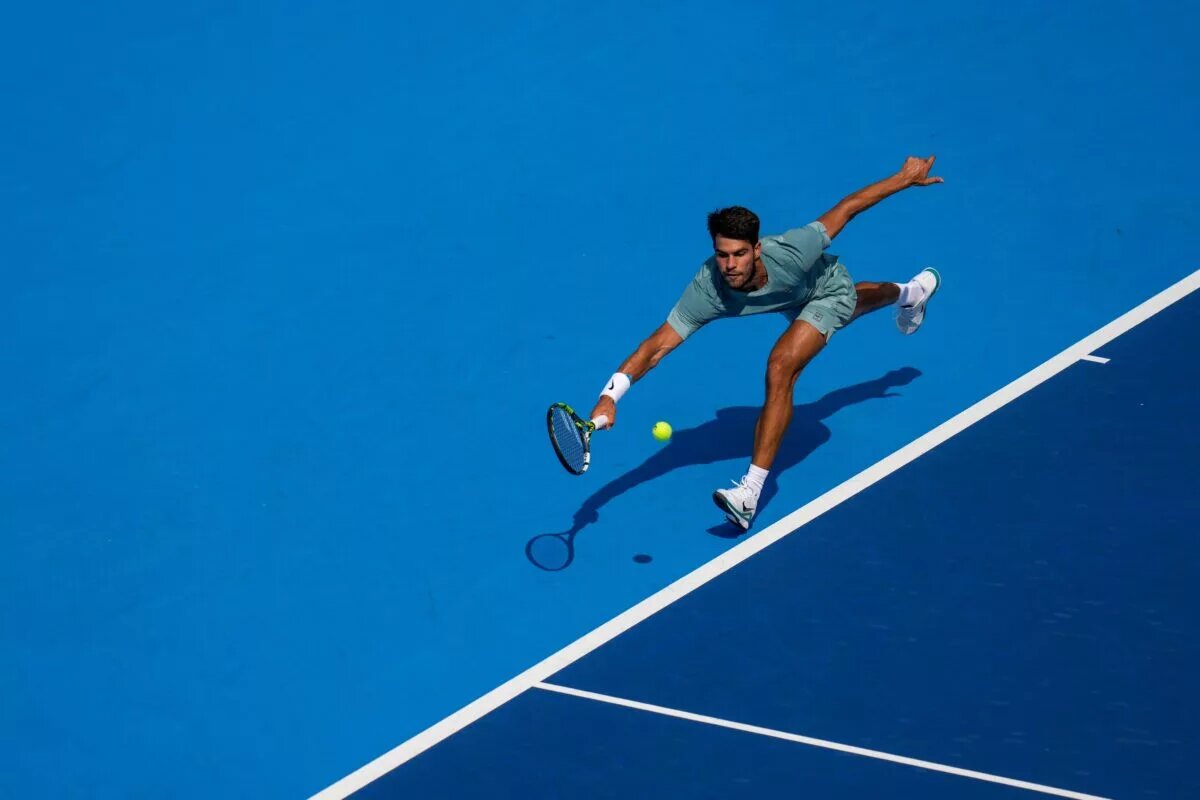
1. Carlos Alcaraz: 3,420 points (21-3)
Carlos Alcaraz was by far the best player on the Masters circuit this year; most matches won, most points earned, most titles captured. He won three of these prestigious tournaments, confirming what we already knew: Alcaraz was the most dominant force in 2025.
No player came remotely close to his point total or win count. Much like in the final ATP rankings, Alcaraz sits firmly at the top here following an absolutely sensational campaign. When the biggest events arrived, he was ready. And more often than not, he was untouchable.
2. Jannik Sinner: 2,350 points (16-3)
Sinner didn’t play as many Masters events as Alcaraz, but he still secured the second-most points of any player. His win total isn’t the second-highest, which actually proves how ruthlessly efficient he’s been this year.
Whenever he showed up, he generally won. That’s been Sinner’s story for a while now: maximum impact, minimum waste. Much like in the official year-end rankings, he occupies second place here as well. The gap to Alcaraz is substantial, but the gap between him and everyone else is even larger, even though it might not look like that on first glance.
3. Jack Draper: 1,960 points (15-4)
Here’s where things get interesting. Draper ranks just 10th in the official year-end standings, yet he’s third on this list. Why? Because he played exceptionally well when the stakes were highest.
He won Indian Wells. He reached the Madrid final. Despite missing significant time due to injury, he accumulated enough points at the Masters level to leapfrog nearly everyone. It’s a testament to his ability to peak at the biggest events, even if consistency throughout the whole season remains elusive.
4. Lorenzo Musetti: 1,780 points (19-9)
Musetti is another player who fares significantly better here than in the official rankings. He played solid, professional tennis across the Masters circuit, competing in all nine events and winning most of them. Patient, consistent point accumulation defined his season.
His 19 wins are the second-most among all Top 10 players at the Masters level, trailing only Alcaraz by four. That’s legitimately impressive, even if he never quite produced the explosive week that would vault him into title contention.
5. Ben Shelton: 1,690 points (15-8)
Shelton had a genuinely strong Masters season, highlighted by his title run in Montreal. That victory alone accounts for a massive chunk of his point total. Outside that breakthrough week, though, he didn’t quite replicate that level, suffering some disappointing early losses at other events.
Still, 15 wins and a Masters title at age 23 is nothing to dismiss. He’s building something, even if the consistency isn’t fully there yet.
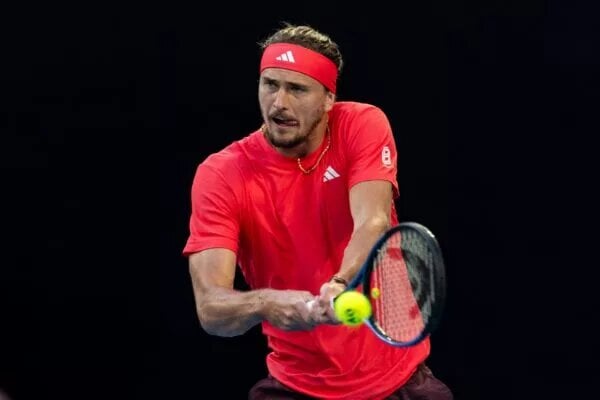
6. Alexander Zverev: 1,670 points (19-9)
Despite matching Musetti’s 19 victories, Zverev sits sixth because he lacked a defining run. He won matches at every Masters event he played, steadily accumulating points, but he never made a truly deep run: no finals, no titles, essentially no statement weeks.
It’s become an unfortunate pattern in his career. The talent is obvious, the work ethic is there, but the decisive punch that separates good from great was largely missing this year, not just at the Masters level.
7. Alex de Minaur: 1,410 points (18-9)
de Minaur suffers from the same syndrome as Zverev. He amassed a respectable point total through consistency and winning matches at nearly every event, but it lacked the explosive run that would elevate him into elite territory.
Eighteen wins sound impressive until you realize none of them came in the semifinals or finals of these prestigious tournaments. He’s perpetually one level below where he needs to be to break through truly.
8. Taylor Fritz: 1,260 points (16-8)
Fritz largely disappointed at the Masters level this year. Sixteen wins are solid, but only 1,260 points reveal the problem: he didn’t produce a strong run at any event. His ranking here is lower than his official year-end position precisely because he failed to impose himself when it mattered most.
For a player considered among America’s best, this represents a missed opportunity. The Masters 1000 circuit is where elite players prove themselves. Fritz couldn’t quite do that in 2025.
9. Felix Auger-Aliassime: 1,140 points (12-8)
Despite finishing in the Top 5 of the official ATP rankings, Auger-Aliassime trails here because his Masters season was underwhelming. Just 12 wins is genuinely disappointing for a player of his caliber, and his point total reflects that inadequacy.
He did finish the season strong, earning decent points at the final Masters events, but the earlier tournaments cost him dearly. Inconsistency remains his greatest enemy.
10. Novak Djokovic: 1,080 points (9-5)
Perhaps the most surprising entry on this list: Djokovic sits last despite being arguably the third-best player in the world this year. The explanation is simple. He didn’t prioritize these events.
He played just 14 Masters matches all season. When he did compete, he was solid, reaching the Miami final. But there were also some head-scratching early losses mixed in. Overall, it’s clear these tournaments simply weren’t his focus in 2025. At 38, he’s picking his spots, conserving energy for the majors that truly matter to his legacy.
What It All Means
The Masters 1000 circuit reveals the truth. Grand Slams can be won with two great weeks and some fortunate draws. But the Masters demand sustained excellence across nine grueling tournaments spread throughout the season.
Alcaraz’s dominance here confirms his status as the best player in 2025. Draper’s third-place finish suggests he’s closer to elite status than his year-end ranking indicates. And Djokovic’s last-place showing reminds us that even legends make strategic choices about where to invest their remaining energy.
The 2025 Masters season told us who was truly remarkable and who was merely good. The gap between those two categories remains as wide as ever.
Main Photo Credit: Albert Cesare/The Enquirer/USA TODAY NETWORK via Imagn Images