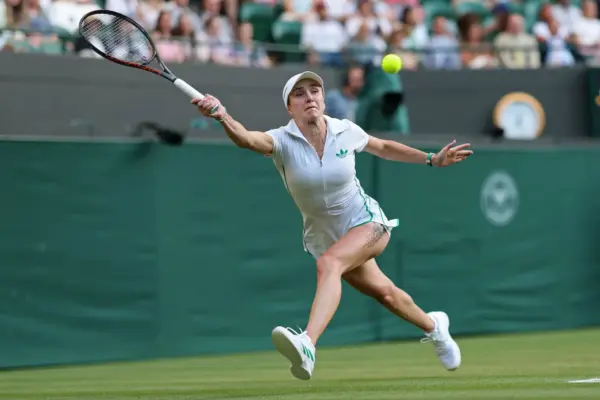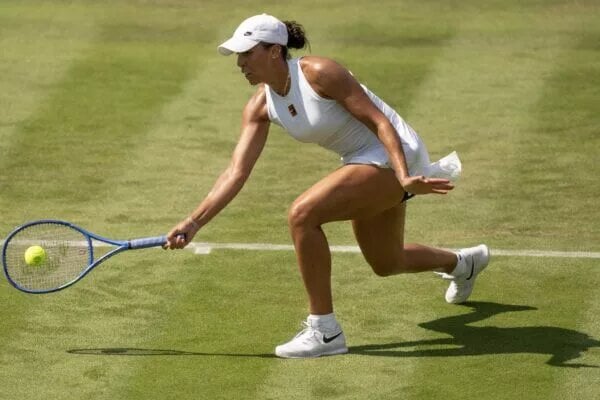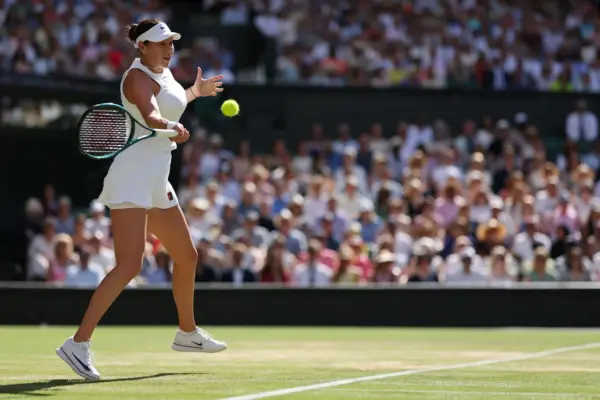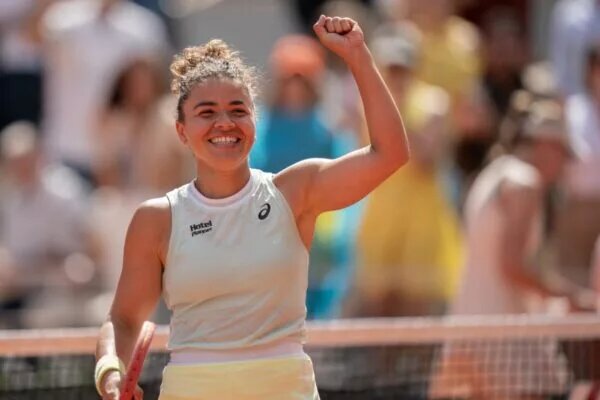

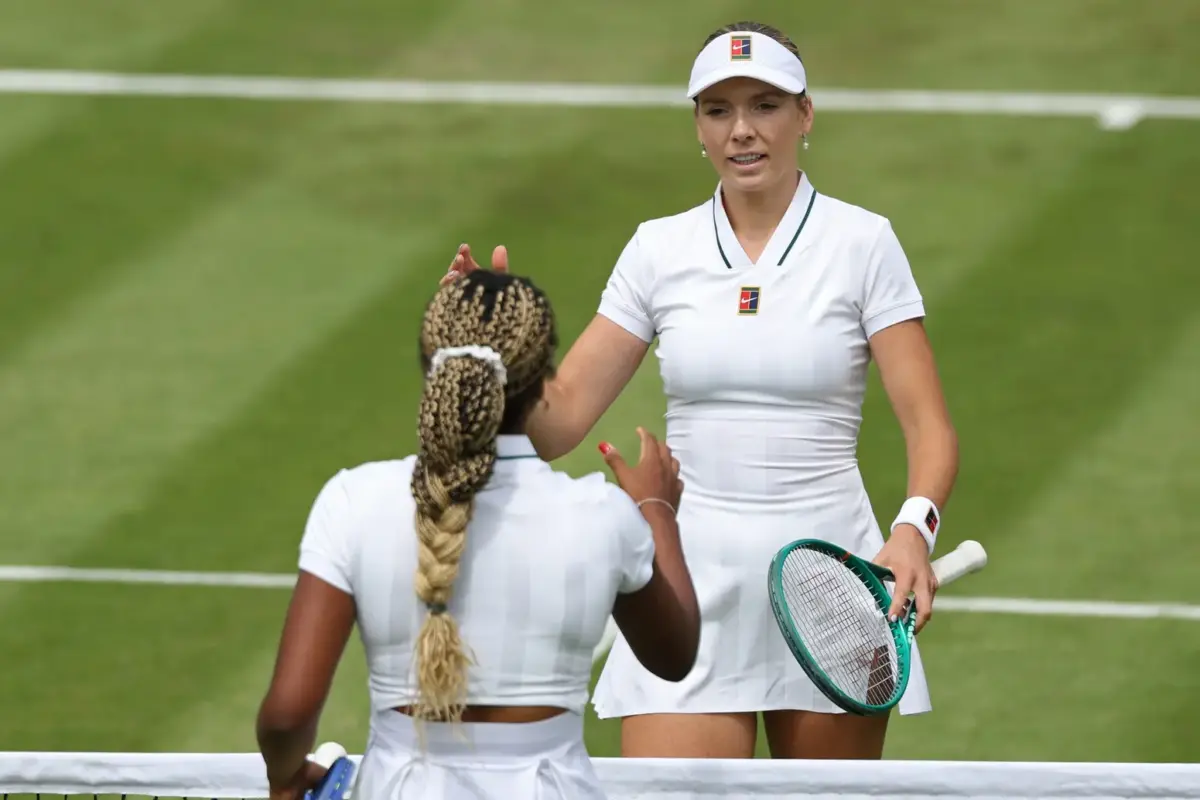

When Katie Swan was announced as a wildcard for the women’s singles draw at Wimbledon, few would have thought she’d be the only woman to make it to the second round. Following the withdrawals of both Emma Raducanu and Jack Draper, the first day of the Championships saw a record 10 British players defeated, the highest number this century. It may well have been 11 had the match between Jack Pinnington Jones and Brandon Nakashima not been suspended due to poor light. Pinnington Jones was defeated 7-5 in the third once the match resumed today.
On the second day of the Championships, the defeats have continued to roll in. The foremost British hope in the women’s draw after Raducanu, Katie Boulter, lost in straight sets to Italian teenager Tyra Caterina Grant. Harry Wendelken, a promising young player who recently came through qualifying at Queen’s, lost out in a competitive four-set match to world #54 Valentin Royer.
Some of the defeats were understandable, but the sheer number of them will be worrying for British tennis. And whilst while Oliver Tarvet, Harriet Dart and Cameron Norrie were beaten in close matches (Norrie losing in a fifth set tiebreak), several upcoming British talents lost in one-sided fashion.
A Great British Bloodbath at Wimbledon?
Mika Stojsavljevic, winner of the girls’ singles title at the 2024 US Open, lost 6-2 6-1 to a superior, more experienced Belinda Bencic. Alice Dudeney, who graduated from the University of Florida in 2025 and has since climbed 900 ranking spots, was defeated 6-3 6-3 by world #79 Alycia Parks. Hannah Klugman, who made waves in the juniors last year as a runner up at Roland Garros, lost 6-1 6-4 to former Wimbledon Champion Barbora Krejcikova. After the match, Klugman reflected on her opponent, acknowledging that”her ball was a joke. I’ve never felt that, her forehand, the jump on her forehand”.
Klugman’s reflection reveals something more problematic behind this Great British Bloodbath, underpinned by the LTA and Wimbledon’s approach to wildcards.
Of all the 16 wildcards available in the singles draw, 12 were awarded to British players, leaving even retiring legends like Gaël Monfils missing out. On the men’s side (at time of writing), three out of six have lost in their first match, and on the women’s side only one has made it through. With British veteran Dan Evans left out of the singles wildcards, it’s clear that the Wimbledon Wildcard sub-committee, with their advice from the LTA performance committee, have prioritised young British talent.
Stojsvljevic and Klugman, both incredibly promising youngsters but still only 17, were awarded wildcards. Dudeney, while 23 has only been out of college for a year, was also awarded a wildcard. Compare that to Katie Boulter’s teenage conquerer, Tyra Grant, who came through three competitive matches in qualifying (especially a tough first round assignment against 18th seed Taylah Preston). As Emma Raducanu famously found in her fairytale run in New York nearly five years ago, winning through qualifying can create good form and strong momentum coming into the main draw and in Raducanu’s case propelled her all the way to the trophy.
The gulf Klugman acknowledged between her previous experiences and Krejcikova’s level underline the problem with this approach. These are players not yet hardened to tour life, and not yet competing at the level of their more experienced peers. Britain is luck to be a Grand Slam nation, and players often recognise the privilege of being awarded these wildcards and how it can help catapult them up the rankings. But this comes at the risk of longer term development, where young players miss out on the opportunity to discover form, grind out wins and gain more experience at a level that reflects their current form more truthfully.
Oliver Tarvet was one of the breakout stories from last year, coming through qualifying and then his first round to set up a second round meeting with Carlos Alcaraz. This year he likewise came through qualifying. While he lost out to 25th seed and good-on-grass Arthur Rinderknech, the match was close and Rinderknech – visibly relieved – let out a huge roar when Tarvet was unable to make a play on a huge cross court forehand from the frenchman.
But if Tarvet went down fighting, most of the wildcards have gone out on a whimper.
There’s a greater argument to be made about the fairness of these wildcards, and whether British players – just because they were born in a Grand Slam nation – should be prioritised so much. But notwithstanding this longstanding and complex debate, the record British losses at the Championships this year questions if this system, and the awarding of 12 wildcards to British players with an average world ranking of 182, needs to be rethought.
What was once thought a springboard to a longterm professional tennis career for a promising British player, might now be turning into a privileged disadvantage.
Main photo credit: Geoff Burke-Imagn Images