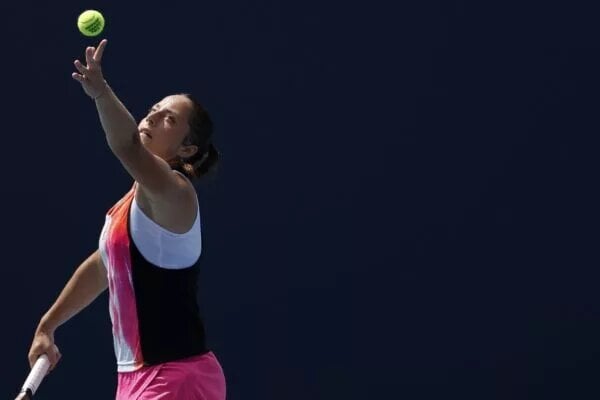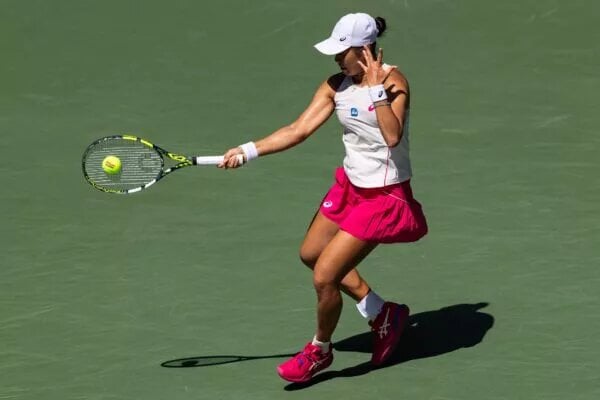

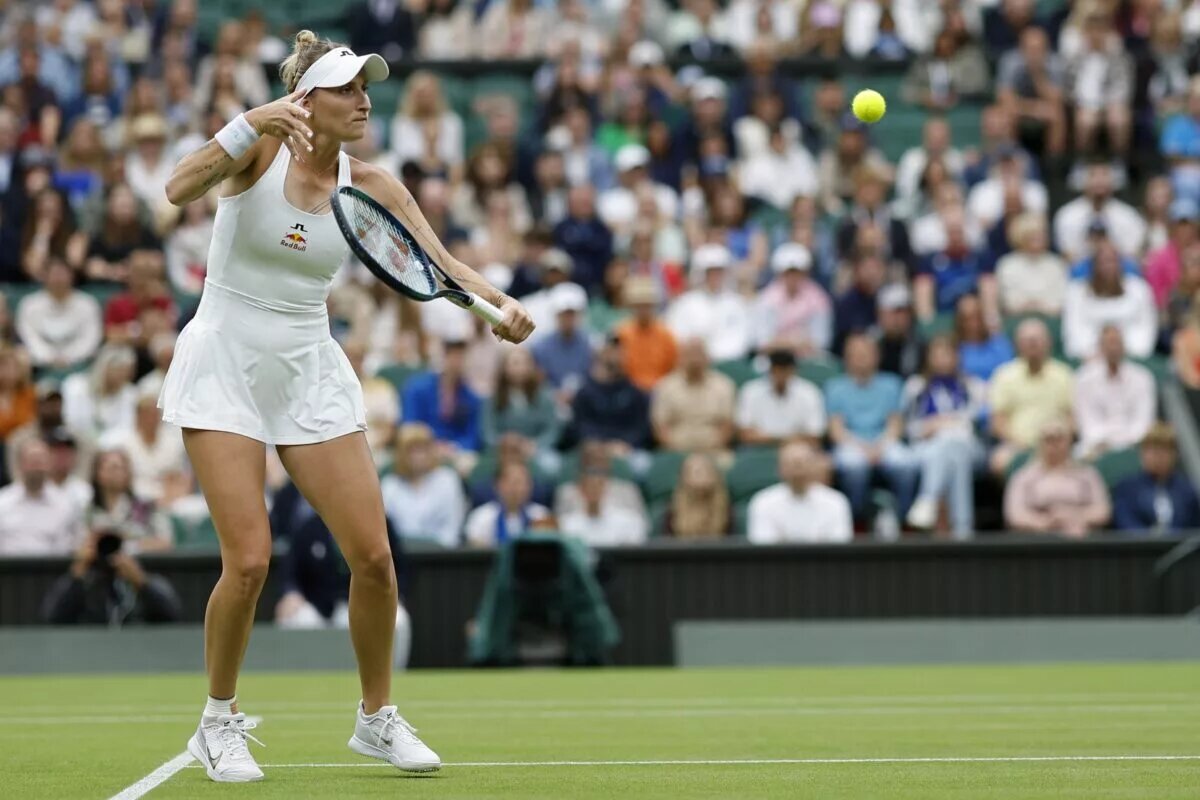

Marketa Vondrousova is the 2023 Wimbledon champion, a two-time Grand Slam finalist, a former World #6, and as of Monday morning, a player banned from professional tennis until June 21, 2030. She will be essentially 31 years old when the suspension ends if it runs its full course. The ban was issued by an independent tribunal following a ruling by the International Tennis Integrity Agency, which charged her under Article 2.3 of the Tennis Anti-Doping Programme for refusing to submit to sample collection without compelling justification. She has already spent 2026 away from the tour following a shoulder injury that forced her withdrawal from the Australian Open and every event since. The ban begins from the date of the ruling and does not credit her for time already spent off court.
The circumstances of the underlying incident have been widely reported and deserve to be stated clearly before any analysis. On the evening of December 3, 2025, a doping control officer arrived at Vondrousova’s home at approximately 8 p.m. to conduct an out-of-competition test. The officer, according to Vondrousova’s account, failed to adequately identify themselves, produced no visible credentials, and arrived outside of her designated one-hour testing window. She refused to let the officer in. She then went public with her account in April 2026, citing the psychological effect of what happened to her compatriot Petra Kvitova in 2016, when a man posing as an electrician gained access to Kvitova’s home and attacked her with a knife, severely injuring her playing hand. Vondrousova also disclosed that medical professionals had confirmed she was suffering from an acute stress reaction and generalised anxiety disorder, conditions she said had been building over time.
Marketa Vondrousova’s Ban: What the Rules Say
The tribunal’s ruling is clear and the logic behind it is set out in the ITIA’s governing code. Under anti-doping rules, the starting point for a sanction when a player refuses a test must be the same as if they had tested positive. This is to ensure that anyone who is doping cannot serve a shorter ban simply by refusing to be tested. That principle is the structural foundation on which the integrity of the entire anti-doping system rests, and it is worth spelling out why.
If an athlete fails a test with a detectable substance in their system, the anti-doping body knows what is present. The athlete can then provide an explanation, offer evidence of contamination or innocent ingestion, and if the case is sufficiently plausible, the sanction can be reduced to reflect the absence of intentional doping. The process is imperfect, but it has a starting point: a piece of evidence that can be investigated. When an athlete refuses the test outright, there is nothing. No sample, no data, and no baseline. Literally anything could be present in the athlete’s system, and there is no mechanism to find out. If refusal carried a lighter penalty than a positive test, it would become the rational strategy for any athlete who had something to hide. The rules exist to close that gap, and they must be enforced consistently for the closure to mean anything.
The charge Vondrousova faces is Article 2.3 of the anti-doping code. It is one of the most serious categories in the rulebook precisely because the entire anti-doping system depends on athletes being accessible and compliant when testing officials arrive. The tribunal heard her evidence, including the mental health diagnoses, the reference to Kvitova, and her account of the officer’s conduct. It still found that the refusal did not meet the threshold of compelling justification. That finding may feel harsh given the circumstances. It is nevertheless consistent with how the rule has been applied across multiple sports and multiple jurisdictions for years.
Vondrousova’s suspension will end on June 21, 2030, when the two-time Grand Slam finalist from the Czech Republic will be 30 years old, seven days from her 31st birthday. The timing is brutal when placed against the context of her career. She is 26 now, ranked outside theo p 100 after months away from competition, and carrying a shoulder injury that has kept her off Tour since January. She reached the quarterfinals of the 2025 US Open, beating Elena Rybakina and Jasmine Paolini along the way, before withdrawing ahead of a match against Aryna Sabalenka. That run was the last sustained evidence of the player she is capable of being. The next time she can step onto a court is four years from now.
She will appeal to the Court of Arbitration for Sport, and that appeal will almost certainly result in some reduction. CAS consistently finds something to give the appellant, whether a partial reduction based on mitigating circumstances, procedural irregularities in the original hearing, or fresh medical evidence that shifts the fault assessment. The mental health diagnoses, the documented anxiety disorder, and the specific weight of the Kvitova reference give her legal team something to work with. A reduction to two or two-and-a-half years is plausible. A full exoneration is not.
What makes the case feel particularly uncomfortable is the comparison it invites with other recent anti-doping outcomes. Jannik Sinner tested positive not once but twice for clostebol, an illegal substance, and was banned for less than three months, not missing a single Grand Slam during his suspension. That comparison is emotionally understandable and analytically flawed. Sinner’s case involved a detectable substance, a plausible innocent explanation, and a process that the system was designed to allow. Vondrousova’s case involves a refusal, which the code treats as categorically different regardless of intent. The rules are not inconsistent on this point. They are applying different articles to different infractions, and conflating the two because the outcomes feel disproportionate does not serve the cause of clean sport.
The Logic Is Uncomfortable But Correct
Marketa Vondrousova’s ban will generate significant sympathy, and the circumstances genuinely warrant some of it. She is not accused of doping. She is a player who, by her own account, was frightened by a stranger at her door on a December evening and made a decision that the rules cannot accommodate regardless of the reason behind it. That is a hard thing to write about someone who has dealt with real mental health struggles and invoked a real and violent event in her country’s recent sporting history.
But sympathy and the integrity of the system cannot both win in this situation. Professional athletes at the elite level have one core obligation in the anti-doping framework: they must be available and compliant when a duly authorized officer arrives to test them. That obligation does not come with an exception for inconvenient timing or an unfamiliar face at the door. If it did, the exception would swallow the rule within a generation. Every athlete who wanted to avoid a test would have a story ready, and the system would have no mechanism to distinguish genuine fear from deliberate evasion.
The penalty for refusal must equal the penalty for a positive test, because the alternative creates a rational incentive to cheat by non-compliance. Four years is harsh. The principle behind it is sound. Both of those things are true at the same time, and the appeal to CAS will determine how the balance is ultimately struck.
Main Photo Credit: Geoff Burke-USA TODAY Sports