
The ATP Power Rankings after the 2026 French Open look different from the official ATP standings, and they should. A Grand Slam has just been decided; Alexander Zverev beat Flavio Cobolli in five sets to claim his first major title, and the results of the past fortnight in Paris have reshuffled what we know about this generation of players.
These ATP Power Rankings are not just a snapshot of points. They are an attempt to capture who is actually playing the best tennis right now and what the last two weeks told us about where each player genuinely stands. Recent form is the primary currency here.
With that said, let’s get into it.
ATP Power Rankings: Post-French Open
1. Jannik Sinner
ATP Rank: 1
Previous Power Ranking: 1
It feels almost absurd to have him at the top, given that he lost in the second round of Roland Garros. Still, these ATP Power Rankings exist to reflect reality, and the reality is that what Sinner did before his collapse in Paris was as dominant as anything the tour has produced in years. He arrived at the French Open having gone 29-0 in ATP Masters 1000 events in 2026, winning his first five titles of the year, Monte Carlo, Indian Wells, Miami, Madrid, and Rome, dropping only three sets across the entire Masters 1000 calendar. He was a single game away from a straight-sets second-round win, having cruised through the first two sets in under 90 minutes before his body gave way in the Paris heat. His season record heading into the tournament was 37-2 with a 94.8 % win rate, figures that belong on a different planet from everyone else on tour. The collapse was real and embarrassing, but the evidence from the preceding four months is overwhelming. He remains number one.
2. Alexander Zverev
ATP Rank: 3
Previous Power Rankings: 3
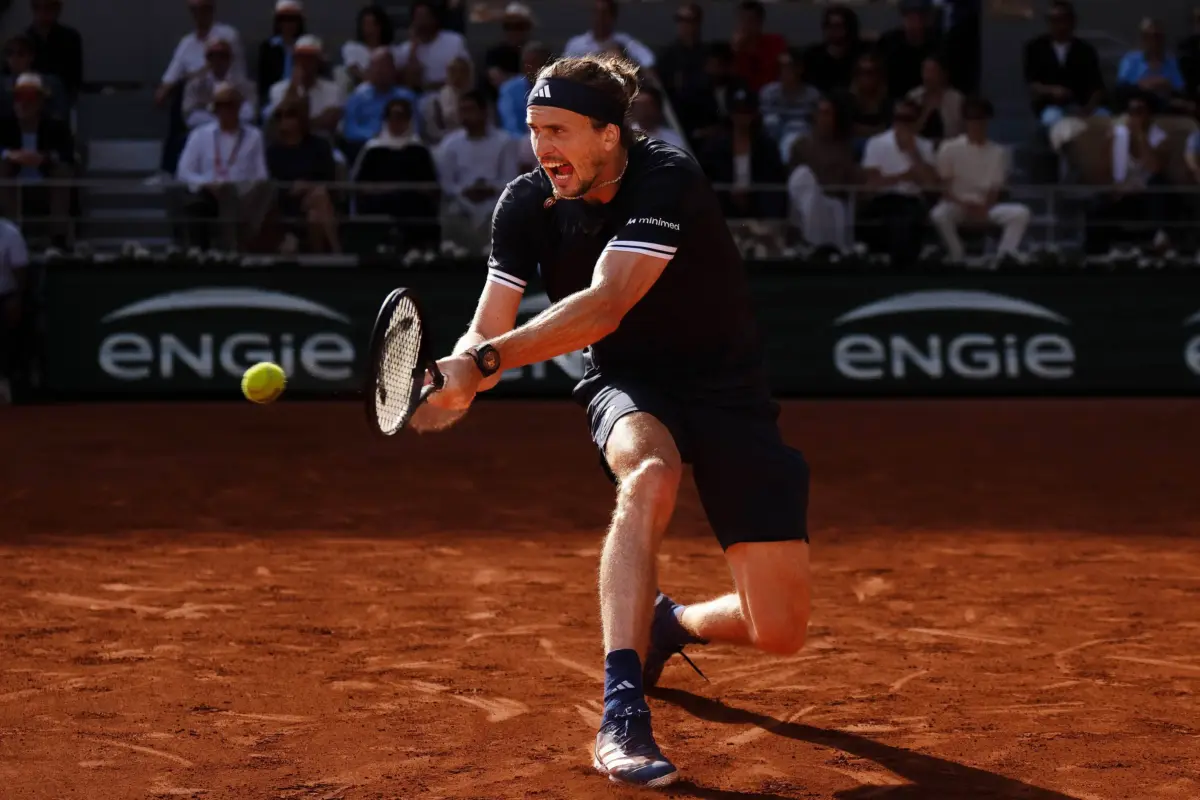
He won Roland Garros in a five-set final, defeating Cobolli 6-1 4-6 6-4 6-7(5) 6-1 in a match that tested his nerve before confirming his quality. Our previous ATP Power Rankings had him in the top three before Paris; his clay-court form throughout the season had been consistently strong, and winning the tournament locks him in at No. 2. The Grand Slam title is confirmation of what the numbers had already suggested.
3. Rafael Jodar
ATP Rank: 23
Previous Power Ranking: 9
The 27th seed reached the quarterfinals of Roland Garros in what was one of the more compelling stories of the first week. The Spaniard had been playing the kind of clay-court tennis in the weeks before Paris that justified legitimate excitement, Barcelona semifinals, Madrid and Rome quarterfinals, a title in April, and he backed it up at the biggest event of the clay swing. A quarterfinal at a Grand Slam when ranked outside the top 30 is a meaningful result. The form was not a fluke. He has earned a spot in the top three of these ATP Power Rankings.
4. Novak Djokovic
ATP Rank: 7
Previous Power Ranking: 4
His season record of 9-4 and a third-round exit at Roland Garros are numbers that would have been unthinkable in almost any prior year of his career. He reached the Australian Open final in January, the anchor keeping him this high. Still, his loss to 19-year-old Joao Fonseca in five sets was his earliest Roland Garros exit since 2009, and the pattern of 2026 points in one uncomfortable direction. He is not what he was. These ATP Power Rankings have to account for trajectory, and Djokovic’s is slowly, undeniably downward. He belongs in the top four for now. We’ll see about the future.
5. Casper Ruud
ATP Rank: 14
Previous Power Ranking: 2
These ATP Power Rankings have him at five rather than higher precisely because of what happened in Paris. He came into Roland Garros as a genuine contender, Italian Open final in Rome, strong clay form, legitimate Grand Slam pedigree, and then lost in the fourth round to Fonseca after spending nearly four hours on court in a match he should have controlled more convincingly. Away from that result, Ruud is comfortably one of the better players on tour right now. His clay-court record over several seasons is outstanding, and the Rome run was legitimate. He simply needed to do better in Paris when the draw had opened up for him, and he didn’t.
6. Flavio Cobolli
ATP Rank: 10
Previous Power Ranking: 7
A French Open final at 24 years old is a fantastic result, and these ATP Power Rankings reward it accordingly. But they cannot place Cobolli higher than six because the road to that final included a semi-final walkover and Arnaldi’s illness-related withdrawal from the semifinal. He legitimately beat the fourth seed, Auger-Aliassime, in the quarterfinals, and his win record over genuine opponents in Paris deserves credit. The caveat is that his clay form before Roland Garros was patchy at best, and the pre-tournament body of work simply does not support a higher placement here. Tremendous run. Incomplete story.
7. Daniil Medvedev
ATP Rank: 8
Previous Power Ranking: 5
A first-round exit at Roland Garros is deeply on-brand for a player who has never found a way to coexist with the clay swing, and these ATP Power Rankings dock him accordingly. Away from the dirt, however, Medvedev remains one of the most complete and dangerous players on tour. His results on hard courts in 2026 have been solid, his level on indoor surfaces is elite, and the French Open is genuinely the one tournament every year where his numbers simply do not tell the wider story of his abilities. He lands at seven, which is high enough to respect what he is across the full season, but low enough to register that first-round exits at majors hurt in any power rankings worth taking seriously.
8. Felix Auger-Aliassime
ATP Rank: 4
Previous Power Ranking: NR
This is the placement that will frustrate his supporters the most, and it should frustrate him. FAA went out in the quarterfinals as the fourth seed, beaten by Cobolli in a match he was favoured to win. He had the ranking, the seeding, and the experience to make a real run in the most open draw Roland Garros had produced in a generation. He did not. This is, in fairness, a recurring theme. These ATP Power Rankings have him at eight because his overall season justifies a top-ten presence. But the French Open result is the same old story, and the same old story in tennis only gets you so far.
9. Jakub Mensik
ATP Rank: 17
Previous Power Ranking: NR
He belongs in these ATP Power Rankings, and not purely because of sentiment. A semifinal at Roland Garros as the 26th seed, at 20 years old, having come through a wheelchair-assisted recovery from severe cramping two rounds earlier, that is a real result against real opponents. He beat Rublev in five sets and Fonseca, the man who had eliminated Djokovic, in the quarters. The question marks over his fitness and ability to sustain elite-level form over a full Grand Slam fortnight remain. But he has answered enough of them in Paris to earn a place here. He needs more consistency across a full season before climbing higher.
10. Alex de Minaur
ATP Rank: 6
Previous Power Ranking: 10
A third-round exit at Roland Garros as the eighth seed is the kind of result that defines De Minaur’s Grand Slam record, professional, and not quite enough. Away from the clay, he is a reliable top-ten performer; his hard-court game gives him legitimate weapons at most of the year’s bigger events. He sits at ten in these ATP Power Rankings, not because he has done anything particularly wrong, but because nine other players above him have done something more right. He is a consistent and reliable piece of the puzzle. The puzzle just has more compelling pieces at the moment.
Main Photo Credit: Susan Mullane – Imagn Images