

The last time a Frenchman reached the Roland Garros men’s singles final, Henri Leconte was making the crowd roar in 1988. Thirty-eight years of heartbreak, near-misses, and wait-until-next-years have followed since. The French tennis public is a patient one, but patience, like a clay court rally, only stretches so far.
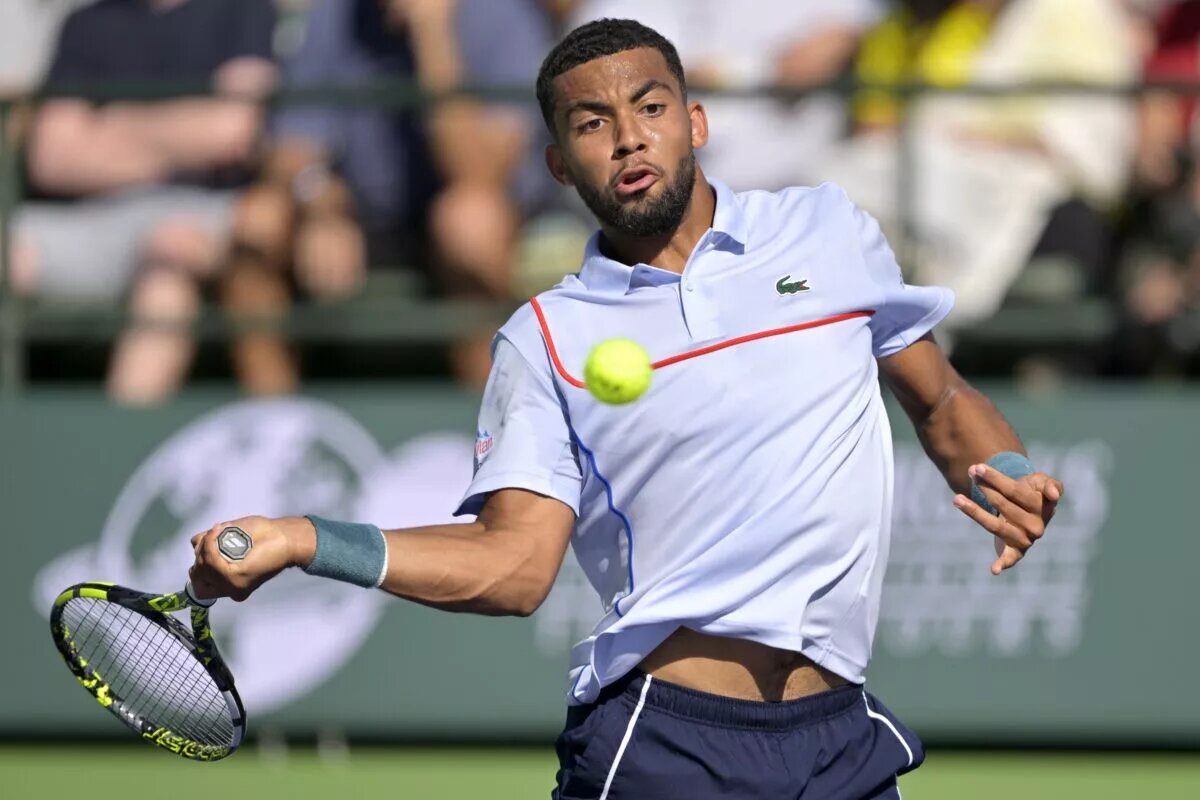
Enter Arthur Fils. Twenty-one years old, built like he was designed specifically to hit a tennis ball very hard, and finally, finally healthy. After an injury-stricken 2025 season, a persistent back injury sustained during last year’s Roland Garros sidelined him for months. Fils came back in 2026 like a man with something to prove, and prove it he has.
Can Arthur Fils measure up to expectations?
He is 13-1 on clay over the last 52 weeks, second only to Sinner among the entire field. He won Barcelona, reached the Madrid semifinal, and broke into the top 10 for the first time in his career. The talent scouts who flagged him as a teenager were right; the timeline just needed time.
The numbers are legitimately exciting. His trajectory accelerated through a series of results that allowed him to reach a new career-high ranking, a clear reflection of growing maturity and hard-won consistency on the clay. This is no longer a player who wins ugly and exits at the business end of tournaments; he is now a player who has learned to close, to handle the weight of expectation, and to hurt opponents who give him a short ball. His forehand, always his weapon, is now accompanied by a backhand that no longer begs to be attacked, and a serve that has added enough variety to keep even the best returners guessing.
Watch him on clay, and you notice something else: he moves as though he enjoys it. Some players merely tolerate the surface, grinding their way through the dust and the slow-motion exchanges until the hard courts come back around. Fils slides into his groundstrokes with the loose, intuitive confidence of a player who grew up understanding exactly what red clay asks of you. It asks endurance, tactical patience, and the willingness to build a point rather than simply end one. He has all three.
But the cloud of injury concerns has resurfaced after Fils was forced to retire in Rome, leaving his fitness for the main draw uncertain. For a player whose entire story in Paris depends on staying on court for seven matches across a fortnight, that is not a small footnote; it is the core question. The back that cost him 2025 is the same back. It does not forget, and it does not forgive a fortnight of five-setters on a surface that tests every muscle in the posterior chain.
His medical staff will know more than we do. What we know is that a healthy Fils in Paris is a different conversation entirely from a compromised one. The difference between a player managing discomfort and one playing freely is evident within three games of a match. His opponents will be watching, so will his nation.
If he is fit, the proposition becomes very interesting indeed. The atmosphere when a Frenchman is playing well at Roland Garros is described by visitors as a physical force. The crowd does not just cheer; they pull, they drag, they demand.
Yannick Noah and the 1983 title remain the benchmark, the last time a Frenchman actually won the thing, but a final would be enough to send Paris sideways. A run to the last eight would feel like oxygen returning to a room that has been sealed for decades.
At his current form, Fils is France’s best hope since Jo-Wilfried Tsonga was in his prime. That comparison is both flattering and instructive. Tsonga, for all his brilliance and crowd-surfing charisma, never won a Grand Slam. The difference between reaching a final and winning one is the difference between a beautiful story and a changed history. Fils is young enough to come back; the worry is that Paris 2026 might be a peak moment, an alignment of form, surface, and draw that does not repeat on request.
His best Grand Slam result remains the third round, and he has never been past the fourth round of a major. Those are facts, but facts at Roland Garros have a way of being rewritten by young Frenchmen playing in front of 15,000 people who have waited 38 years to believe again. The court moves differently when the crowd is with you. The ball lands more heavily, and opponents start thinking about the noise rather than the next point.
Is Fils ready to end the wait? The body must cooperate. The draw has cracked open just enough to dream, and somewhere in the stands, beneath a tricolore held aloft by hands that were doing the same thing when Leconte was serving for glory in 1988, France is watching, hoping that this time, this boy, this year, it finally happens.
Main photo credit: Jayne Kamin-Oncea-USA TODAY Sports