
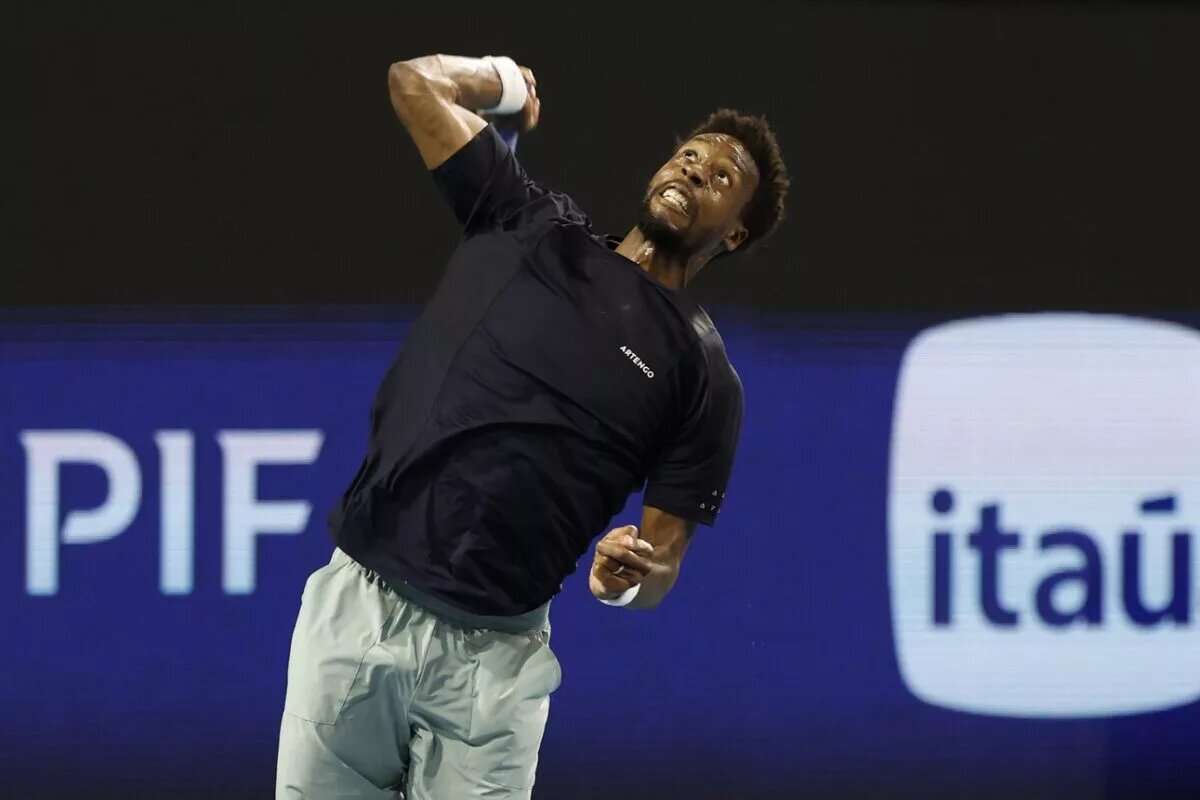

If you thought the send-off for Gael Monfils was going to be a pity party in the vein of a procession of polite applause and tearful tributes from commentators running out of things to say, you have not been paying attention. You have not been watching this man for the last two decades. Because Monfils does not do gentle farewells. He was never going to accept the terms that this sport usually imposes on its ageing players, which is to say: know your place, lose to someone half your age, give a dignified speech and disappear.
On Sunday in Monte-Carlo, ranked 203rd in the world and competing on a wildcard, he came from a set down to beat world number 32 Tallon Griekspoor, becoming the oldest match winner in Monte-Carlo since 1973, and moved to 145 ATP Masters 1000 match wins, the highest total among all French players in history. That is a statement delivered at full volume under the Mediterranean sun, which is exactly the only way Monfils has ever done anything.
The Showman Myth That Buried the Competitor
Here is a thing that happened to Gael Monfils over the course of his career that was not entirely fair. He became so associated with the entertainment side of the sport, the diving retrieves, the between-the-legs winners, the post-match dances, that a significant portion of tennis discourse decided the showmanship was the story and the results were secondary. He was framed as the player who could have been great but settled for being spectacular. It was a lazy reading of a genuinely complicated career, and it missed most of what actually made him remarkable.
He reached two Grand Slam semi-finals, at Roland Garros in 2008 and the US Open in 2016. He reached three Masters 1000 finals, at the Paris Indoors in 2009 and 2010, and Monte-Carlo in 2016. He reached a career high of world number six. He lifted 13 tour-level titles across a professional career that began in 2004, spanning over two decades of a sport that was simultaneously home to Federer, Nadal, and Djokovic.
Many have talked about how difficult it is to carve out a significant career during the years when those three men were playing at the peak of their powers. Monfils not only survived that era, he thrived in it, reached the later stages of Slams in it, and came back from injuries that would have ended most careers several times over to keep competing.
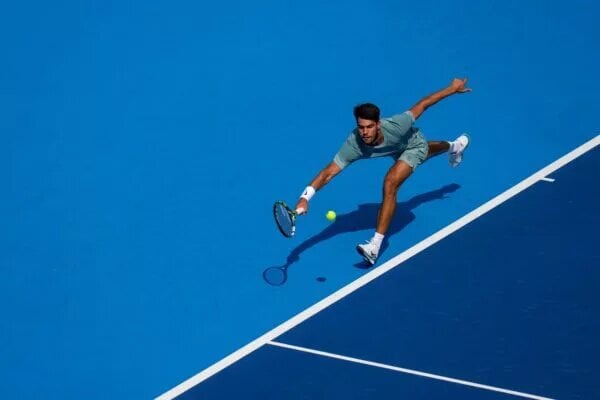
The showmanship was not a substitute for the tennis. It was an expression of the same athletic intelligence that made the tennis work. The diving retrieves were not circus tricks. They were the product of a body that moved at speeds and angles the sport had rarely seen, deployed in service of winning points. The crowd interaction was not a distraction from the competition. It was fuel.
Monfils has described the relationship between his emotional expressiveness and his on-court performance as straightforward: it is joy, and the joy enables his creativity. Players who perform for crowds are often dismissed as not taking the tennis seriously enough. In Monfils’ case, the performing and the competing were always the same thing.
Still Here, Still Standing, Still Competing
In January 2025, Monfils became the oldest player to win an ATP Tour title in history, claiming his 13th tour trophy in Auckland at the age of 38 years and 132 days, taking over the record from Roger Federer. That result alone should have recalibrated the conversation about what he was doing with his final years on tour.
He is the last of the French Musketeers to call it quits, following Tsonga, Gasquet, and Simon into retirement. For years, that generation carried French tennis, which wasn’t easy, and their careers proved that. Complicated careers full of brilliant individual moments and the constant shadow of what might have been. Monfils carried it the longest and perhaps the most lightly, because he seemed to understand, better than almost any of his contemporaries, that the sport was supposed to be enjoyed. He played with a happiness that his results arguably did not always merit, but that his legacy absolutely does.
Monte-Carlo and the Next Round
Sunday’s win over Griekspoor was Monfils’ thirteenth appearance at Monte-Carlo, a tournament he has been competing in since 2005 and where he reached the final in 2016. He lost the first set in a tiebreak, came out in the second and third with authority, and closed it out 6-1, 6-4 against a player ranked 170 places above him in the current standings.
He now faces Alexander Bublik in the second round, which is almost too perfect, because Bublik is arguably the current generation’s closest equivalent to what Monfils represented at his peak. Two entertainers, different eras, same stage. The show is guaranteed, and that phrase has never been more literal.
Monfils said he wants to play each match like it is his last. If Sunday in Monte-Carlo is the template for what that looks like, then the tour is in for several more months of a forty-year-old Frenchman conducting an extended argument with the concept of graceful decline. He has more to give. He knows it. The court at Monte-Carlo knew it yesterday. Anyone who thought this farewell tour was going to be quiet has not been watching the right man.
Main Photo Credit: Geoff Burke-USA TODAY Sports