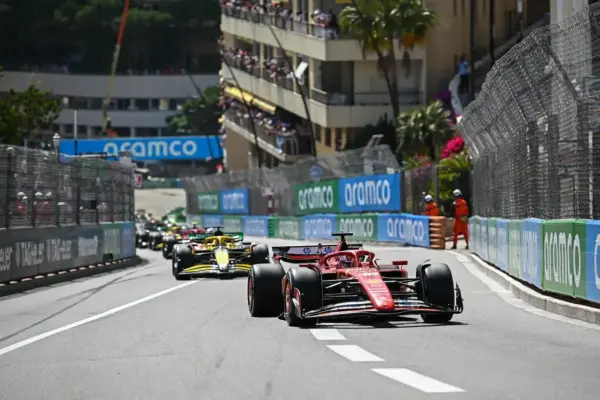

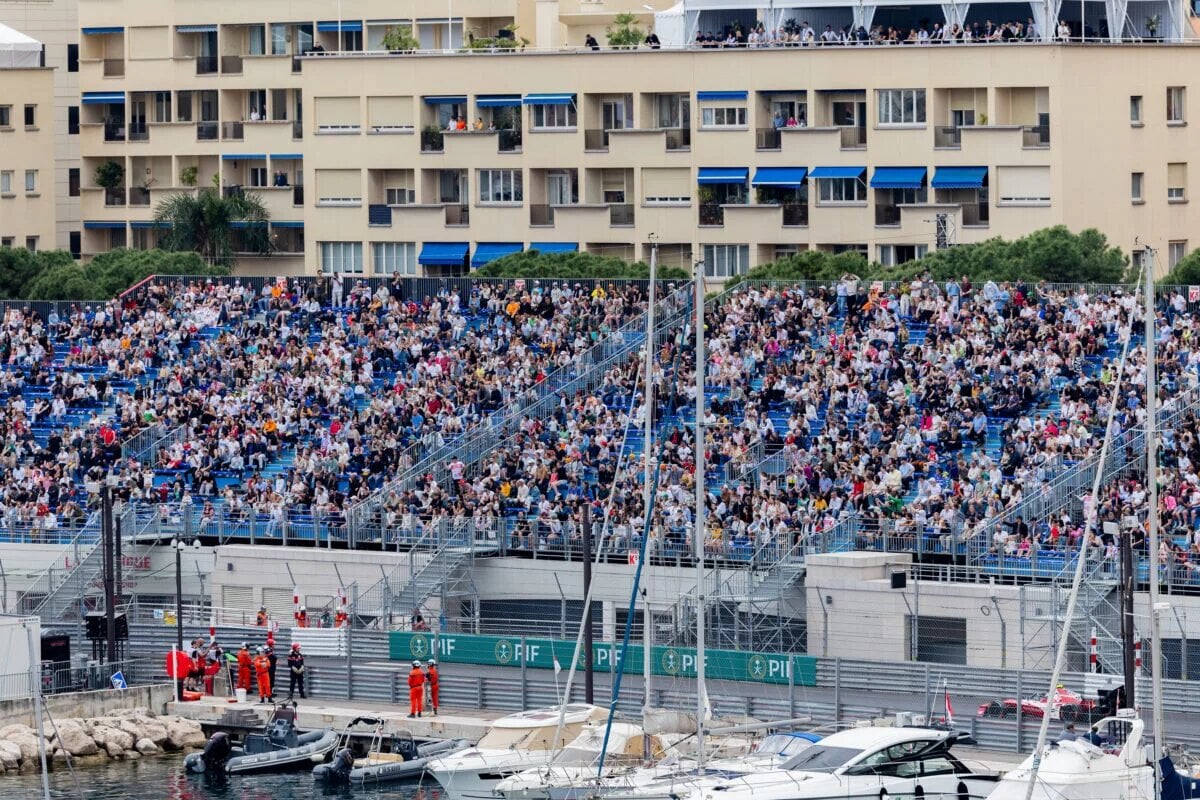

Round 8 of the 2025 F1 season takes us to the Monaco Grand Prix.
Everything You Need to Know About the Monaco Grand Prix
Few sporting events can match the spectacle of the Monaco Grand Prix. Set among the winding streets of Monte Carlo and La Condamine, this race has become a staple of the F1 calendar.
R A C E 🤩 W E E K
Next stop, Monte Carlo! 🇲🇨#F1 #MonacoGP pic.twitter.com/T2tGhA7VlQ
— Formula 1 (@F1) May 19, 2025
The Schedule
| Date | Session | Time* |
|---|---|---|
| 23 May (Thu) | Practice 1 | 13:30 – 14:30 |
| 23 May (Thu) | Practice 2 | 17:00 – 18:00 |
| 24 May (Fri) | Practice 3 | 12:30 – 13:30 |
| 24 May (Fri) | Qualifying | 16:00 – 17:00 |
| 25 May (Sat) | Race | 15:00 |
*Track Time
Origins and Early Years
In 1929, Antony Noghès, president of the Automobile Club de Monaco (ACM), aimed to elevate his organisation to full national status within the Association Internationale des Automobiles Clubs Reconnus (AIACR). The AIACR rejected the ACM’s application because the event was not entirely contained within the principality.
In response, Noghès proposed a solution. He wanted to hold a motor race through the narrow streets of Monte Carlo. With the endorsement of Prince Louis II and support from Monegasque driver Louis Chiron, the Monaco Grand Prix was born.
Held on 14 April 1929, the inaugural race was won by William Grover-Williams in a Bugatti Type 35B. Despite being invitation-only, several top drivers of the era declined to attend. Bugatti and Mercedes were both represented. Rudolf Caracciola, starting from 15th, raced into contention before pit delays dropped him to second.
READ MORE: Mercedes Struggles at the 2025 Imola Grand Prix
Building Prestige in the Pre-War Era
The race quickly gained prominence. By 1933, it earned the status of Grande Épreuve, placing it alongside the French, Belgian, Italian, and Spanish Grands Prix as one of the AIACR’s premier events. That year also marked a milestone. Grid positions were set by qualifying times rather than a ballot, introducing a practice still used today.
Achille Varzi and Tazio Nuvolari battled on the circuit, with Varzi triumphing in 1933 after Nuvolari’s car caught fire on the final lap. The mid-1930s saw the rise of Auto Union and Mercedes-Benz, but also brought chaos.
In 1936, a slick track and poor visibility led to a crash-filled event, ultimately won by Rudolf Caracciola. Financial pressures and the developing conflict in Europe saw the race disappear from the calendar after 1937, not to return until after the Second World War.
Post-War Revival and F1
Motorsport resumed in Europe in 1945, but Monaco remained absent until 1948, when the Grand Prix returned with Nino Farina victorious in a Maserati 4CLT. After Prince Louis II’s death, the 1949 Grand Prix was cancelled out of respect.
A new era began in 1950 when Monaco became part of the F1 World Championship. That year, Juan Manuel Fangio secured his first World Championship victory on the streets of Monte Carlo.
The early 1950s were turbulent. The race dropped off the calendar several times due to regulatory uncertainty and budget constraints. But in 1955, it returned for good, beginning an unbroken run that continues.
Graham Hill and Key Amendments
The 1960s belonged to Graham Hill. The Briton’s command of Monaco’s circuit earned him five victories. His 1965 win was particularly memorable. After an off-track excursion, he rejoined in fifth, surged through the field, and reclaimed the lead to win.
Behind the glamour, safety concerns grew.
Initially, the circuit reflected the everyday streets, with trees, buildings, and sheer drops. In 1969, organisers installed Armco barriers in selected areas. By 1972, nearly the entire track was lined for safety. That year saw major alterations, including new pits and the now-famous Swimming Pool section.
YOU MAY ALSO LIKE: Harsher Penalties For Team Penske In Indianapolis 500
Into the 21st Century
The 21st century brought further modernisation to the Monaco Grand Prix.
A redesigned pit complex and expanded seating transformed Monte Carlo’s infrastructure. Schumacher would go on to match Hill’s five wins, although a qualifying incident in 2006 led to a grid penalty.
The race has retained its status despite challenges, including COVID-19 in 2020, which led to the event’s first cancellation since 1954. It returned in 2021, and Charles Leclerc secured pole positions in 2021 and 2022, though strategic missteps denied him victory.
In 2024, Leclerc finally delivered, becoming the first Monegasque F1 race winner. That year’s race was notable not for its excitement, but its lack of action. There were no overtakes in the top ten, and the grid finished in qualifying order, prompting widespread calls for regulatory changes.
New suit. Same streets. 🤝 pic.twitter.com/Md5Bbdw5fG
— Scuderia Ferrari HP (@ScuderiaFerrari) May 20, 2025
Circuit and Challenges
The Circuit de Monaco remains largely unchanged since 1929.
With its tight corners, elevation shifts, and infamous tunnel, it presents a unique challenge. Despite its short length and limited overtaking opportunities, the circuit remains untouchable for its history and atmosphere.
Modern cars may outgrow Monte Carlo, but the spectacle remains unmatched elsewhere.
Key Data
| Statistic | Value |
|---|---|
| First Grand Prix | 1950 |
| Number of Laps | 78 |
| Circuit Length | 3.337 km |
| Race Distance | 260.286 km |
| Lap Record | 1:12.909 – Lewis Hamilton (2021) |
READ NEXT: 2025 Imola Grand Prix: Verstappen Led a McLaren 2-3 to Victory
Main Photo
- Credit: IMAGO / NurPhoto
- Recording Date: 05/03/2025