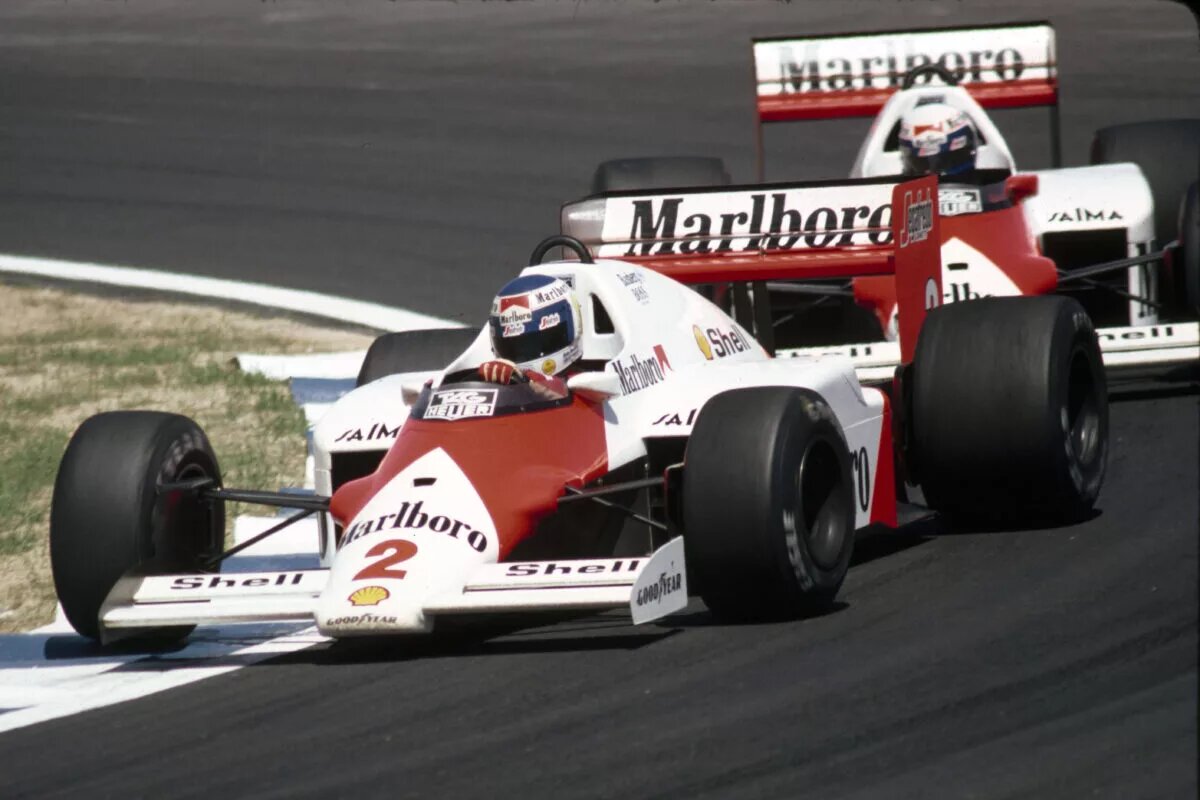

Explore the careers of the drivers with the most retirements in Formula 1 history, highlighting the challenges they faced and the resilience required to succeed in the sport.
When Bad Luck Runs the Track: The Formula 1 Drivers With the Most Retirements
In Formula 1, a driver’s journey isn’t just about victories and podiums. It’s also about facing challenges and overcoming the unexpected. Mechanical failures, accidents, and various misfortunes are all part of the sport, often leading to retirements.
These moments can leave a mark not just on their careers but also on the record books, where some drivers hold not only the highs but also the low
Andrea De Cesaris
Andrea De Cesaris was an Italian racing driver who spent most of his career in Formula 1.
Over the years, he raced for many teams, achieving his best results with Alfa Romeo. He also drove for McLaren, Ligier, Minardi, Brabham, Rial, Scuderia Italia, Jordan, Tyrrell, and Sauber.
His career was full of highs and lows.
Unfortunately, De Cesaris holds the record for the most retirements in F1 history. Between the French Grand Prix in 1985 and the Portuguese Grand Prix in 1986, he retired from 18 consecutive races.
Earlier in his career, from the Brazilian GP to the Austrian GP in 1982, he faced 12 straight retirements.
These setbacks were largely caused by mechanical failures and bad luck.
Ivan Capelli
Ivan Capelli takes second place on the list of drivers with the most retirements in F1 history. The former Italian racing driver and sports commentator competed in the sport from 1985 to 1993.
Before reaching Formula 1, he achieved significant success in single-seater racing, winning the Italian Formula 3, European Formula 3, and International Formula 3000 championships.
Despite his early victories, Capelli also set some unfortunate records in F1.
Between the 1990 Italian GP and the 1991 German GP, he suffered 14 consecutive retirements. These were caused by a mix of issues, including gearbox failures, a punctured tyre, brake troubles, collisions, and several tailbacks.
READ MORE: The 1997 Formula 1 Season: A Battle for the Ages
Alex Caffi
Alex Caffi holds third place on the list. The Italian racing driver had a career in Formula 1, with his best result being a P4 finish at the 1989 Monaco GP.
The son of racing driver Angelo Caffi, Alex began his career in karting before moving to Formula 4 and Formula Fiat Abarth in 1980. By 1984, he advanced to Formula 3, becoming European champion the following year.
Caffi’s time in F1 was a mix of highs and lows.
While he had some standout moments, his career was also marked by numerous setbacks. In 1987, he endured 12 consecutive retirements between the Brazilian and Portuguese GPs.
These were caused by a combination of mechanical failures and tyre punctures – unfortunate occurrences that are all too common in F1.
Riccardo Patrese
Riccardo Patrese is fourth on the list. The former Italian racing driver was a karting world champion and an Italian and European Formula 3 champion.
He competed in Formula 1 from 1977 to 1993, starting 256 Grands Prix – a record that stood for 15 years – and securing six victories.
Patrese’s long career was marked by more disappointments than triumphs. His best performances came during his time with Williams, particularly in the 1989, 1990, and 1991 seasons.
However, he also set some unfortunate records.
He faced 11 consecutive retirements twice – first between the 1982 Italian Grand Prix and the 1983 British Grand Prix, and again between the 1984 Belgian and Dutch Grands Prix.
Jacques Villeneuve
Jacques Villeneuve takes fifth place on the list. The former Canadian racing driver was the 1997 Formula 1 World Champion, as well as the winner of the Indianapolis 500 and the CART Championship in 1995.
Known for his strong sprinting skills and fearless duelling ability, Villeneuve consistently showcased his talent on the track.
Despite his achievements, Villeneuve also faced challenging moments in his career. In 1999, he suffered 11 consecutive retirements between the Australian and Hungarian GPs.
These were caused by a mix of accidents, hydraulic system failures, gearbox issues, and occasional spins.
YOU MAY ALSO LIKE: Top 10 NASCAR Cup Drivers of 2024
Jean-Pierre Jabouille
Jean-Pierre Jabouille is sixth on the list.
The French racing driver won two F1 Grands Prix and was crowned European Formula 2 champion in 1976. He also made history as the first driver to win an F1 race in a car equipped with a turbocharged engine.
However, Jabouille’s career was not without its challenges.
Between the 1979 British GP and the 1980 South African GP, he endured 10 consecutive retirements. These were caused by a range of technical issues, including engine failures, exhaust problems, clutch malfunctions, and brake troubles.
Reliability issues plagued his career, earning him an unfortunate place in the record books.
Keke Rosberg
Keke Rosberg takes seventh place on the list. The Finnish driver and 1982 F1 World Champion is also the father of Nico Rosberg, the 2016 Formula 1 World Champion with Mercedes.
During his early career, Keke raced for lower-tier teams before making the move to Williams, where his fortunes improved.
With Williams, Rosberg spent four seasons, securing five victories and consistently scoring points.
However, even a champion’s career isn’t without setbacks. Between the 1984 British GP and the 1985 San Marino GP, Rosberg endured 10 consecutive retirements. These were largely due to car reliability issues.
The Value of Drivers Beyond Formula 1 Retirements
Formula 1 is a sport that demands talent, tenacity, and, perhaps most of all, luck. For drivers who have endured numerous retirements, these moments should not be seen as signs of weakness.
Instead, they highlight the immense challenges this sport presents – challenges that go beyond battles on the track, rivalries with teammates, or competition with opponents. They represent a relentless contest with fate itself.
Each retirement tells a story of risk, of the drivers’ struggles, and of the collective disappointment felt by their teams.
Ultimately, what sets great drivers apart isn’t just the number of victories or the trophies on their shelves. It’s their ability to rise after every setback, to push forward through failure, and to continue chasing their dreams despite the odds.
Because at its heart, F1 is as much about resilience as it is about glory.
READ NEXT: The Best F1 Rivalries of All Times