
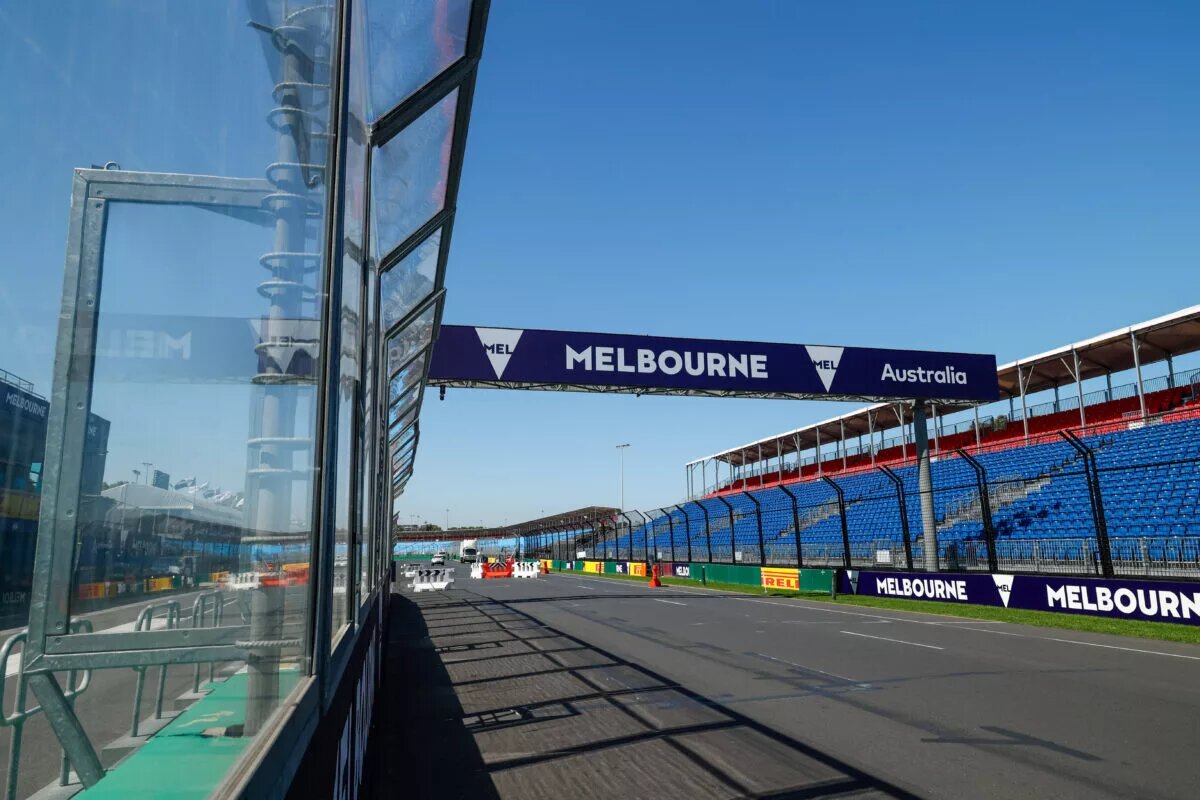

The 2025 F1 season returns to the Australian Grand Prix for its grand opening.
From the 14th to the 16th of March
For the first time since 2019, Australia will open the 2025 F1 season. With six rookies, driver swaps, and team changes, the opening weekend has plenty to offer.
Oscar Piastri and Alpine rookie Jack Doohan are the first drivers to have the chance to go for glory in their home country.
The Schedule
| Date | Session | Time (Local) |
|---|---|---|
| 14 Mar | Practice 1 | 12:30 – 13:30 |
| 14 Mar | Practice 2 | 16:00 – 17:00 |
| 15 Mar | Practice 3 | 12:30 – 13:30 |
| 15 Mar | Qualifying | 16:00 – 17:00 |
| 16 Mar | Race | 15:00 |
If you are heading to the track this weekend, the best place to be is Turns 9 and 10. It’s the fastest section of the circuit, with little margin for error.
The direction change underlines the remarkable performance of an F1 car, and there is a general admission area on the outside of Turn 9 for easy viewing.
Albert Park – a bird’s eye view 👀
Not long to go now until cars take to the track in Melbourne 😌#F1 pic.twitter.com/dRmRFaPfKC
— Formula 1 (@F1) March 11, 2025
Creation of the Melbourne Circuit
In 1993, Melbourne secured the deal to host the Australian Grand Prix, marking a significant shift from its previous home in Adelaide.
Rather than constructing an entirely new circuit, organisers opted to integrate the race into the existing roadways of Albert Park.
The layout primarily uses Aughtie Drive and Lakeside Drive to create a fast, flowing track.
Albert Park Grand Prix Circuit sees the characteristics of a street circuit meet the challenges of a more traditional racing venue.
READ MORE: Why McLaren Are Clear Favourites in 2025
Melbourne’s First Grand Prix
Just months after Adelaide hosted its final Formula 1 race at the end of 1995, Melbourne welcomed the sport in early 1996.
The event provided an immediate spectacle, best remembered for Martin Brundle’s crash at Turn 3.
After launching off the back of Johnny Herbert’s Sauber, Brundle’s Jordan was sent airborne before crashing heavily. Fortunately, he emerged unscathed and even restarted the race in a spare car, cementing the event’s place in Formula 1 history.
YOU MAY ALSO LIKE: Women Trailblazers in IndyCar
The Albert Park Circuit’s Characteristics
As a temporary circuit, Albert Park presents unique challenges. The track surface is often bumpy, and the lack of year-round racing activity means the asphalt starts slippery, gradually gaining grip as the weekend progresses.
A responsive and well-balanced car is key, as several corners require a strong front end for precise turn-in.
The first of Albert Park’s 14 corners always delivers the action! 👀#F1 pic.twitter.com/19sypOQv7q
— Formula 1 (@F1) March 12, 2025
Despite its street circuit classification, Melbourne ranks among the fastest tracks on the calendar, with Max Verstappen’s 2024 pole lap averaging over 250 km/h.
Track changes ahead of the 2022 season saw the circuit become faster to increase overtaking, with some corners removed or changed. There are four DRS zones, and the best places to overtake are at Turns 3 and 11.
This blend of speed and technical demands makes Albert Park a favourite among drivers and fans alike.
Key Data
| Feature | Details |
| First Grand Prix | 1996 |
| Number of Laps | 58 |
| Circuit Length | 5.278 km |
| Race Distance | 306.124 km |
| Lap Record | 1:19.813 (Charles Leclerc, 2024) |
Main Photo
IMAGO / SOPA Images
Recording Date: 07.03.2025