
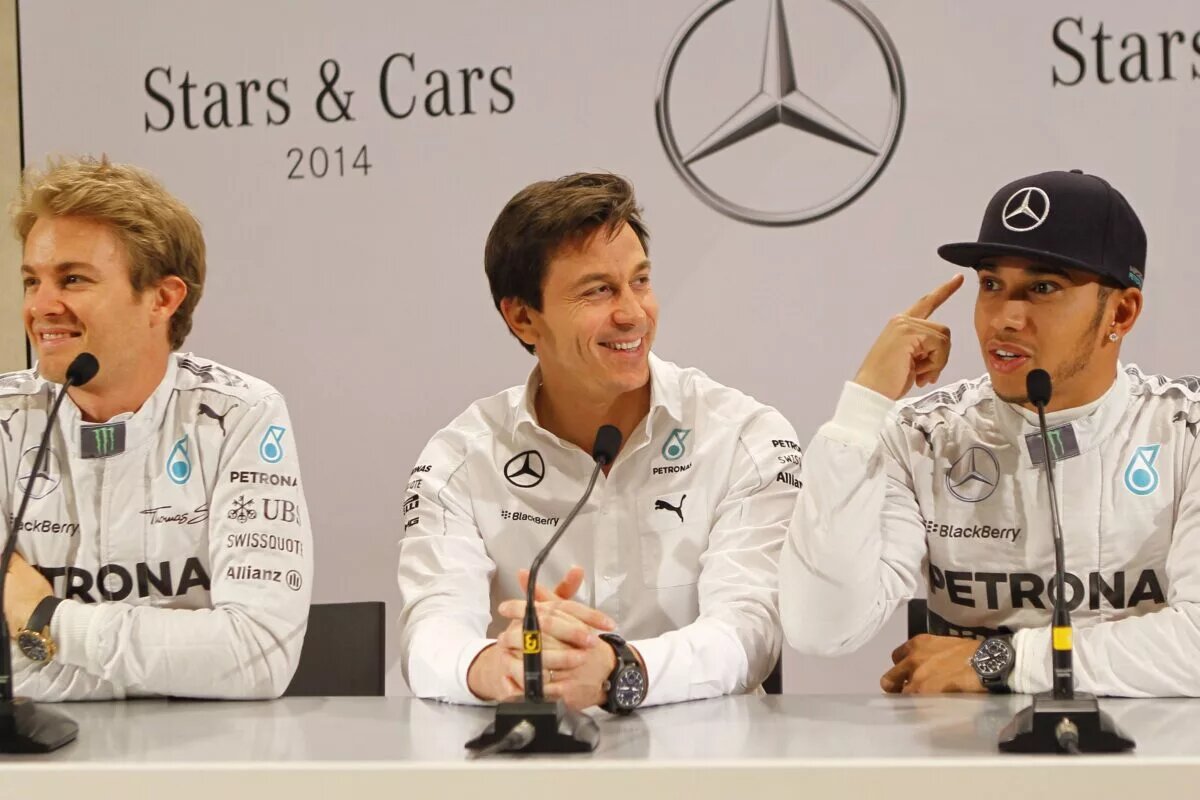

Relive Lewis Hamilton’s 2014 F1 title win, where he became a World Champion with Mercedes for the first time.
Seven Stars: Lewis Hamilton’s Legacy in Formula 1
As one chapter of Lewis Hamilton’s extraordinary career comes to a close, another is set to begin.
With his move to Ferrari in 2025, Hamilton leaves behind a legacy at Mercedes that redefined dominance in Formula 1. But before he embarks on this new journey, it’s the perfect time to reflect on the moments that made him a seven-time World Champion.
For seven weeks, we’ll relive the defining seasons of Hamilton’s career, celebrating his unparalleled achievements and revisiting the path that established him as one of the greatest drivers in history.
Last week, week one of seven, we explored his breakout year with McLaren: The Birth of a Champion. This week, we delve into the season that changed everything: the year Lewis Hamilton and Mercedes began rewriting the history books.
2014: The Dawn of a Dynasty
When Lewis Hamilton made the bold decision to leave McLaren for Mercedes in 2013, sceptics called it a mistake. But Hamilton and the Silver Arrows would soon prove that gamble was anything but.
The 2014 season marked the start of Formula 1’s turbo-hybrid era, and no team adapted to the new regulations better than Mercedes. The introduction of 1.6-litre turbocharged V6 engines became the foundation for a period of dominance rarely seen in the sport.
With an iconic driver lineup of Hamilton and Nico Rosberg, Mercedes set the grid alight, winning 16 of the 19 races that year.
For Hamilton, this wasn’t just another championship campaign; it was the beginning of an era.
As he claimed his second World Drivers’ Championship, and first with Mercedes, he silenced the doubters and ushered in a partnership that has gone on to secure six Drivers’ titles and an unprecedented eight consecutive Constructors’ Championships.
Lewis Hamilton will race in his 246th race as a Mercedes driver this weekend at the 2024 Abu Dhabi Grand Prix.
Now, as he prepares for his final race with Mercedes, we look back at the season that marked the dawn of their dynasty.
From thrilling battles with Rosberg to stunning victories, 2014 was a year of triumph, tension, and the start of something truly special.
A start to forget
The season opener in Australia was a nightmare weekend for Hamilton.
It started out strong, with the Brit claiming pole in a wet qualifying session by three-tenths, just ahead of Red Bull’s Daniel Ricciardo and Rosberg.
At the race start, however, is where it all unravelled.
Hamilton’s engine lost a cylinder at the start, and he dropped to third by the first corner. By the end of the first lap, he was down to P5. Running on an engine with only 5 cylinders, he was called into the pits to retire.
Rosberg went on to win the race for Mercedes, whilst McLaren enjoyed what was their last podium until the 2019 Brazilian Grand Prix and last double podium until the 2021 Italian Grand Prix.
This race also marked the last time that McLaren led the Constructors’ Championship until the 2024 Azerbaijan Grand Prix.
READ MORE: The Last Time McLaren Were in a Title Fight
Asserting dominance
The next four rounds of the season were a very much-needed turnaround for Hamilton, and vital for his confidence.
In Malaysia, on a wet track, just 5 one-hundredths of a second ahead of Sebastian Vettel’s Red Bull, Hamilton earned his 33rd pole position, equalling Jim Clark for most poles of a British F1 driver.
Hamilton went on to win the race after a dominant performance, crossing the line 17 seconds ahead of Rosberg.
The 2014 Bahrain Grand Prix was the prologue of the Silver War – the Lewis Hamilton and Nico Rosberg rivalry. The two duelled under the stars in the desert, providing the world with nail-biting action as the two fought for the win from Lap 1 all the way to the chequered flag.
Hamilton who defended mightily throughout the 57 laps won the race, with Rosberg assuring Mercedes a one-two. Behind them was Mercedes’ customer team Force India’s driver Sergio Perez who fought off Ricciardo for the final podium spot.
In China, Hamilton had a dominant race. He won the race from pole, with an 18-second gap between him and his teammate. He led every lap and the victory meant he had won three races in a row for the first time in his career.
Spain saw the Silver War truly begin. In a race that Hamilton suffered with oversteer and understeer as well as a poor pit stop, he still went on to win his fourth consecutive race.
However, it was a race that sparked a feud that would last till the end of time. To keep Rosberg behind him in the final stint of the race, Hamilton switched to an engine mode that the team did not want their drivers to use.
It marked the second instance that season where a Mercedes driver used a prohibited engine setting, following Rosberg’s use of it during the Bahrain Grand Prix two races prior in an attempt to overtake Hamilton.
Hamilton’s victory took him to 100 points in the standings and allowed him to lead for the first time in the season.
The Silver War wages
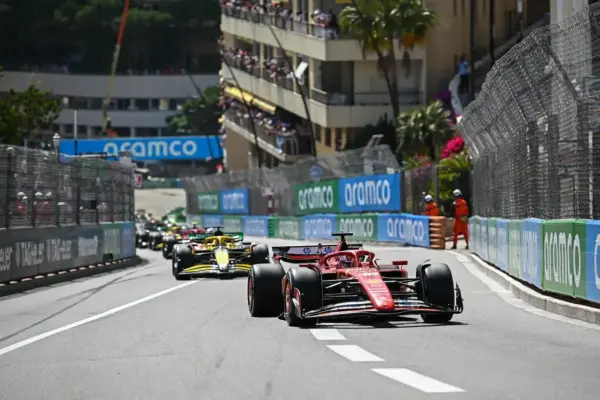
In Monaco, Rosberg acquired pole, but not without controversy. After he had set the fastest time and was on provisional pole, the German ran deep at the Mirabeau corner, aborting his lap and reversing back onto the track.
This brought on the yellow flags, which slowed Hamilton down. The Brit had a purple first sector, on a strong lap to take pole from his teammate.
Rosberg was under investigation for deliberately ruining Hamilton’s lap, but the stewards concluded that there was no evidence to support the claim.
The tension spilled over into the race, in which Rosberg and Hamilton finished in first and second respectively. With his win, Rosberg retook the lead of the Drivers’ Championship standings.
A difficult run followed by a home win
Canada was a difficult race for the Mercedes duo. Halfway through the race, both Hamilton and Rosberg faced issues with the MGU-K (Motor Generator Unit – Kinetic). The failures of the MGU-K were a key reason for the loss of performance for both drivers.
Hamilton went on to retire from the race, whilst Rosberg finished on the podium, separating the two Red Bulls of Ricciardo and Sebastian Vettel.
The Brit experienced problems with his brakes, specifically with his front brakes overheating. Whilst the MGU-K failure also contributed to his difficulties, the reason for his retirement was the brake issue.
After a difficult qualifying in Austria, Hamilton started the race in P9. Rosberg qualified in P3, just behind the Williams pair of Felipe Massa and Valtteri Bottas.
Mercedes however turned it around on race day, with Rosberg leading the one-two finish.
Hamilton won his home Grand Prix in commanding fashion after Rosberg retired due to gearbox issues. In P2 was Bottas who finished an astonishing 30 seconds behind his future teammate.
It was a crucial moment for Hamilton, reigniting his title hopes as he narrowed Rosberg’s lead.
READ MORE: A Sour Ending to the Lewis Hamilton and Mercedes Partnership?
Mountain climbing in Europe
In Q1 of the German Grand Prix, Hamilton lost control of his Mercedes after a failure in the right front brake disc. This sent him into the tyre wall at the left-handed Sachs Kurve.
Whilst his teammate started on pole, Hamilton started in P20, with only Max Chilton behind him. By Lap 4 though, Hamilton the Mercedes driver had already made his way up to P13, and on Lap 13, he was seventh.
Initially, on a two-stop strategy, contact with his former McLaren teammate Jenson Button damaged his front wing, and Hamilton went into the pits for his third stop.
Despite it all, Hamilton managed a podium finish with P3. In P1 and P2 respectively were then teammate Rosberg and future teammate Bottas.
It was another great recovery drive from Hamilton in Hungary. He managed to convert a pitlane start to a remarkable P3 finish. Ahead of him were former teammate Fernando Alonso, and Ricciardo.
Crucially for Hamilton, Rosberg finished the race in P4.
Mercedes went on to lock out the front row in Belgium – Rosberg in pole. A one-two finish looked likely until the two collided on Lap 2.
At the start of the race, Rosberg immediately lost the lead to his teammate, and then P2 to Vettel. After a driver error though, Rosberg overtook his fellow countryman and immediately chased down Hamilton.
On Lap 2, in an attempt to overtake Hamilton, Rosberg’s front wing clipped the Brit’s left-rear tyre at Les Combes, puncturing it and causing damage to Hamilton’s car. After limping to the pits, Hamilton rejoined in P19.
Rosberg pitted on Lap 8 for a new front wing, dropping to 15th.
Despite recovering to P16 by Lap 25, Hamilton’s car damage proved too severe, and he retired on Lap 39.
Rosberg crossed the finish line in P2, extending his lead in the standings by 29 points.
The resurgence
The front row was locked out again by Mercedes in Italy, but this time with Hamilton on pole. However, a slow start saw Rosberg gain the lead, and Hamilton drop to P4 by Turn 1.
By Lap 10, he was back in second and began closing the gap to his teammate, ignoring a team instruction to stay 2.5 seconds behind. On Lap 29, Rosberg ran wide, allowing Hamilton to take the lead and secure his sixth win of the season and the 28th of his career.
A dominant performance at the 2014 Singapore GP saw Hamilton take the win. Meanwhile, Rosberg retired due to steering wheel issues.
This race put Hamilton back in the championship lead, a position he did not relinquish for the rest of the season.
Triumph amid tragedy
Going into the 2014 Japanese GP, Hamilton led Rosberg by three points in the Drivers’ Championship, and Mercedes was far ahead in the Constructors’ Championship.
The race in Japan began under the safety car due to heavy rain from Typhoon Phanfone, reducing visibility. The safety car stayed out for nine laps before the race resumed.
Hamilton eventually overtook Rosberg and went on to win the race, extending his championship lead by 10 points.
The race was red-flagged after Lap 46, with results taken from Lap 44, following a severe accident involving the late Jules Bianchi. His car collided with a recovery vehicle assisting Adrian Sutil’s Sauber. Bianchi sustained life-threatening head injuries, ultimately leading to his tragic passing in 2015.
The accident occurred in worsening weather conditions, and the FIA received criticism for not suspending the race earlier. Additionally, the helicopter could not operate due to weather. Therefore, Bianchi was transported to a hospital by road ambulance, undergoing emergency surgery before being placed in intensive care.
YOU MAY ALSO LIKE: F1: A Look Back At The Controversial 2022 Japanese GP
The resurgence continues
At the 2014 Russian Grand Prix, Hamilton dominated the race, starting from pole position and leading every lap to secure the win.
Rosberg made an unscheduled pit stop after locking both of his front tyres while attempting to overtake Hamilton at the start. Rosberg switched to the harder compound tyres, adopting an alternate strategy to complete the remaining laps without another pit stop.
Despite the setback, Rosberg made a remarkable recovery, working his way through the field to finish in second place.
Hamilton, on the other hand, controlled the race from the front. He managed a 40-second lead before his pit stop and went on to win by 13 seconds. This victory marked Mercedes’ ninth one-two finish of the season.
At COTA, Rosberg secured pole position and maintained the lead at the start, his teammate staying close behind him.
After both Mercedes drivers made their pit stops, Hamilton overtook Rosberg on Lap 24 and pulled away to win the race.
This victory not only marked his tenth win of the season but also saw him surpass Nigel Mansell’s record for the most Grand Prix victories by a British driver in Formula 1, with 32 career race wins.
Rosberg fights back
Nico Rosberg won the Brazilian GP from pole position, securing his fifth and final victory of the season.
Hamilton started the race in P2, crossing the finish line in that same position.
The result saw Rosberg cut Hamilton’s World Drivers’ Championship lead to 17 points heading into the final race of the season.
Down to the wire… and then the wires went out
The 2014 Abu Dhabi Grand Prix marked a dramatic conclusion to the 2014 title fight.
Starting from P2, Hamilton quickly passed Rosberg by the first corner and built a 1.2-second lead by the end of Lap 1.
Rosberg’s race took a turn for the worse on Lap 23 when he locked up at turn 17, losing significant time. His troubles escalated when he reported a loss of engine power, eventually learning his Energy Recovery System (ERS) had failed.
By Lap 25, Rosberg was over 7 seconds behind Hamilton, and despite desperate attempts to salvage his race, he began to drop down the field. On lap 53, Rosberg was asked to retire, but the German opted to finish the race, ultimately crossing the line in 14th.
Hamilton, in contrast, managed his pace well and asked the team to turn down his engine in order to avoid the same issues that affected Rosberg.
Despite a challenge from Felipe Massa, who had fresher tyres after his pit stop, Hamilton maintained a steady lead. He eventually finished the race 2.5 seconds ahead of Massa. Bottas completed the podium in P3, giving Williams’ first double podium since the 2005 Monaco Grand Prix.
This victory, along with double points awarded for the first – and last – time, clinched Hamilton’s second title – his first as a Mercedes driver.
More than just speed
While some critics claim that Hamilton’s success is merely a product of having the fastest car on the grid, 2008 and 2014 serve as stark reminders that his title wins did not come easy.
In both seasons, Hamilton faced fierce competition, not just from other teams, but from his own teammate.
In 2008, Ferrari won the Constructors’ title, and Hamilton’s battle with Massa went on towards the final lap of the race. And in 2014, he had to contend with the ever-present challenge of his childhood friend Rosberg.
Rosberg, with his relentless consistency and ability to match Hamilton at almost every turn, made sure that Hamilton’s victory was never handed to him on a silver platter.
Rosberg would go on to challenge him again in 2015 and 2016.
READ NEXT: Formula E: What to Expect in Season 11